Section 01 of 20
Introduction
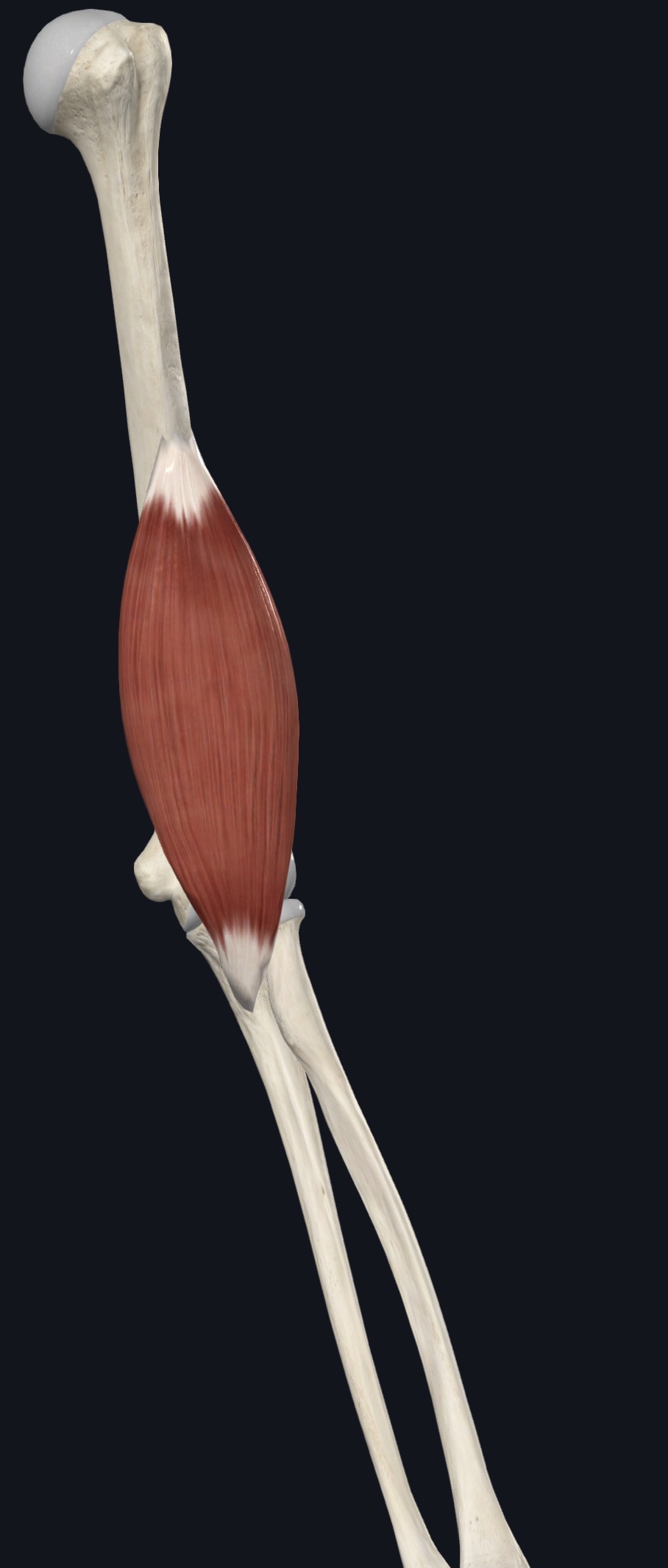
Triceps brachii is the large muscle that covers the entire back of the upper arm. As its name suggests, it has three heads: the long head, the lateral head, and the medial head, which merge into a single tendon that crosses the elbow.
The long head is the only one that crosses the shoulder joint, arising from the scapula, while the lateral and medial heads arise from the humerus itself and act only at the elbow. All three heads work together as the primary muscle that straightens the elbow.
Section 02 of 20
Origin
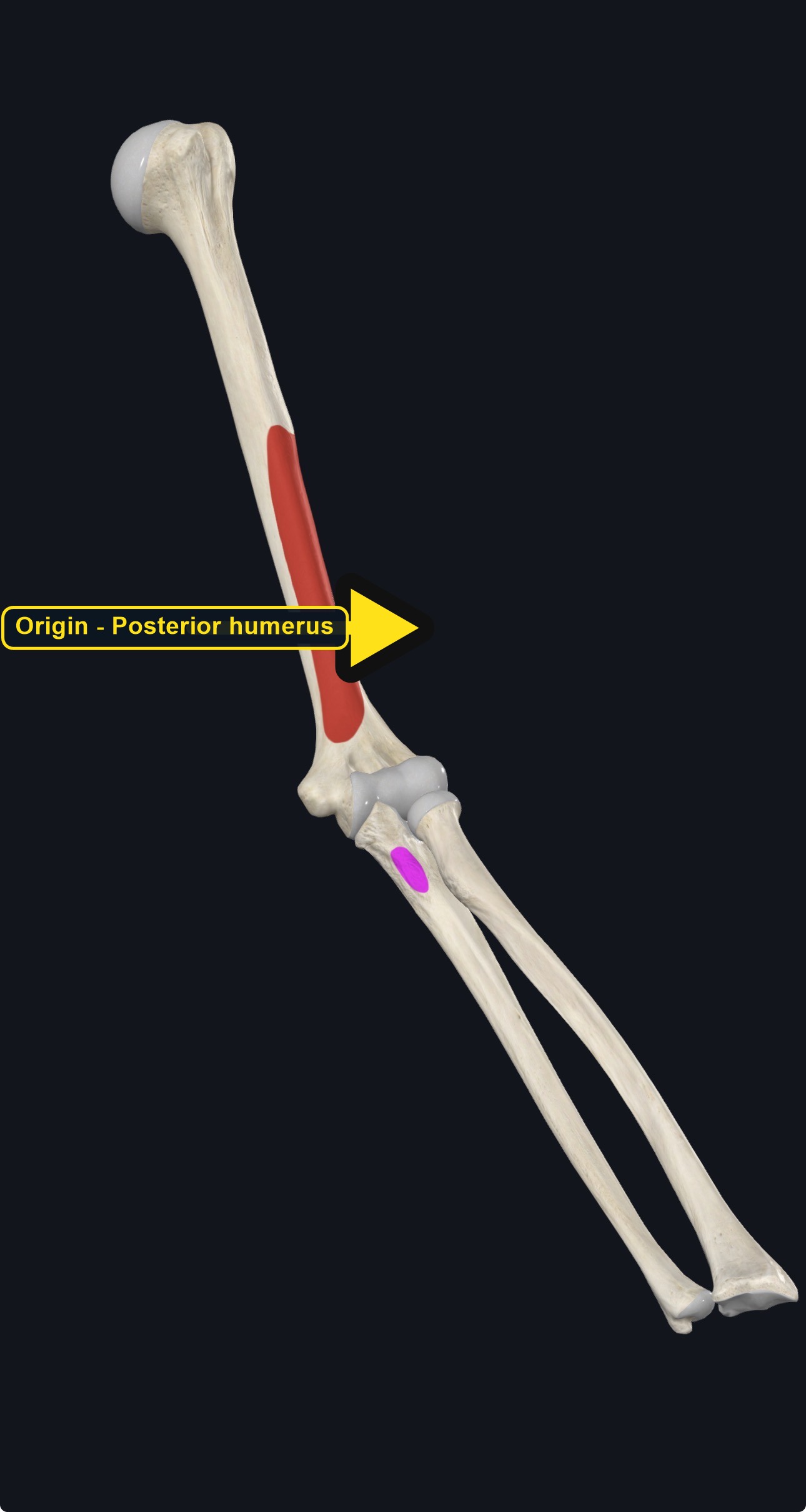
| Origin | Long head: the infraglenoid tubercle of the scapula, just below the shoulder socket. Lateral head: the posterior surface of the humerus, above the radial (spiral) groove. Medial head: the posterior surface of the humerus, below the radial groove. |
|---|
Section 03 of 20
Insertion
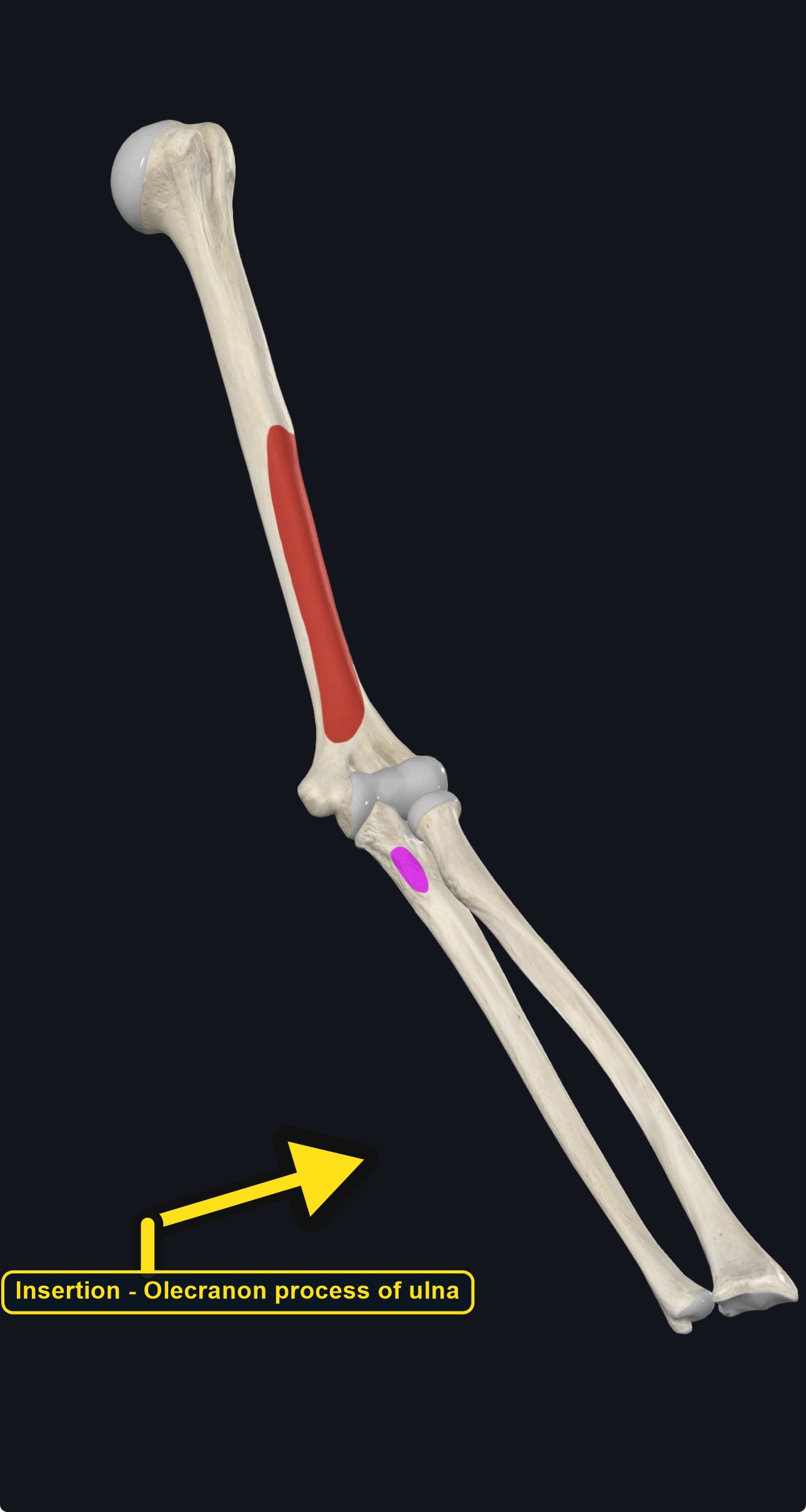
| Insertion | The olecranon process of the ulna, with a smaller slip into the elbow joint capsule and the deep fascia of the forearm. |
|---|
Section 04 of 20
Actions
| Primary action | Extension of the elbow. |
|---|---|
| Secondary actions | Weak extension and adduction of the shoulder (long head only) and elbow stabilization. |
| Movement at the joint | Elbow joint (all heads) and shoulder joint (long head only). |
| Heads / fiber groups | Three heads: long, lateral, and medial. |
| Functional examples | Push-ups and bench press; pushing open a door; throwing; pushing up from a chair or the floor. |
Elbow extension
Straightens the elbow; this is the muscle's primary and most powerful action.
Shoulder extension and adduction
The long head, crossing the shoulder, weakly assists extending and adducting the arm.
Elbow and shoulder stabilization
Helps stabilize the elbow joint during forearm movements and contributes to shoulder stability.
Section 05 of 20
Nerve Innervation
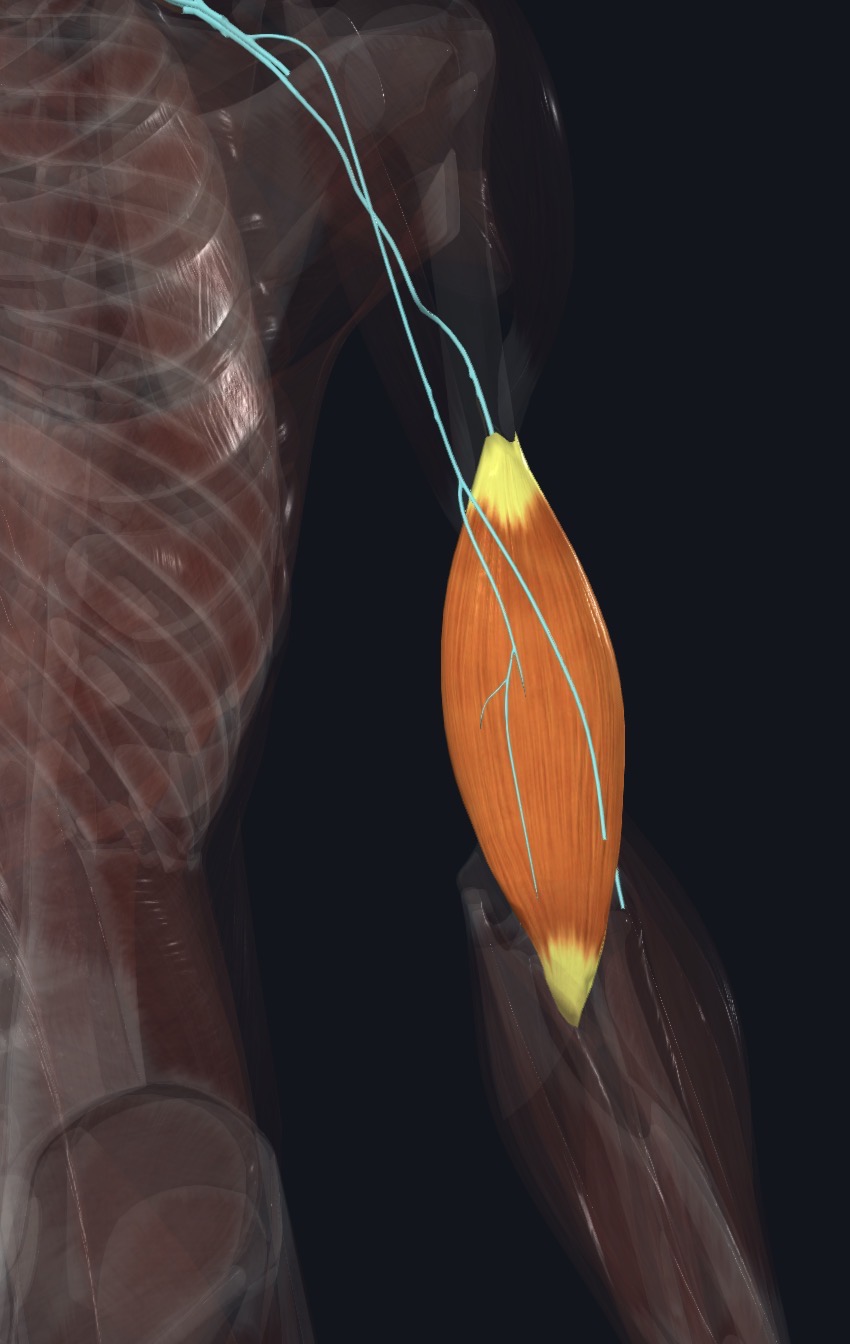
| Nerve | Radial nerve, roots C6–C8 (sometimes including T1). |
|---|
The radial nerve runs in the radial groove on the back of the humerus, between the lateral and medial heads of triceps, making it vulnerable in mid-shaft humerus fractures. Weakness of elbow extension or wrist drop after a humerus injury may reflect radial nerve involvement, not only muscle tightness.
Section 06 of 20
Blood Supply
| Blood | The deep brachial (profunda brachii) artery, with contributions from the posterior circumflex humeral artery near the shoulder end. |
|---|
Section 07 of 20
Pictures and Visual Anatomy
Section 08 of 20
Functional Movement
Triceps brachii is used in every pushing movement: push-ups, bench pressing, pushing open a door, and throwing. It is also essential for pushing up from a chair or the floor, and works alongside the biceps during activities that alternate between pulling and pushing.
Section 09 of 20
Synergists and Antagonists
Synergists: anconeus (elbow extension), and posterior deltoid and latissimus dorsi (shoulder extension, for the long head's secondary role). Antagonists: biceps brachii and brachialis (elbow flexion), and anterior deltoid and coracobrachialis (shoulder flexion).
Section 10 of 20
Palpation and Location
Client position and technique
Position the client prone with the arm resting on the table, or supine with the arm supported. Locate the back of the upper arm between the shoulder and the olecranon, and follow the muscle from the tip of the elbow upward. Ask the client to straighten the elbow against light resistance to feel the muscle tighten and its tendon become prominent near the elbow.
Protect nearby structures
Use moderate, broad pressure over the muscle belly. Avoid deep pressure directly over the radial groove on the back of the humerus and over the ulnar nerve at the inner elbow (funny bone area), and stop if the client reports tingling, numbness, or sharp pain in the forearm or hand.
Section 11 of 20
Massage Therapy Relevance
Triceps brachii is commonly involved in overuse conditions from pushing sports and repetitive elbow extension, such as throwing and weightlifting. Elbow and upper arm pain can also come from the joint, tendon, or nerve, so careful assessment matters.
Section 12 of 20
Dysfunction: What Happens When Movement Goes Wrong
Changes in how a muscle works can change how a joint moves. The points below describe possibilities that may be associated with altered muscle function; they are not diagnoses, and one muscle is never assumed to be the sole cause of a problem.
When the muscle is weak
Weakness may reduce pushing strength and may be associated with difficulty pushing up from sitting or the floor.
When it is tight or shortened
Tightness may be associated with limited elbow flexion and a pulling sensation at the back of the upper arm.
When it is overused
Repeated pushing, throwing, and heavy pressing may overload the muscle and tendon and may contribute to elbow or upper arm pain.
When it is strained
A strain may cause pain at the back of the arm or elbow with resisted extension; joint and tendon problems can look similar.
When it is inhibited or others compensate
Reduced activation may be associated with less pushing power and more reliance on shoulder and trunk movement to compensate.
When it does not coordinate well with synergists and antagonists
Poor coordination with biceps brachii and the shoulder muscles may alter arm control during pushing and pulling tasks and may be associated with elbow or shoulder symptoms.
Section 13 of 20
Conditions, Pathologies, and Pain Relationships
Triceps tendinopathy
Repetitive elbow extension, as in weightlifting or throwing, may irritate the tendon near the olecranon and cause pain at the back of the elbow.
Triceps strain
Sudden forceful extension, such as a fall onto an outstretched hand or a heavy bench press, can strain the muscle or, less commonly, tear the tendon.
Olecranon bursitis
Repeated pressure or friction over the point of the elbow can inflame the bursa near the triceps insertion, causing swelling.
Differential considerations
Elbow joint problems, radial nerve entrapment, cervical radiculopathy, and referred pain from the shoulder can all cause similar arm and elbow symptoms.
Section 14 of 20
Example Clinical Relationship
A weightlifter reports pain at the back of the elbow that worsens with heavy pressing movements and is tender right over the tip of the elbow. Triceps brachii and its tendon may be involved, and the pattern may be associated with tendinopathy, but olecranon bursitis and elbow joint problems can look similar. Gentle work along the muscle belly may support comfort, while a sudden pop with inability to extend the elbow, or a hot swollen elbow, needs referral.
Section 15 of 20
Massage and Treatment Approaches
For healthy, non-acute tissue, position the client prone or supine with the arm supported. Begin with broad effleurage from the elbow toward the shoulder, then use kneading and compression along the three heads, and consider gentle elbow flexion stretches within comfort.
| Movement | Use gentle elbow flexion and shoulder flexion stretches within comfort; do not force range. |
|---|---|
| Regional work | Consider the posterior deltoid, anconeus, and the forearm extensors when assessment supports it. |
| Avoid | Deep pressure over the radial groove or the inner elbow (ulnar nerve), over a swollen olecranon bursa, or at any point that reproduces forearm or hand tingling. |
Section 16 of 20
Precautions and Contraindications
Precautions and contraindications
- Acute strain, suspected tendon tear, recent elbow or shoulder injury or surgery.
- Use caution with olecranon bursitis; avoid direct pressure over a swollen bursa.
- Use caution with anticoagulant use or easy bruising.
- Stop if pressure causes tingling, numbness, or sharp pain in the forearm or hand.
Section 17 of 20
Red Flags and When to Refer
Red flags and referral
- Sudden severe pain with a pop and inability to extend the elbow (possible tendon rupture).
- A humerus fracture with wrist drop or loss of sensation on the back of the hand (possible radial nerve injury).
- A rapidly swelling, hot, red elbow, especially with fever (possible infected bursitis).
- Arm pain with chest pain, shortness of breath, or unexplained weight loss.
Section 18 of 20
Study Summary
Attachments
Origin: infraglenoid tubercle of the scapula (long head) and posterior humerus (lateral and medial heads). Insertion: olecranon process of the ulna.
Actions
Extends the elbow; the long head weakly extends and adducts the shoulder.
Supply
Radial nerve (C6–C8); deep brachial artery.
Section 19 of 20
Instructor Narration
Open narration transcript
Triceps brachii covers the back of the upper arm and has three heads: long, lateral, and medial.
The long head arises from the infraglenoid tubercle of the scapula, and the lateral and medial heads arise from the back of the humerus; all three insert on the olecranon process of the ulna.
Together they extend the elbow, the muscle's main action, and the long head weakly extends and adducts the shoulder. Anconeus helps it, and biceps brachii and brachialis oppose it.
The radial nerve supplies it, from C6 to C8, and the deep brachial artery provides its blood.
Palpate the back of the upper arm from the elbow toward the shoulder, and ask for elbow extension against light resistance. Avoid deep pressure over the radial groove and the inner elbow.
Tendinopathy, strain, and olecranon bursitis are common, and elbow joint and nerve problems can overlap. Refer a sudden pop with inability to extend the elbow, a humerus fracture with wrist drop, or a hot swollen elbow with fever.
Remember: scapula and posterior humerus to the olecranon; elbow extension; radial nerve.
Section 20 of 20