Section 01 of 20
Introduction
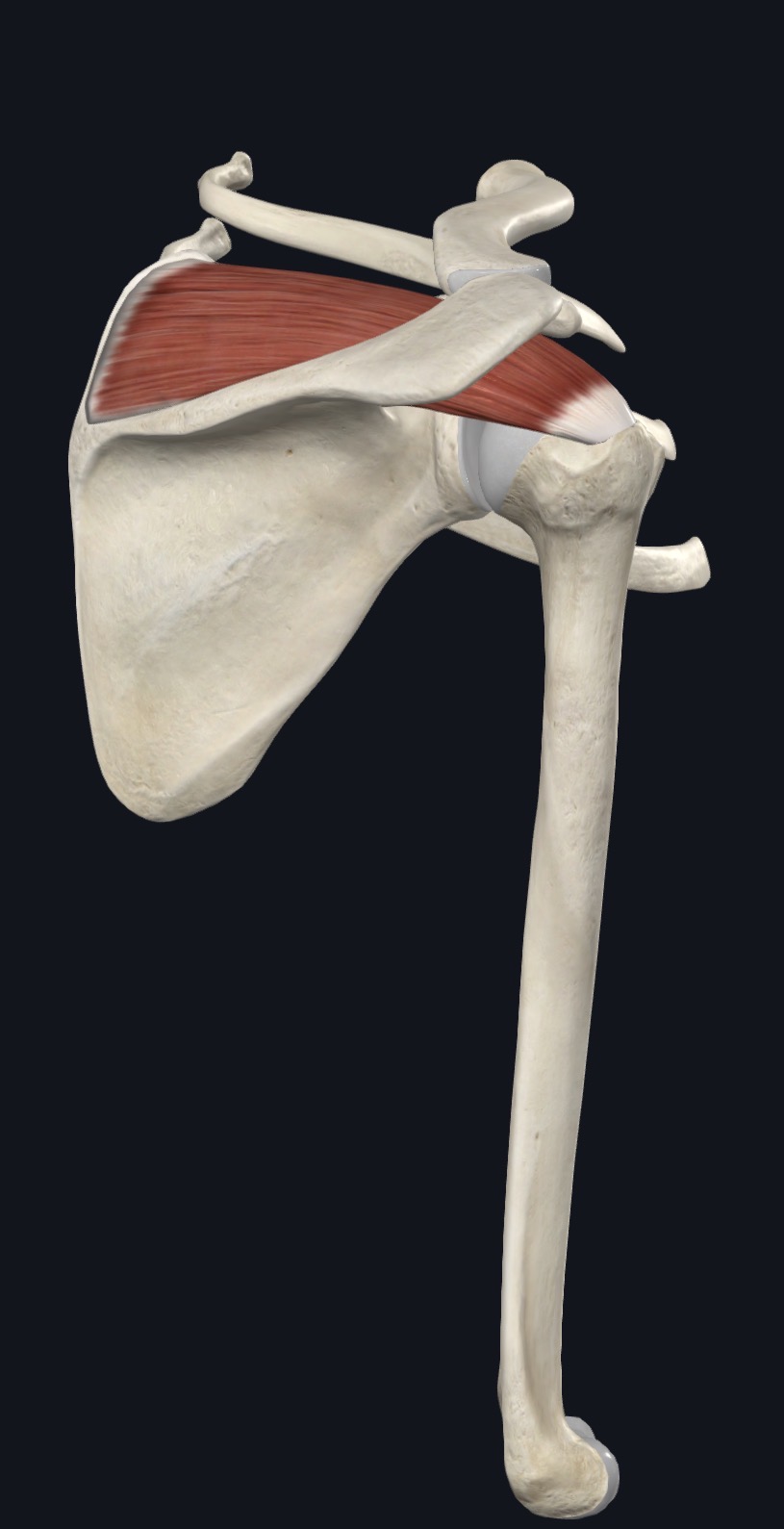
Supraspinatus is a small, deep rotator cuff muscle that sits in the supraspinous fossa, the narrow bony groove above the spine of the scapula, largely covered by the trapezius. Despite its small size, it is functionally significant and clinically important — it is the rotator cuff muscle most frequently involved in tendinopathy and tearing.
Supraspinatus works closely with the deltoid during shoulder abduction, helping to initiate the movement and to keep the humeral head properly seated in the glenoid fossa as the larger, more powerful deltoid does most of the lifting work through the rest of the range.
For massage therapists, understanding supraspinatus is essential background for understanding shoulder impingement, rotator cuff pathology, and the overall mechanics of arm elevation.
Section 02 of 20
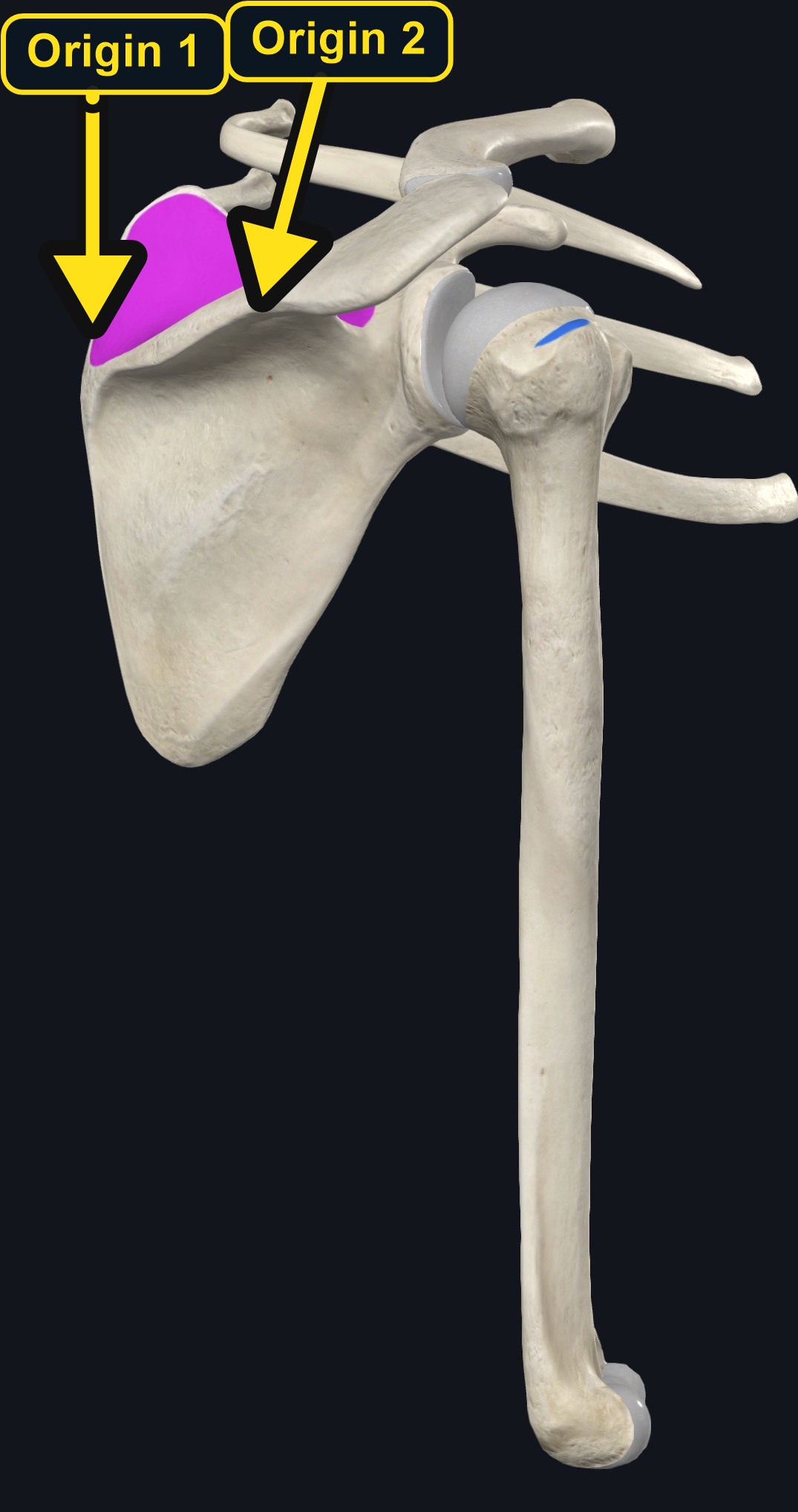
Origin
| Origin | Supraspinous fossa of the scapula — the narrow depression above the spine of the scapula, on the posterior surface of the shoulder blade. |
|---|
Section 03 of 20
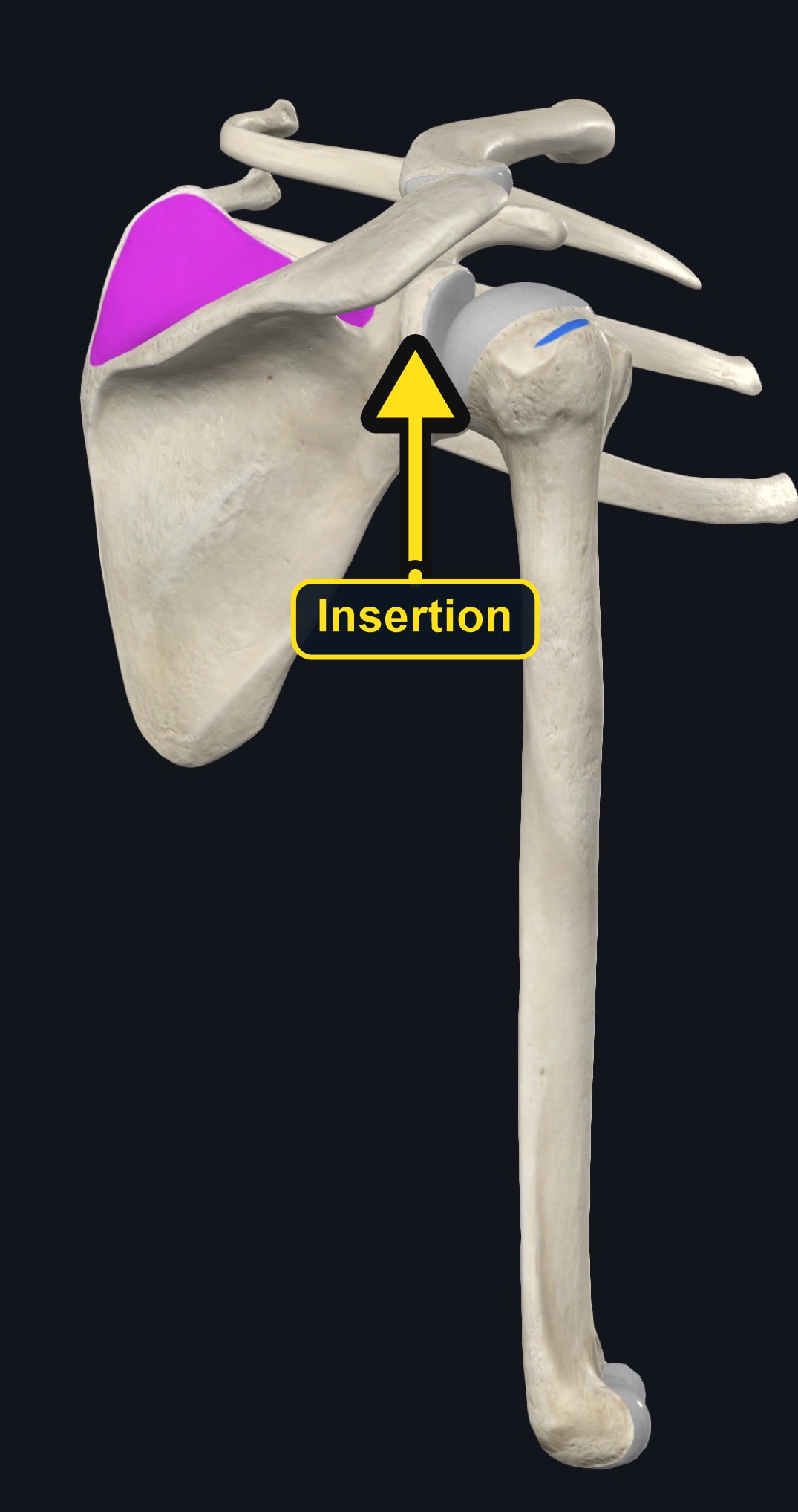
Insertion
| Insertion | Superior facet of the greater tubercle of the humerus, with fibers blending into the superior shoulder joint capsule. The tendon passes beneath the acromion and the coracoacromial ligament on its way to this insertion — a narrow passage relevant to impingement discussed below. |
|---|
Section 04 of 20
Actions
No dedicated action video is currently available. This movement is explained below and video will be added when verified source media becomes available.
| Primary action | Initiation of shoulder abduction (the first 15 degrees or so) and compression of the humeral head into the glenoid. |
|---|---|
| Secondary actions | Assists external rotation and works with the deltoid for the rest of abduction. |
| Movement at the joint | Glenohumeral (shoulder) joint. |
| Heads / fiber groups | Single muscle belly; its tendon passes under the acromion. |
| Functional examples | Starting to lift the arm to the side; holding the arm out; reaching to a shelf; carrying a bag at the side. |
Primary actions
- Initiates and assists abduction of the shoulder, particularly the first approximately 15 degrees, before the deltoid becomes the dominant abductor for the remainder of the range.
Secondary / functional role
- Works with the other rotator cuff muscles to dynamically stabilize and center the humeral head in the glenoid fossa throughout arm movement, resisting the upward pull of the deltoid that would otherwise tend to shift the humeral head superiorly.
Section 05 of 20
Nerve Innervation
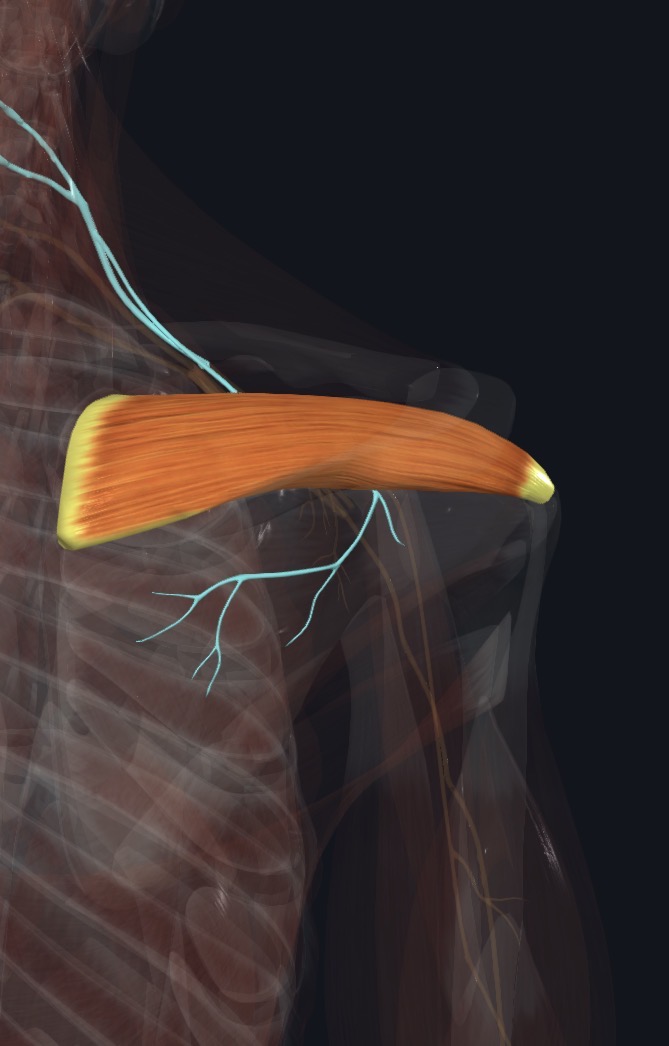
| Nerve | Suprascapular nerve |
|---|---|
| Roots | C5, C6 |
| Relationship | The suprascapular nerve arises from the upper trunk of the brachial plexus and passes through the suprascapular notch (deep to the transverse scapular ligament) to reach and supply supraspinatus first, before continuing around the scapular spine through the spinoglenoid notch to supply infraspinatus. The suprascapular notch is a recognized site of potential nerve compression. |
Section 06 of 20
Blood Supply
Supraspinatus is primarily supplied by the suprascapular artery, with some additional contribution from the dorsal scapular artery in certain individuals. Clinically, the tendon's insertion area is also recognized as having a relatively less robust blood supply in some individuals ("critical zone"), which is discussed as one possible contributing factor in tendinopathy and degenerative tearing.
Section 07 of 20
Pictures and Visual Anatomy
Section 08 of 20
Functional Movement
Supraspinatus starts arm elevation to the side and keeps the humeral head seated against the socket while the deltoid lifts the arm. It is used when reaching to a shelf, lifting a bag, combing hair, and holding the arm out to the side.
Section 09 of 20
Synergists and Antagonists
Synergists
Deltoid (abduction, especially middle fibers).
Antagonists
Adductor muscles of the shoulder, such as latissimus dorsi, teres major, and pectoralis major.
Section 10 of 20
Palpation and Location
Client position
Client prone or seated, with the arm relaxed.
Landmarks and technique
- Locate the spine of the scapula, then move superior to it — supraspinatus fills the narrow supraspinous fossa above the spine, though it is largely covered by the upper trapezius, making direct palpation more subtle than for infraspinatus below the spine.
- Gentle, broad pressure through the upper trapezius in this fossa, combined with asking the client to initiate a small amount of shoulder abduction, can help the therapist appreciate the muscle's general location and tone, though isolating it precisely from the overlying trapezius by palpation alone is difficult.
- The distal tendon, near the greater tubercle, is not directly palpable in most people due to the overlying deltoid and acromion, but the general area just below the lateral edge of the acromion is a common region of reported tenderness in supraspinatus-related conditions.
- Because this tendon is a common source of genuine pathology, avoid aggressive direct pressure in this region in any client reporting significant shoulder pain, weakness, or a history of rotator cuff injury.
Section 11 of 20
Massage Therapy Relevance
Supraspinatus is one of the most clinically significant muscles in the shoulder for massage therapists to understand, because it is the rotator cuff tendon most frequently associated with tendinopathy, partial tearing, and full-thickness tears, particularly with advancing age and repetitive overhead activity.
Clients reporting shoulder pain with overhead reaching, a painful arc during arm elevation, or night pain when lying on the affected shoulder may have supraspinatus-related pathology contributing to their symptoms, though — as with all shoulder pain — several other structures can produce a similar presentation.
General tension in the upper trapezius overlying supraspinatus is also extremely common in massage therapy clients and is often addressed together with this deeper structure as part of general upper shoulder/neck work.
Section 12 of 20
Dysfunction: What Happens When Movement Goes Wrong
Changes in how a muscle works can change how a joint moves. The points below describe possibilities that may be associated with altered muscle function; they are not diagnoses, and one muscle is never assumed to be the sole cause of a problem.
When the muscle is weak
Weakness may make it hard to start or hold arm elevation and may allow the humeral head to move upward, which may be associated with pinching under the acromion and shoulder pain.
When it is tight or shortened
Tightness may be associated with limited adduction and reaching across the body and may contribute to superior shoulder tension.
When it is overused
Repetitive overhead work may load the tendon and may contribute to pain in the upper shoulder that is worse with the arm raised.
When it is strained
Tendinopathy or a tear may cause a painful arc and weakness in abduction; this is a common shoulder problem that needs assessment, not diagnosis by massage.
When it is inhibited or others compensate
Reduced activation may be associated with more reliance on the deltoid and upper trapezius and altered shoulder mechanics.
When it does not coordinate well with synergists and antagonists
Poor timing with the deltoid and the other rotator cuff muscles may reduce humeral head control and may be associated with subacromial pain.
Section 13 of 20
Conditions, Pathologies, and Pain Relationships
Supraspinatus tendinopathy
What it is: Irritation or degenerative change of the supraspinatus tendon, commonly near its insertion.
Why the muscle may be involved: Repetitive overhead loading and the tendon's relatively limited blood supply in some individuals.
Typical symptoms: Pain with overhead reaching, a painful arc typically in the mid-range of abduction, and sometimes pain when lying on the affected side at night.
Similar-presenting conditions: Subacromial impingement, subacromial bursitis, biceps tendinopathy, other rotator cuff involvement.
Refer when: Persistent or worsening pain, or significant weakness, warrants medical/orthopedic evaluation.
Rotator cuff tear (partial or full-thickness)
What it is: A structural tear of the supraspinatus tendon; supraspinatus is the most commonly torn rotator cuff tendon.
Why the muscle may be involved: Cumulative degenerative change with age, combined with mechanical loading and, in some cases, acute trauma.
Typical symptoms: Weakness with arm elevation, pain, and in some cases an inability to actively initiate abduction (sometimes tested clinically as a "drop arm" sign, which is a medical assessment, not a massage technique).
Similar-presenting conditions: Tendinopathy without tear, suprascapular nerve entrapment, adhesive capsulitis (frozen shoulder), cervical radiculopathy.
Refer when: Any suspected tear (significant weakness, especially after trauma, or inability to actively lift the arm) warrants medical/orthopedic evaluation, not massage treatment alone.
Subacromial impingement syndrome
What it is: Compression of subacromial structures, including the supraspinatus tendon and the subacromial bursa, between the humeral head and the acromion during arm elevation.
Why the muscle may be involved: The supraspinatus tendon passes directly through this narrow subacromial space.
Typical symptoms: Painful arc during abduction, often with pain worsening in the mid-range and improving near full elevation.
Similar-presenting conditions: Supraspinatus tendinopathy or tear, bursitis, AC joint pathology.
Refer when: Persistent, progressive, or significantly function-limiting symptoms warrant medical evaluation.
Calcific tendinitis
What it is: Deposition of calcium within the supraspinatus tendon, which can be asymptomatic or produce significant acute pain, particularly during a resorptive phase.
Why the muscle may be involved: The supraspinatus tendon is the most common site for this condition in the shoulder.
Typical symptoms: Can range from mild ache to sudden, severe, disabling shoulder pain.
Similar-presenting conditions: Acute bursitis, tendon tear, infection (rare but important to rule out with sudden severe symptoms plus fever/systemic signs).
Refer when: Sudden, severe shoulder pain — especially with significant loss of motion — warrants medical evaluation and is not an appropriate presentation for massage treatment until assessed.
Section 14 of 20
Example Clinical Relationship
The "critical zone" and why this tendon is so often involved
The supraspinatus tendon passes through a genuinely narrow anatomical corridor — between the head of the humerus below and the acromion/coracoacromial ligament above — sometimes called the subacromial space. Combined with an area of relatively reduced blood supply near its insertion in some individuals (often referred to as the tendon's "critical zone"), this anatomical arrangement is commonly discussed as contributing to why supraspinatus is the most frequently affected rotator cuff tendon.
Massage therapists should understand this anatomical vulnerability as useful background knowledge, not as license to diagnose "impingement" or "a torn rotator cuff" in a client. Shoulder pain with overhead movement has multiple possible causes that can look similar on the surface, and appropriate differentiation (including, when needed, imaging or specialist orthopedic assessment) is outside massage therapy scope. Within scope, therapists can address general soft tissue tension in the surrounding shoulder girdle musculature and encourage appropriate medical evaluation for persistent or significant shoulder pain, especially with weakness.
Section 15 of 20
Massage and Treatment Approaches
The following approaches may be considered for a generally healthy client with no contraindications present.
Broad warming strokes
Why: Prepares the upper trapezius and shoulder girdle tissue overlying supraspinatus.
Direction/location: Broad strokes across the upper trapezius and supraspinous fossa region.
Pressure: Light to moderate.
Gentle compression
Why: Can address general tension in the overlying trapezius and the accessible portion of supraspinatus.
Direction/location: Through the trapezius into the supraspinous fossa, guided by client feedback.
Pressure: Light to moderate; avoid aggressive pressure directly toward the acromion/subacromial region, especially in clients reporting shoulder pain.
Myofascial techniques
Why: May help address general fascial tension across the upper shoulder girdle.
Direction/location: Slow, broad contact across the supraspinous region and upper trapezius.
Pressure: Light, sustained.
Gentle passive/active movement
Why: Very gentle passive range-of-motion assessment within a comfortable range can help gauge general shoulder mobility, within general massage-therapy scope.
Pressure: Light; never force into a painful arc or beyond comfortable range.
Section 16 of 20
Precautions and Contraindications
Use caution or avoid the area when any of the following are present
- Acute shoulder injury or suspected rotator cuff tear.
- Sudden, severe shoulder pain of unclear cause (which may include calcific tendinitis or other acute pathology).
- Recent shoulder surgery without medical clearance for massage.
- Significant weakness with arm elevation, especially after trauma.
- Signs of acute inflammation or infection.
Vulnerable structures — general awareness
- The subacromial space, where the supraspinatus tendon and subacromial bursa are frequently irritated in clients with shoulder pain — avoid aggressive, narrow, deep pressure here.
- Follow client feedback closely; a painful arc or sharp pain with pressure or movement should prompt a lighter approach or referral rather than continued work into the same range.
Section 17 of 20
Red Flags and When to Refer
Postpone massage and refer for medical evaluation if a client reports or shows:
- Significant or sudden weakness lifting the arm, especially after trauma.
- Inability to actively hold the arm elevated once passively raised (possible large rotator cuff tear).
- Sudden, severe, disabling shoulder pain.
- Numbness, tingling, or other neurological symptoms in the shoulder or arm.
- Signs of infection (fever, redness, warmth, swelling).
- Unexplained, severe, or worsening pain not clearly related to a specific movement or activity.
Section 18 of 20
Study Summary
Supraspinous fossa of the scapula.
Superior facet of the greater tubercle of the humerus.
Initiates/assists shoulder abduction (first ~15 degrees); stabilizes the humeral head.
Suprascapular nerve (C5, C6).
Most commonly injured rotator cuff tendon; central to discussions of shoulder impingement and overhead-reaching pain.
Section 19 of 20
Instructor Narration
Open narration script (readable / for audio conversion)
Section 20 of 20