Section 01 of 20
Introduction
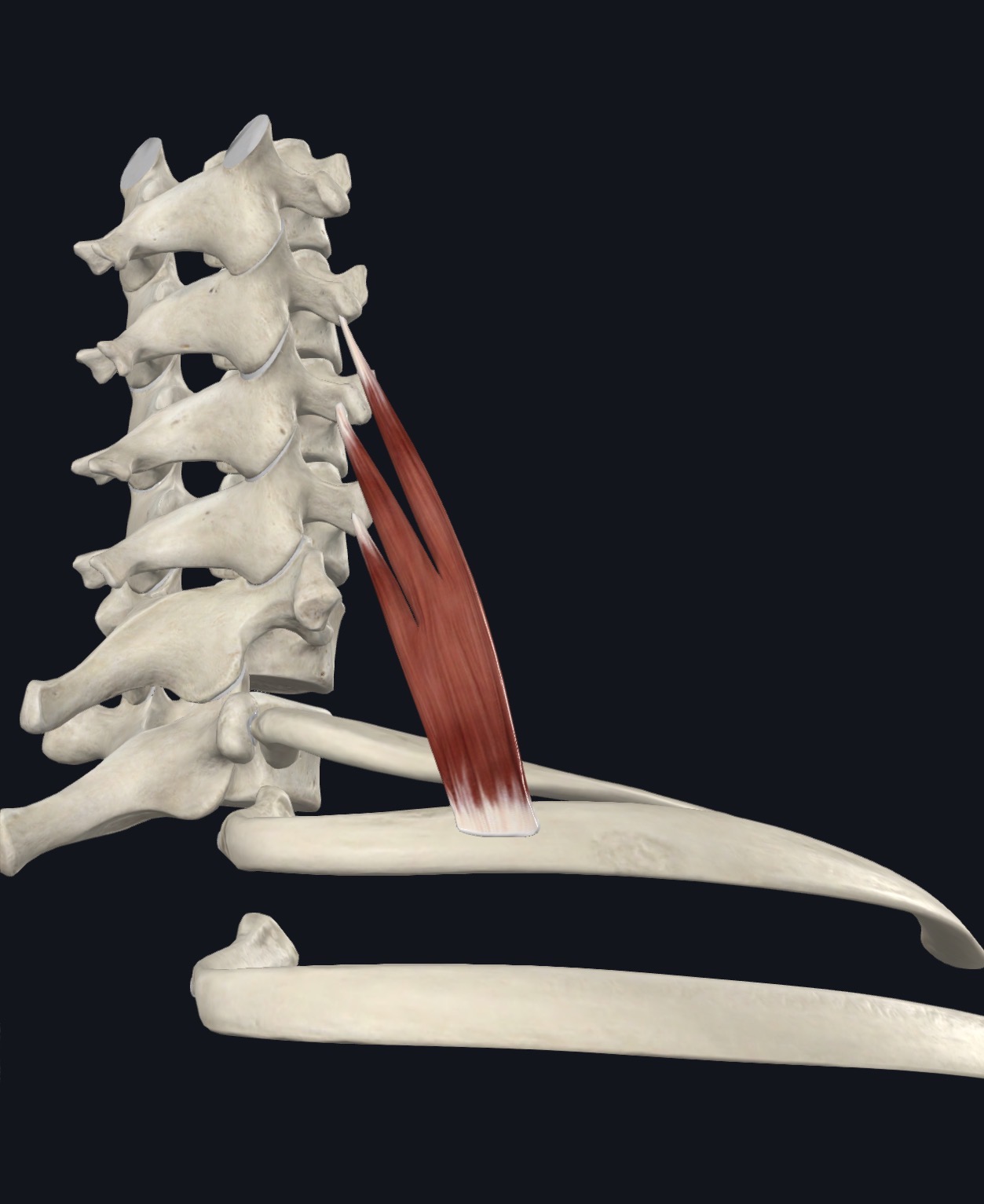
Splenius capitis is a broad, flat muscle on the back and side of the neck. Its name comes from the Greek word for bandage, describing the way it wraps obliquely across the deeper neck muscles like a strap.
It lies deep to the trapezius and sternocleidomastoid and runs upward and outward from the lower neck and upper back to the base of the skull, just behind the ear. Together with splenius cervicis below it, it forms the splenius group, which helps hold the head upright and turns the face to the same side.
Section 02 of 20
Origin
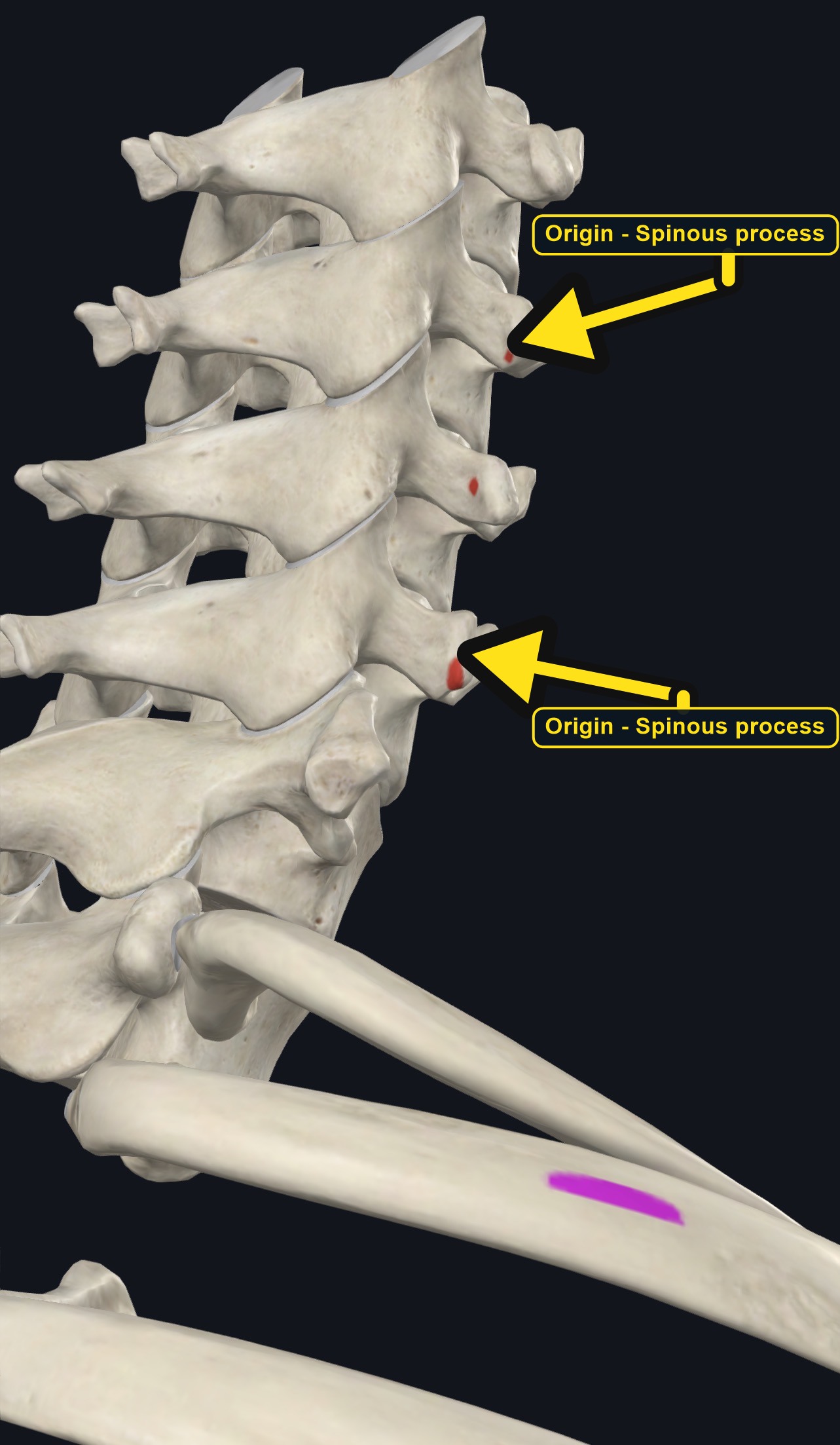
| Origin | The lower half of the nuchal ligament and the spinous processes of C7 through about T3–T4. |
|---|
Section 03 of 20
Insertion
| Insertion | The mastoid process of the temporal bone and the lateral part of the superior nuchal line of the occipital bone, deep to sternocleidomastoid. |
|---|
An anatomical image for this section will be added when verified source media becomes available.
Section 04 of 20
Actions
| Primary action | Extension of the head and neck. |
|---|---|
| Secondary actions | Lateral flexion and same-side rotation of the head. |
| Movement at the joint | Cervical spine and the atlanto-occipital region. |
| Heads / fiber groups | Single broad muscle in the splenius group. |
| Functional examples | Holding the head upright at a screen; looking up; turning to check over the shoulder; looking to the side while driving. |
Extension of the head and neck
Both sides together tilt the head back and help hold it upright.
Lateral flexion of the head and neck
One side tilts the head toward that shoulder.
Rotation of the head
One side turns the face toward the same side.
Section 05 of 20
Nerve Innervation
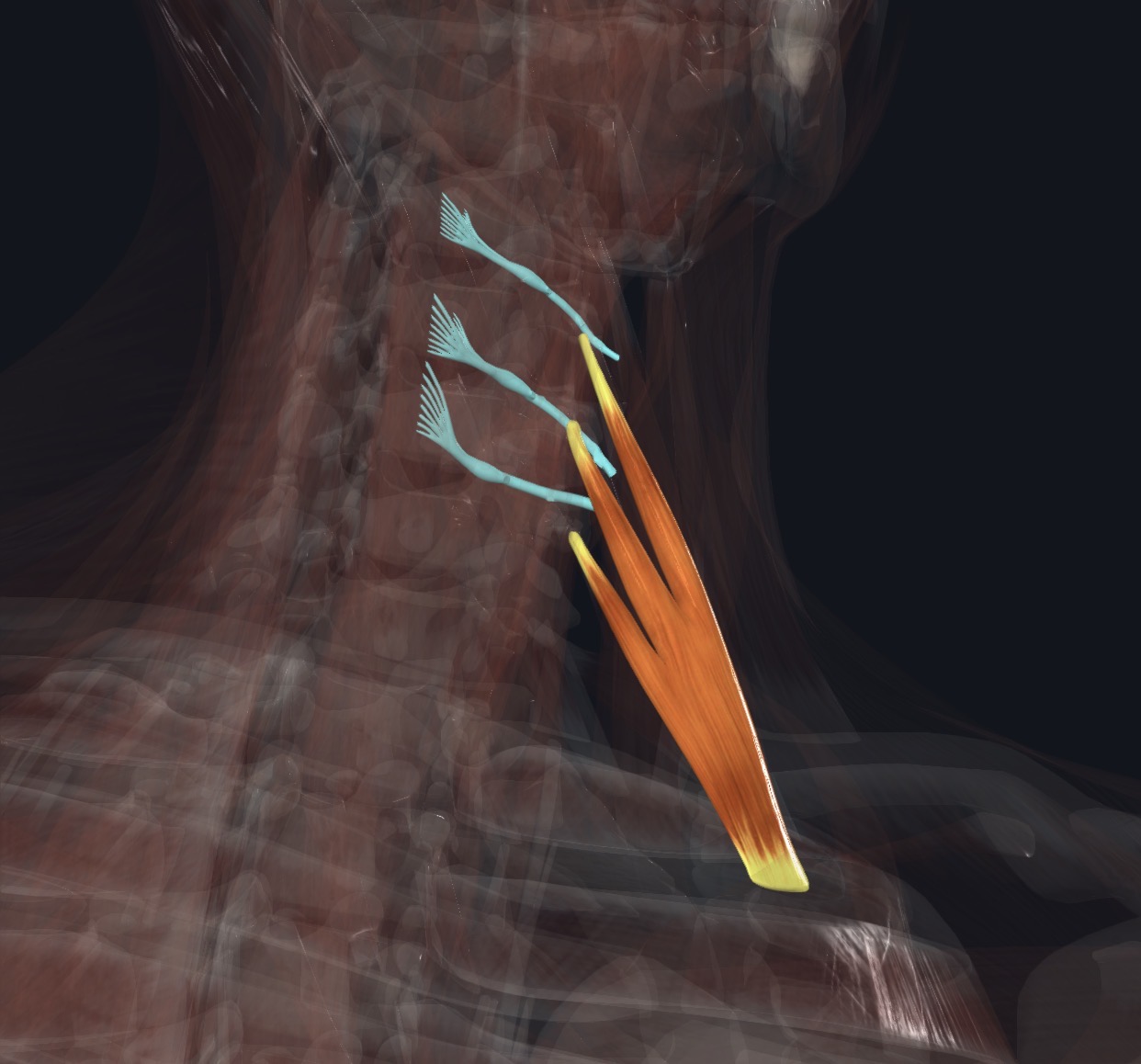
| Nerve | Posterior (dorsal) rami of the middle cervical spinal nerves, roughly C3–C6. |
|---|
The greater occipital nerve, which carries sensation from the back of the scalp, passes near the upper attachment of splenius capitis. Tension in this area is sometimes discussed alongside occipital headache, though many structures can be involved.
Section 06 of 20
Blood Supply
| Blood | The occipital artery and the deep cervical artery. |
|---|
Section 07 of 20
Pictures and Visual Anatomy
Section 08 of 20
Functional Movement
Splenius capitis works when holding the head upright while reading or working at a screen, looking up, and turning the head to check over the shoulder or look to the side, as in driving or watching sports.
Section 09 of 20
Synergists and Antagonists
Synergists: splenius cervicis, semispinalis capitis, and the suboccipital muscles (extension), and sternocleidomastoid on the opposite side (same-side rotation). Antagonists: the deep neck flexors (longus colli and longus capitis) and sternocleidomastoid for head flexion, and the opposite-side splenius for rotation.
Section 10 of 20
Palpation and Location
Client position and technique
Position the client prone with the forehead supported, or supine with the head cradled. Locate the mastoid process, then follow the muscle diagonally down toward the lower neck and upper back, deep to the upper trapezius. Ask the client to gently extend or rotate the head to feel the muscle tighten under the fingers.
Protect nearby structures
Use slow, moderate pressure and avoid sustained deep pressure near the base of the skull, where the vertebral artery and occipital nerves lie close by. Avoid forceful neck rotation or extension, and stop if the client reports dizziness, visual changes, tingling, or sharp pain.
Section 11 of 20
Massage Therapy Relevance
Splenius capitis is commonly involved in neck stiffness, especially after sleeping in an awkward position or with prolonged screen work, and is often discussed with tension-type and occipital headache. Headache has many causes, so careful screening is essential.
Section 12 of 20
Dysfunction: What Happens When Movement Goes Wrong
Changes in how a muscle works can change how a joint moves. The points below describe possibilities that may be associated with altered muscle function; they are not diagnoses, and one muscle is never assumed to be the sole cause of a problem.
When the muscle is weak
Weakness may reduce head control and neck endurance and may shift work to the upper trapezius and the deeper neck extensors.
When it is tight or shortened
Tightness may be associated with limited neck rotation and side-bending and with a stiff, aching neck.
When it is overused
Prolonged forward head posture, screen work, and sleeping in an awkward position may overload the muscle and may contribute to neck and head pain.
When it is strained
A strain may cause sharp neck pain and stiffness, often after waking, sometimes called a wry neck; disc and joint problems can look similar.
When it is inhibited or others compensate
Reduced activation may be associated with more work by the upper trapezius and the deep neck extensors.
When it does not coordinate well with synergists and antagonists
Poor coordination with the deep neck extensors, sternocleidomastoid, and the scapular muscles may alter head position and may be associated with neck and head symptoms.
Section 13 of 20
Conditions, Pathologies, and Pain Relationships
Neck stiffness and "wry neck"
Sudden strain, often from sleeping awkwardly, may cause a stiff, painful neck with limited rotation.
Tension-type and cervicogenic headache
Tightness in splenius capitis may be associated with a headache that spreads from the neck toward the temple or behind the eye.
Postural overload
Prolonged forward head posture may keep the muscle working hard and may be associated with chronic neck and upper back tension.
Differential considerations
Cervical disc and facet joint problems, migraine, occipital neuralgia, and vascular headaches can all cause similar neck and head symptoms.
Section 14 of 20
Example Clinical Relationship
A client wakes up with a stiff, painful neck that limits turning the head to one side. Splenius capitis may be involved, and the pattern may be associated with a wry neck or muscle strain, but joint and disc problems can look similar. Gentle work along the neck may support comfort, while a thunderclap headache, dizziness, or vision changes needs referral.
Section 15 of 20
Massage and Treatment Approaches
For healthy, non-acute tissue, position the client supine with the head supported. Begin with light effleurage over the back of the neck and upper back, then use gentle kneading and slow strokes along the diagonal fibers, and consider gentle neck rotation and side-bending within comfort.
| Movement | Use gentle neck rotation and side-bending within comfort; never force the neck. |
|---|---|
| Regional work | Consider splenius cervicis, semispinalis capitis, the suboccipitals, upper trapezius, and levator scapulae when assessment supports it. |
| Avoid | Deep pressure at the base of the skull, forceful rotation or extension, or any point that reproduces dizziness or arm tingling. |
Section 16 of 20
Precautions and Contraindications
Precautions and contraindications
- Recent neck injury or whiplash, suspected fracture, or instability.
- Use caution with known vertebral or carotid artery disease, severe osteoporosis, or anticoagulant use.
- Avoid sustained neck rotation and extension, especially with dizziness.
- Stop if pressure causes dizziness, visual changes, tingling, or sharp pain.
Section 17 of 20
Red Flags and When to Refer
Red flags and referral
- Sudden, severe (thunderclap) headache, or the worst headache of the client's life.
- Headache or neck pain with dizziness, vision changes, slurred speech, facial numbness, or weakness on one side.
- Neck pain with fever, stiff neck, confusion, or a rash.
- New headache after a head or neck injury, or unexplained weight loss.
Section 18 of 20
Study Summary
Attachments
Origin: nuchal ligament and C7–T3/T4 spinous processes. Insertion: mastoid process and lateral superior nuchal line.
Actions
Extension, lateral flexion, and same-side rotation of the head and neck.
Supply
Posterior rami of C3–C6; occipital and deep cervical arteries.
Section 19 of 20
Instructor Narration
Open narration transcript
Splenius capitis is a broad strap muscle that wraps from the lower neck and upper back to the base of the skull, giving it a name that means bandage.
It arises from the lower nuchal ligament and the spinous processes of C7 to about T3, and inserts on the mastoid process and the lateral superior nuchal line, deep to sternocleidomastoid.
Both sides extend the head, and one side tilts and turns the head to that side. Splenius cervicis and semispinalis capitis help it, and the deep neck flexors oppose it.
The posterior rami of the middle cervical nerves supply it, roughly C3 to C6, and the occipital and deep cervical arteries provide its blood.
Palpate from the mastoid process diagonally down to the lower neck, deep to the trapezius, with the client gently extending or rotating the head. Avoid deep pressure at the base of the skull and forceful movements.
Neck stiffness, tension-type headache, and postural overload are common, and disc, nerve, and vascular problems can overlap. Refer a thunderclap headache, headache with dizziness or vision or speech changes, neck pain with fever and stiffness, or a new headache after injury.
Remember: C7 to T3 spinous processes to the mastoid process; head extension, side-bending, and same-side rotation; posterior rami C3 to C6.
Section 20 of 20