Section 01 of 20
Introduction
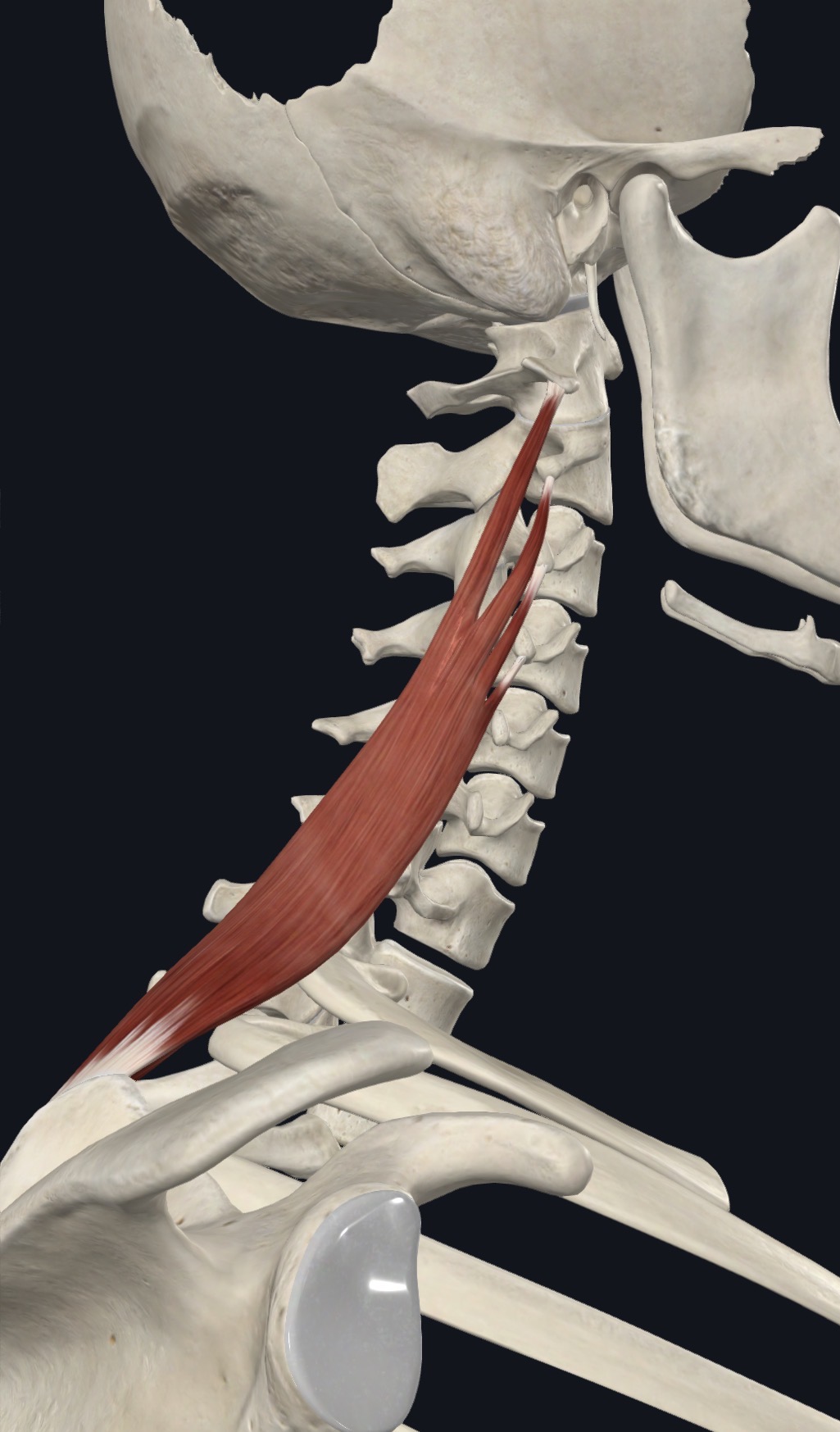
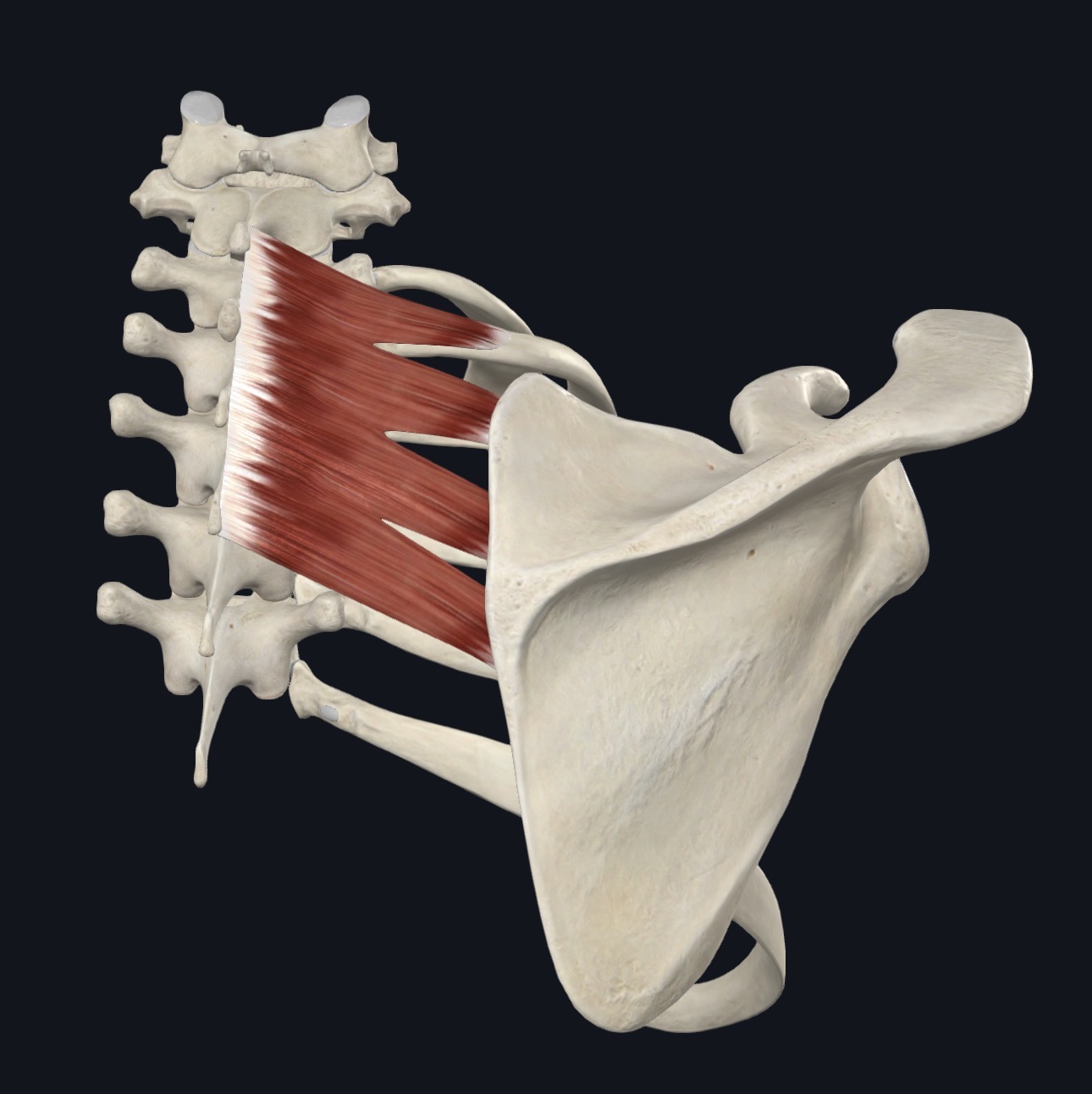
Serratus posterior superior is a thin, flat, quadrilateral muscle in the upper back, deep to the rhomboids and trapezius. It runs downward and outward from the lower cervical and upper thoracic spinous processes to the upper ribs, where it ends in finger-like (serrated) slips.
Like its lower counterpart, serratus posterior superior is a minor accessory muscle of breathing rather than a major mover. Its main role is to help lift the upper ribs during inhalation, working with the external intercostals and the scalenes.
Section 02 of 20
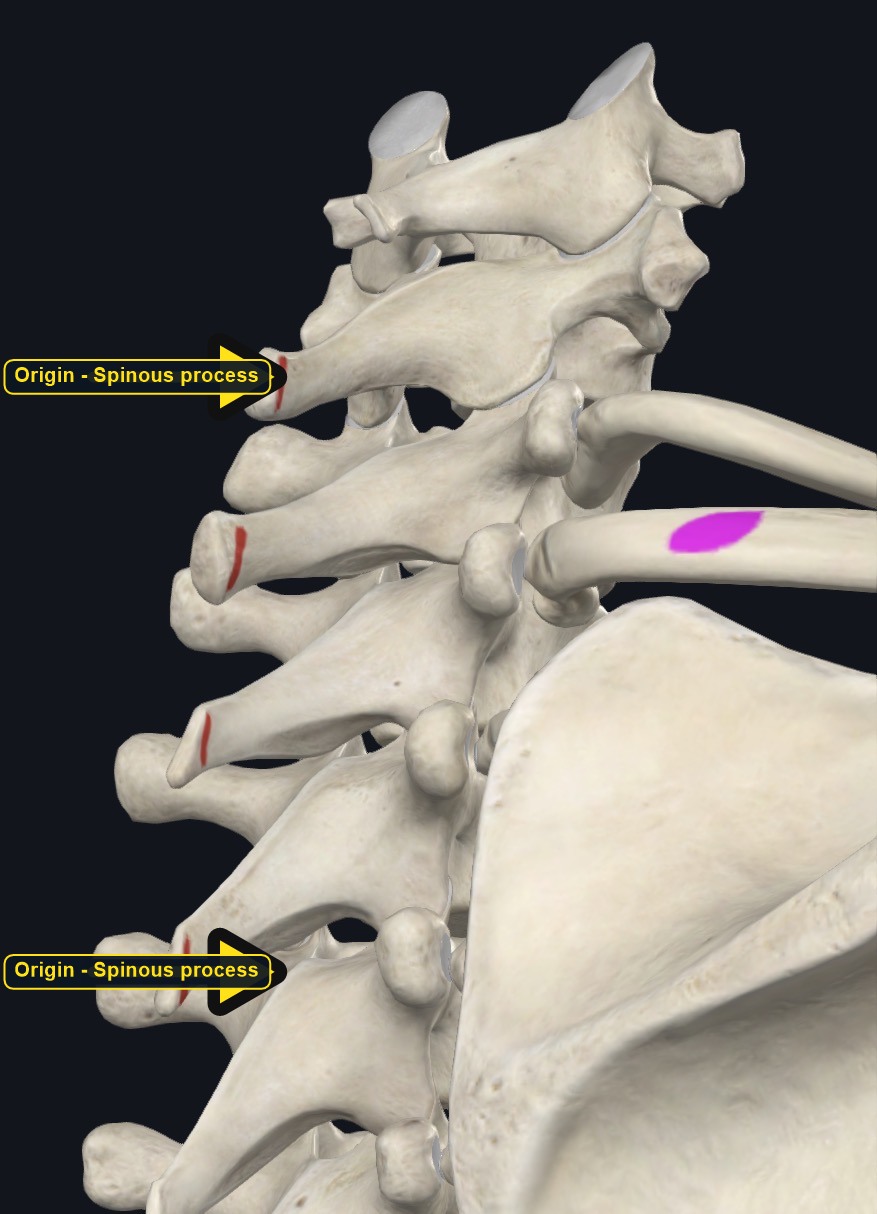
Origin
| Origin | The lower part of the nuchal ligament and the spinous processes of C7–T3 (sometimes T2), by a thin aponeurosis. |
|---|
Section 03 of 20
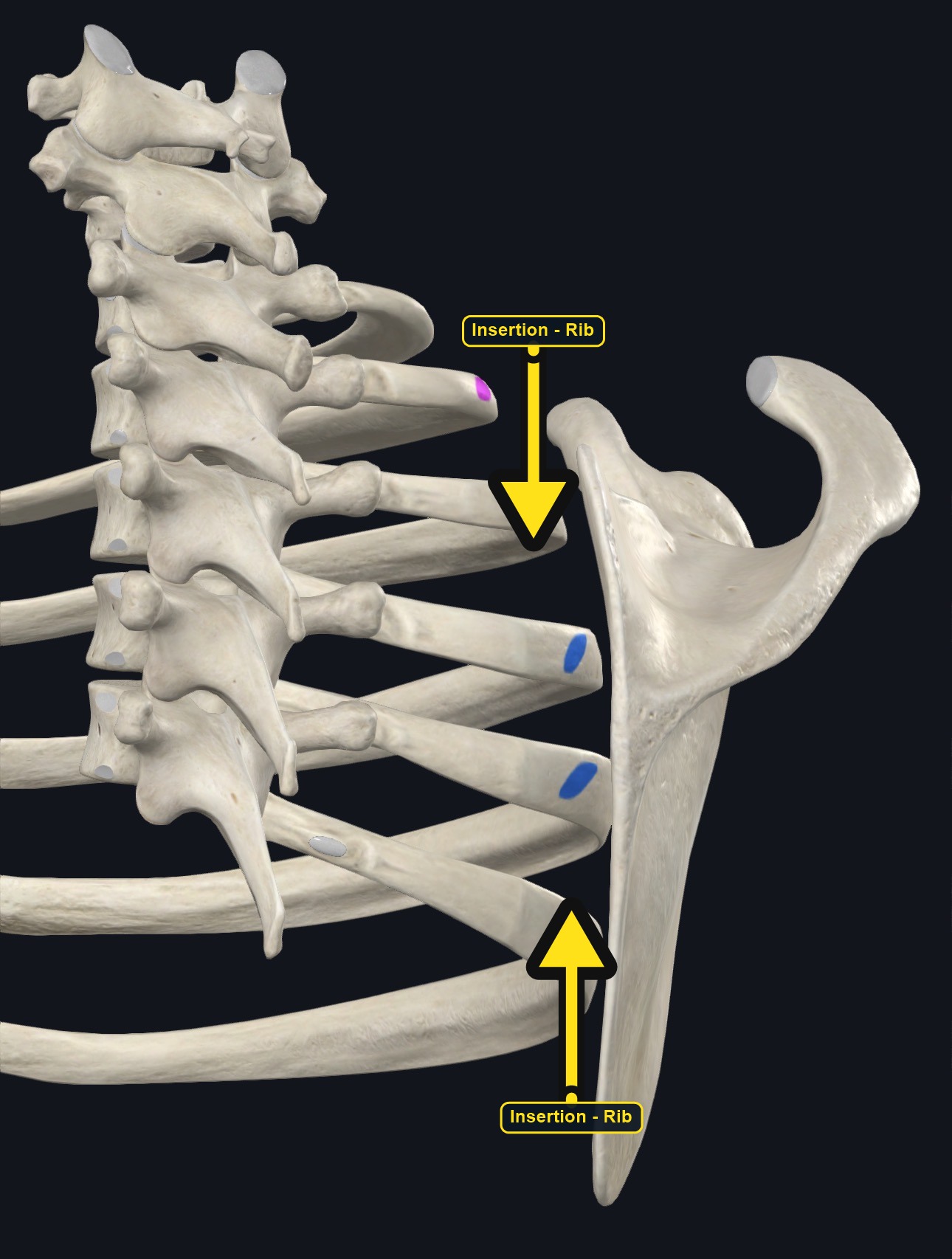
Insertion
| Insertion | The superior borders of ribs 2–5, lateral to their angles. |
|---|
Section 04 of 20
Actions
No dedicated action video is currently available. This movement is explained below and video will be added when verified source media becomes available.
| Primary action | Elevation of the upper ribs during inhalation. |
|---|---|
| Secondary actions | Accessory support for deep or forceful breathing. |
| Movement at the joint | Costovertebral joints of ribs 2–5. |
| Heads / fiber groups | Single thin quadrilateral sheet. |
| Functional examples | Deep or forceful inhalation; singing; playing a wind instrument; breathing hard during illness or exercise. |
Elevation of the upper ribs
Raises ribs 2–5 during inhalation, helping expand the upper chest.
Accessory breathing support
Works with the external intercostals and scalenes to assist deep or forceful inhalation.
Section 05 of 20
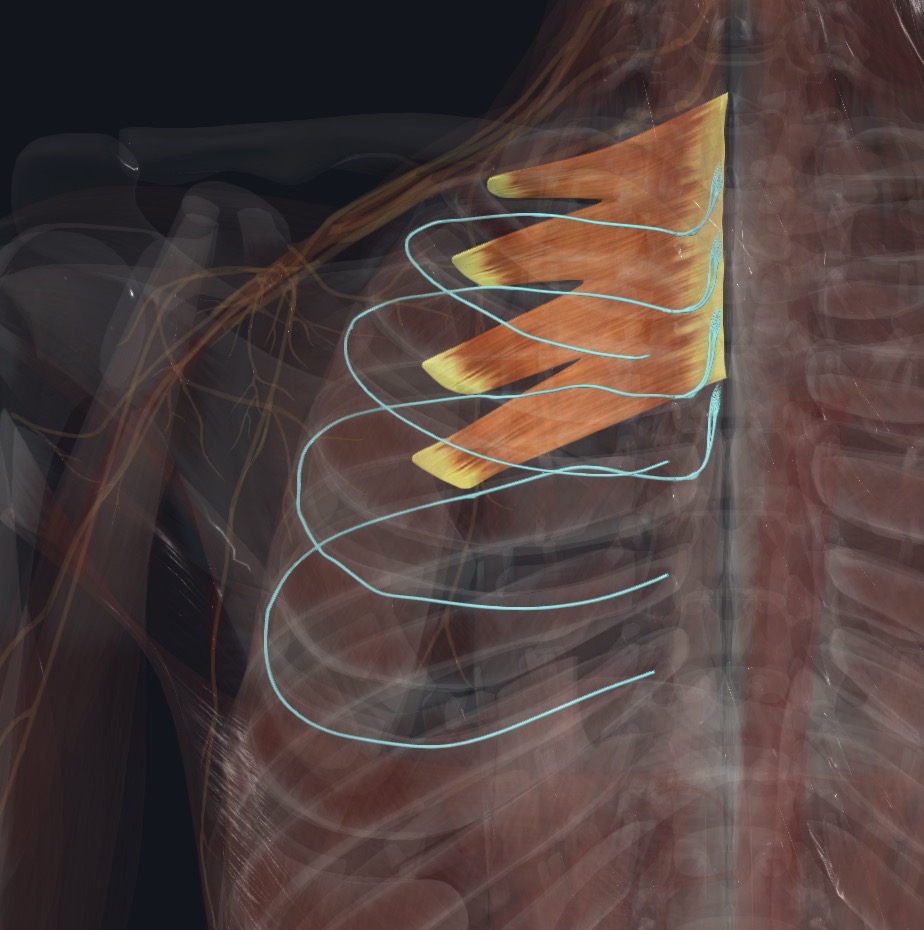
Nerve Innervation
| Nerve | Anterior rami of the upper thoracic spinal nerves, roughly T1–T4. |
|---|
The nerves that supply this muscle are shared with the upper rib and chest wall region. Sharp band-like pain along a rib, or pain with breathing that follows a rib's path, may reflect an intercostal nerve or rib problem, not only muscle tightness.
Section 06 of 20
Blood Supply
| Blood | Posterior intercostal arteries and branches of the transverse cervical artery. |
|---|
Section 07 of 20
Pictures and Visual Anatomy
Section 08 of 20
Functional Movement
Serratus posterior superior becomes active during deep or labored breathing, such as during vigorous exercise, singing, playing a wind instrument, or breathing hard when unwell. During quiet breathing it contributes very little.
Section 09 of 20
Synergists and Antagonists
Synergists: the external intercostals, the scalenes, and sternocleidomastoid (elevation of the upper ribs during forceful inhalation). Antagonists: the internal intercostals and the abdominal muscles (rib depression during exhalation).
Section 10 of 20
Palpation and Location
Client position and technique
Position the client prone with the arms relaxed at the sides. Locate the medial border of the scapula and the spinous processes of the lower neck and upper back, then feel for the thin sheet of tissue deep to the rhomboids and trapezius, over the upper ribs. Because it is thin and deep, it is felt as a subtle change in tissue tension rather than a distinct band; ask for a deep breath in to notice subtle rib movement in the area.
Protect nearby structures
The upper ribs and the lung apex lie close to this region. Use light to moderate pressure, avoid pressing sharply on the ribs, and stop if the client reports sharp pain, difficulty breathing, or numbness or tingling in the arm.
Section 11 of 20
Massage Therapy Relevance
Serratus posterior superior is a minor contributor to upper back tension, most often considered in singers, wind instrument players, and people with chronic cough or labored breathing. Most upper back pain in this region comes from the rhomboids, trapezius, levator scapulae, or the cervical and thoracic spine.
Section 12 of 20
Dysfunction: What Happens When Movement Goes Wrong
Changes in how a muscle works can change how a joint moves. The points below describe possibilities that may be associated with altered muscle function; they are not diagnoses, and one muscle is never assumed to be the sole cause of a problem.
When the muscle is weak
Weakness is difficult to detect on its own; the scalenes and external intercostals carry most of the work of rib elevation.
When it is tight or shortened
Tightness may be associated with a subtle ache between the shoulder blades near the upper ribs, hard to distinguish from the surrounding larger muscles.
When it is overused
Prolonged coughing, forceful singing, or heavy breathing may overload the muscle and may contribute to a dull ache in the upper back.
When it is strained
A strain is uncommon and mild; persistent or severe pain in this area more often points to the ribs, spine, or nerves.
When it is inhibited or others compensate
Reduced activation is difficult to detect clinically, given its small size and overlap with larger back and rib muscles.
When it does not coordinate well with synergists and antagonists
Poor coordination with the scalenes and external intercostals may be associated with inefficient upper-chest breathing mechanics.
Section 13 of 20
Conditions, Pathologies, and Pain Relationships
Minor strain from forceful breathing
Prolonged coughing, forceful singing, or heavy breathing during illness or exercise may be associated with a dull ache between the shoulder blades near the upper ribs.
Overlap with upper back tension
Because it lies deep to the rhomboids and trapezius, its contribution to upper back pain is hard to separate from these larger, more commonly involved muscles.
Rib-related pain
Tenderness near the upper rib attachments may sometimes be associated with rib or intercostal irritation rather than the muscle itself.
Differential considerations
Cervical and thoracic disc or facet joint problems, rib dysfunction, thoracic outlet syndrome, and lung conditions can all cause pain in this region.
Section 14 of 20
Example Clinical Relationship
A wind instrument player reports a mild ache between the shoulder blades near the top of the rib cage after long practice sessions involving deep, controlled breathing. Serratus posterior superior may be a minor contributor, along with the rhomboids and trapezius, and the pattern may be associated with overuse from breath control work, but rib, spine, and nerve problems can look similar. Gentle work in the region may support comfort, while chest pain with sweating, sharp rib pain with breathlessness, or new arm weakness needs referral.
Section 15 of 20
Massage and Treatment Approaches
For healthy, non-acute tissue, position the client prone with the arms relaxed. Begin with broad effleurage over the upper back, then use gentle kneading through the more superficial rhomboids and trapezius, working with the client's breathing and within comfortable pressure.
| Movement | Use gentle diaphragmatic breathing and scapular movement within comfort. |
|---|---|
| Regional work | Consider the rhomboids, trapezius, levator scapulae, and the cervicothoracic paraspinals when assessment supports it. |
| Avoid | Deep pressure directly on the upper ribs, over an acute injury, or at any point that reproduces sharp pain or arm tingling. |
Section 16 of 20
Precautions and Contraindications
Precautions and contraindications
- Acute rib injury, suspected fracture, or recent thoracic surgery.
- Use caution with severe osteoporosis, anticoagulant use, or easy bruising.
- Avoid deep pressure over the upper ribs.
- Stop if pressure causes sharp pain or breathing discomfort.
Section 17 of 20
Red Flags and When to Refer
Red flags and referral
- Sudden sharp chest or rib pain with shortness of breath (possible rib fracture or lung problem).
- Chest pain with sweating, nausea, or pain spreading to the jaw or arm (possible heart problem).
- Back pain with fever, unexplained weight loss, or night pain.
- New arm weakness, numbness, or tingling.
Section 18 of 20
Study Summary
Attachments
Origin: lower nuchal ligament and C7–T3 spinous processes. Insertion: superior borders of ribs 2–5.
Actions
Elevates the upper ribs during inhalation.
Supply
Anterior rami of T1–T4; posterior intercostal and transverse cervical arteries.
Section 19 of 20
Instructor Narration
Open narration transcript
Serratus posterior superior is a thin, deep muscle of the upper back, hidden beneath the rhomboids and trapezius.
It arises from the lower nuchal ligament and the spinous processes of C7 to T3 and inserts, by finger-like slips, on ribs 2 to 5.
It raises the upper ribs during inhalation, helping expand the chest. The external intercostals and scalenes help it, and the internal intercostals and abdominal muscles oppose it.
The upper thoracic intercostal nerves supply it, from about T1 to T4, and the posterior intercostal and transverse cervical arteries provide its blood.
Palpate at the upper back, deep to the rhomboids and trapezius, near the medial border of the scapula, using light to moderate pressure, and notice subtle changes with a deep breath.
Its own contribution to upper back pain is minor and hard to separate from the rhomboids, trapezius, and cervicothoracic spine around it, and rib, lung, and nerve problems can also cause pain here. Refer sudden sharp rib pain with breathlessness, chest pain with sweating or pain spreading to the arm, or new arm weakness or numbness.
Remember: C7 to T3 spinous processes to ribs 2 to 5; elevates the upper ribs; upper intercostal nerves T1 to T4.
Section 20 of 20