Section 01 of 20
Introduction
Sartorius is a long, thin, strap-like muscle that runs diagonally across the front of the thigh, from the outer front of the pelvis to the inner side of the upper tibia. Its name comes from the Latin word for tailor, because it helps bring the leg into the cross-legged position that tailors once sat in.
It crosses both the hip and the knee, forms the lateral border of the femoral triangle, and forms the roof of the adductor canal. Its tendon joins the tendons of gracilis and semitendinosus in the pes anserine (goose-foot) on the inner side of the upper tibia.
Section 02 of 20
Origin
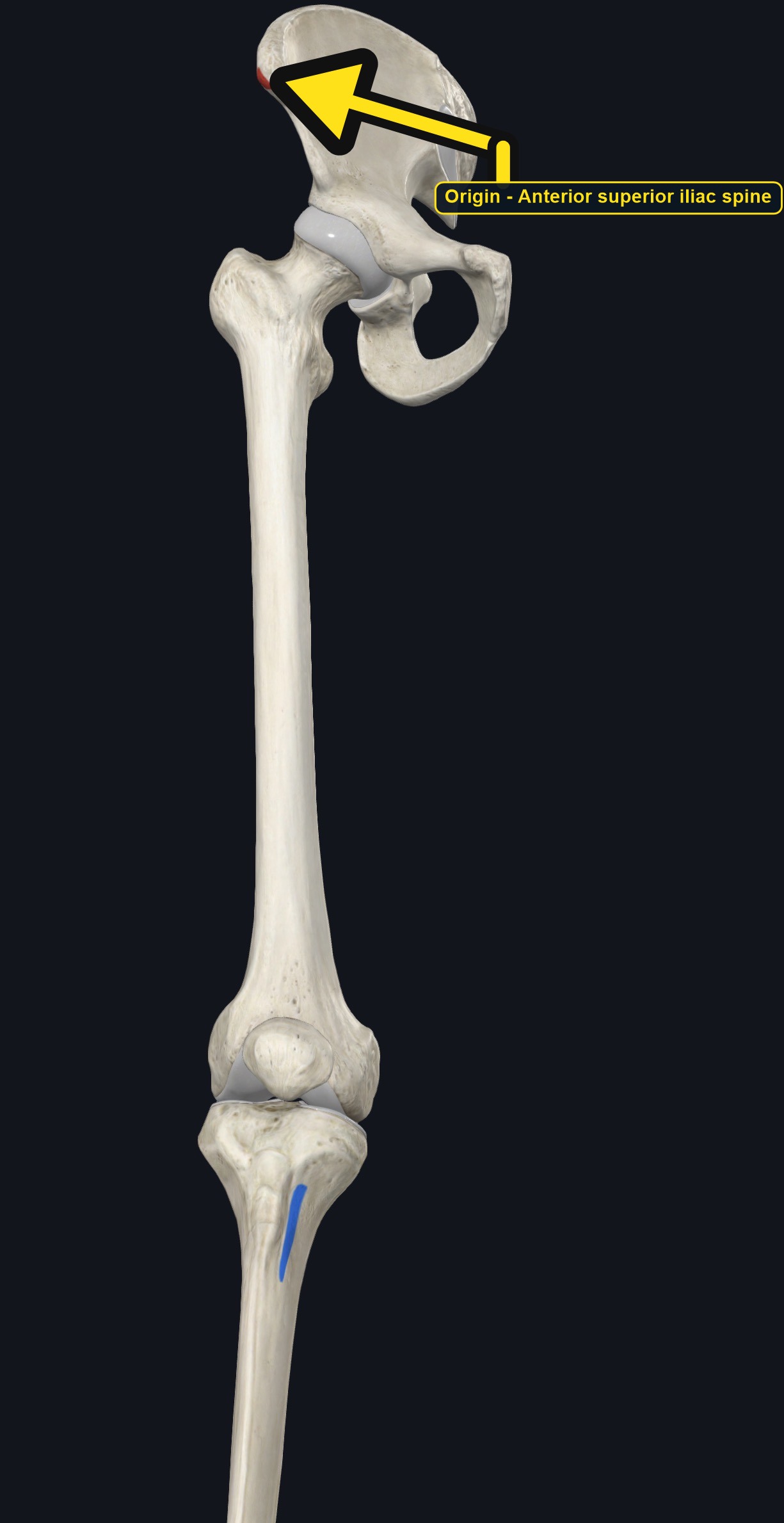
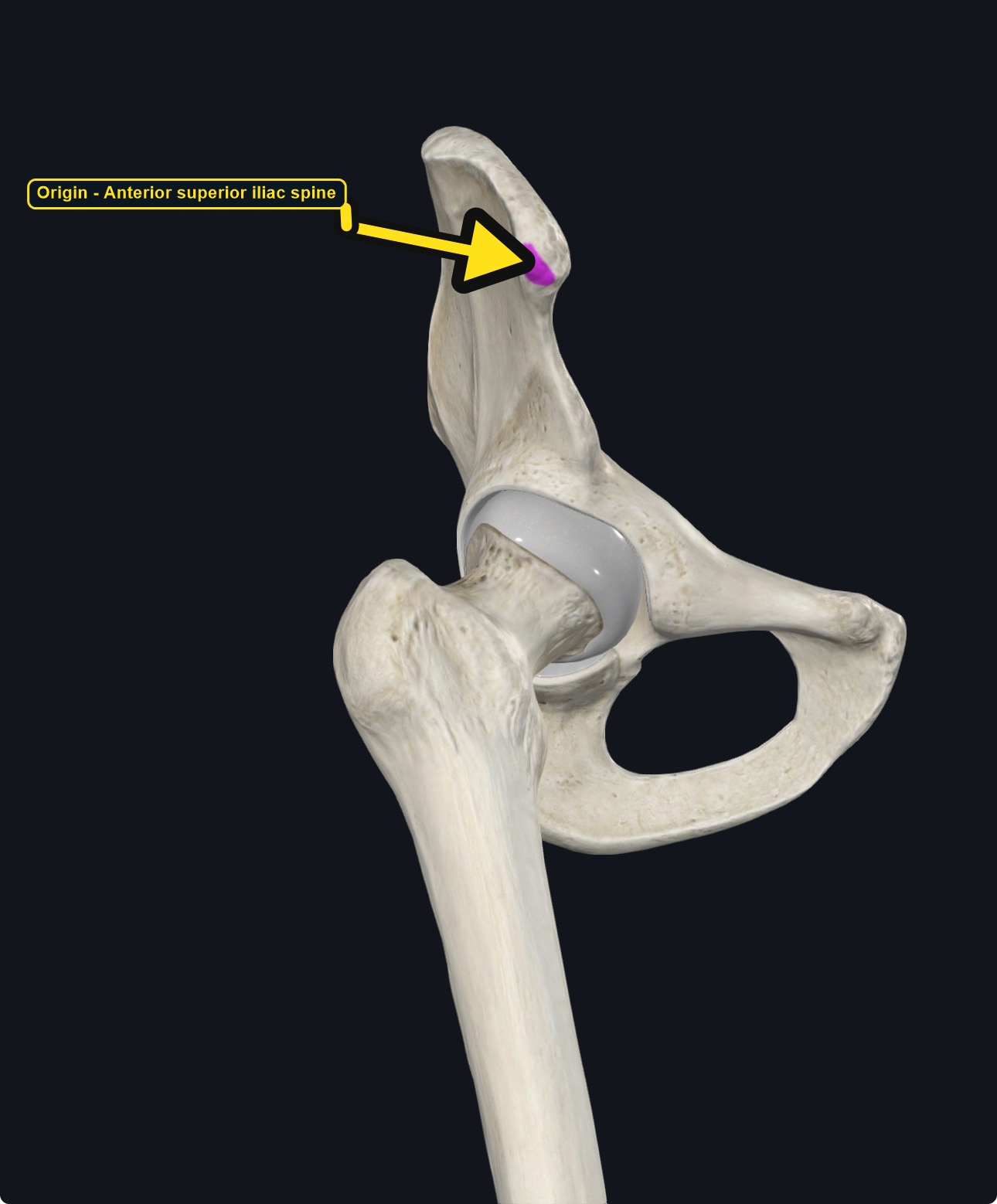
| Origin | The anterior superior iliac spine (ASIS) and the upper half of the notch just below it. |
|---|
Section 03 of 20
Insertion
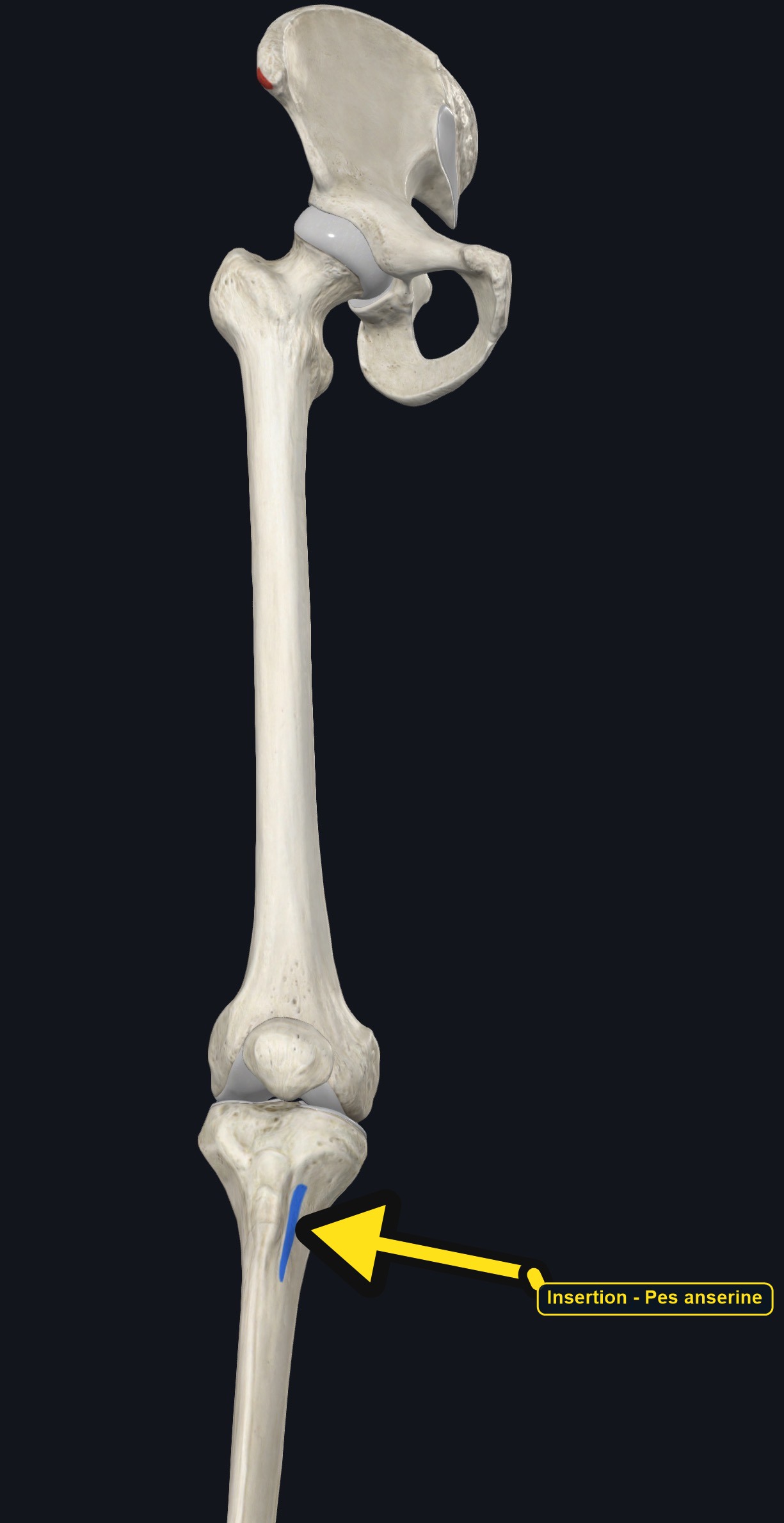
| Insertion | The upper part of the medial surface of the tibia, as part of the pes anserine tendon together with gracilis and semitendinosus. |
|---|
Section 04 of 20
Actions
| Primary action | Hip flexion, abduction, and lateral rotation (cross-legged position). |
|---|---|
| Secondary actions | Knee flexion and medial rotation of the flexed leg. |
| Movement at the joint | Hip joint and knee joint. |
| Heads / fiber groups | Single long strap-like muscle. |
| Functional examples | Sitting cross-legged; putting on a shoe; stepping over an obstacle; the swing phase of walking and running. |
Hip flexion
Lifts the thigh forward at the hip.
Hip abduction and lateral rotation
Swings the thigh outward and turns it outward, as in sitting cross-legged.
Knee flexion
Bends the knee.
Medial rotation of the flexed leg
With the knee bent, it helps turn the lower leg inward.
Section 05 of 20
Nerve Innervation
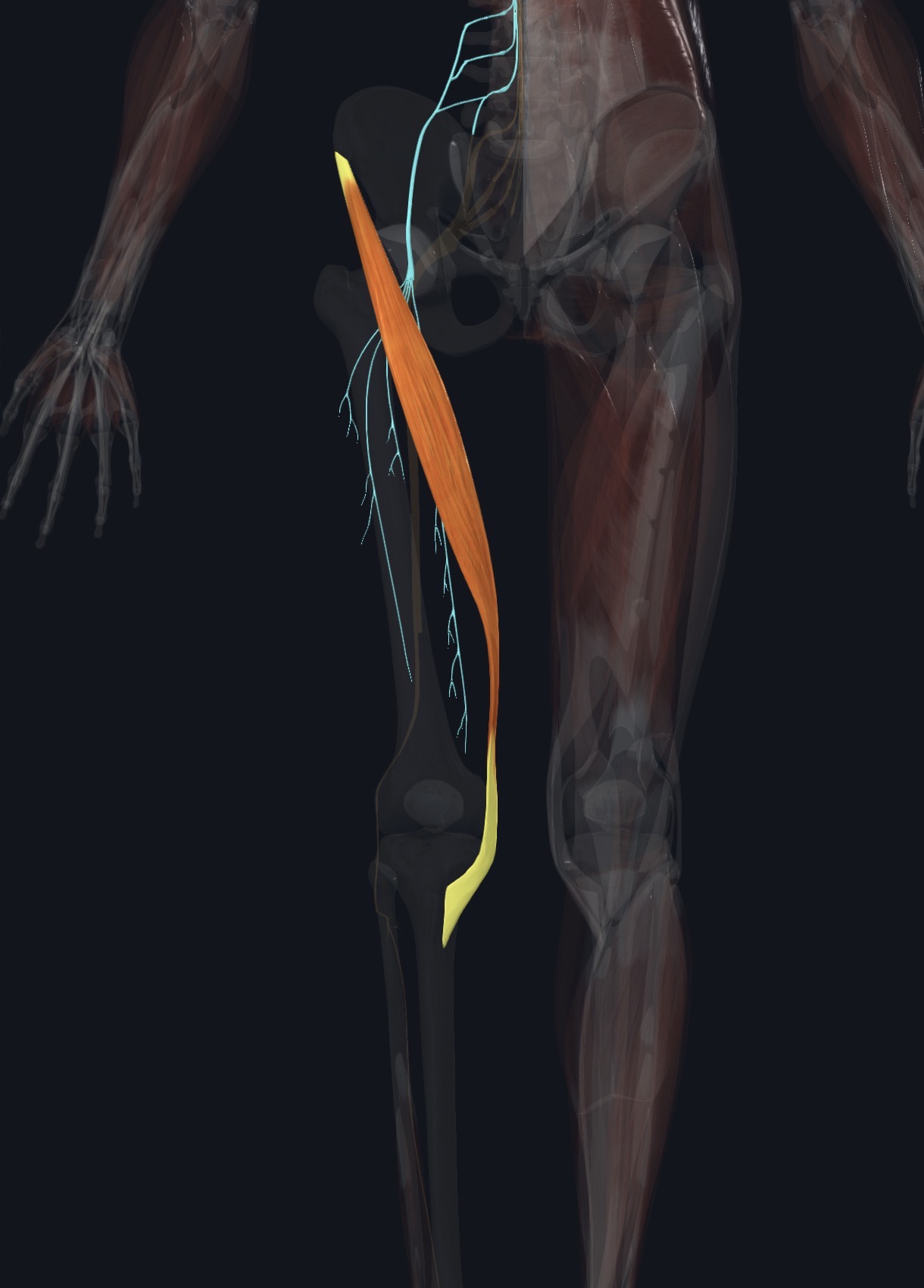
| Nerve | Femoral nerve, roots L2–L3 (sometimes L4). |
|---|
Sartorius forms the roof of the adductor (subsartorial) canal, which carries the femoral artery, femoral vein, and saphenous nerve. Thigh numbness, weakness of knee extension, or inner-knee tingling may reflect nerve problems, not only muscle tightness.
Section 06 of 20
Blood Supply
| Blood | Muscular branches of the femoral artery, with the distal part supplied by the descending genicular and other branches around the knee. |
|---|
Section 07 of 20
Pictures and Visual Anatomy
The pictures for this muscle are shown with the Origin, Insertion, Nerve Innervation, and other sections where they teach best.
Section 08 of 20
Functional Movement
Sartorius works when sitting cross-legged, putting on a shoe or sock, stepping over an obstacle, climbing, and in the swing phase of walking and running. It helps place the foot on the opposite knee, a position used in many everyday tasks.
Section 09 of 20
Synergists and Antagonists
Synergists: iliopsoas, rectus femoris, pectineus, and tensor fasciae latae (hip flexion), the lateral rotators (hip lateral rotation), and the hamstrings, gracilis, and gastrocnemius (knee flexion). Antagonists: gluteus maximus and the hamstrings (hip extension), the quadriceps (knee extension), and the medial rotators of the hip.
Section 10 of 20
Palpation and Location
Client position and technique
Position the client supine with the hip abducted and externally rotated and the knee bent (a relaxed cross-legged position), with the foot resting on the opposite shin. Locate the anterior superior iliac spine and follow the muscle as a firm band that runs diagonally across the thigh toward the inner knee. Ask the client to lift the foot slightly against light resistance to feel the muscle tighten.
Protect nearby structures
The upper part of the muscle forms the border of the femoral triangle, where the femoral artery, vein, nerve, and lymph nodes lie. Avoid pressure on a pulse, use light to moderate pressure near the groin, and be gentle over the inner knee where the saphenous nerve and the pes anserine tendons lie. Stop if the client reports tingling, numbness, or sharp pain.
Section 11 of 20
Massage Therapy Relevance
Sartorius is often tight or tender in runners, dancers, and people who sit cross-legged. It is a factor in front-of-hip and inner-knee discomfort, but many other structures can cause the same symptoms.
Section 12 of 20
Dysfunction: What Happens When Movement Goes Wrong
Changes in how a muscle works can change how a joint moves. The points below describe possibilities that may be associated with altered muscle function; they are not diagnoses, and one muscle is never assumed to be the sole cause of a problem.
When the muscle is weak
Weakness may reduce the ability to lift the leg and cross it over the other, and may shift work to the hip flexors and knee flexors.
When it is tight or shortened
Tightness may be associated with limited hip extension and medial rotation and with an ache along the front of the thigh or the inner knee.
When it is overused
Running, kicking, and repeated cross-legged sitting may overload the muscle and its tendon and may contribute to front-of-thigh or inner-knee pain.
When it is strained
A strain may cause pain along the front of the thigh with resisted hip flexion; hip and knee problems can look similar.
When it is inhibited or others compensate
Reduced activation may be associated with more work by the iliopsoas, rectus femoris, and tensor fasciae latae.
When it does not coordinate well with synergists and antagonists
Poor coordination with the other hip flexors and the hamstrings may alter hip and knee control and may be associated with hip, thigh, or inner-knee symptoms.
Section 13 of 20
Conditions, Pathologies, and Pain Relationships
Sartorius strain
Sudden hip flexion and rotation, such as in kicking and sprinting, may strain the muscle and cause pain along the front of the thigh.
Pes anserine pain syndrome
Tenderness on the inner upper tibia below the knee may involve the pes anserine tendons or their bursa, including sartorius.
ASIS avulsion in adolescents
In young athletes, the growth plate at the anterior superior iliac spine can be pulled away by forceful contraction, causing sudden pain and needing medical assessment.
Differential considerations
Meralgia paresthetica (irritation of the lateral femoral cutaneous nerve near the ASIS), femoral nerve problems, hip joint disorders, and inner-knee joint problems can cause similar symptoms.
Section 14 of 20
Example Clinical Relationship
A runner reports tenderness on the inner side of the upper tibia below the knee and an ache along the front of the thigh after long runs. Sartorius and the other pes anserine tendons may be involved, and the pattern may be associated with tightness or pes anserine pain, but knee joint and nerve problems can look similar. Gentle work along the thigh may support comfort, while a swollen warm leg or worsening weakness needs referral.
Section 15 of 20
Massage and Treatment Approaches
For healthy, non-acute tissue, position the client supine with the leg supported in a relaxed cross-legged position. Begin with light effleurage along the muscle from the inner knee toward the hip, then use gentle kneading and slow strokes along the fibers, staying lateral to the femoral triangle.
| Movement | Use gentle hip extension, adduction, and medial rotation stretches within comfort; do not force range. |
|---|---|
| Regional work | Consider rectus femoris, tensor fasciae latae, the adductors, gracilis, the hamstrings, and the pes anserine area when assessment supports it. |
| Avoid | Deep pressure in the femoral triangle and the adductor canal, over an acute strain, or at any point that reproduces tingling. |
Section 16 of 20
Precautions and Contraindications
Precautions and contraindications
- Acute strain, recent hip, thigh, or knee injury or surgery, or suspected growth plate injury in adolescents.
- Use caution with varicose veins, anticoagulant use, or easy bruising.
- Avoid deep pressure over the femoral triangle and the inner thigh where the vessels run.
- Stop if pressure causes sharp pain, numbness, or tingling.
Section 17 of 20
Red Flags and When to Refer
Red flags and referral
- Sudden severe pain at the front of the hip in a young athlete after sprinting or kicking, especially with limping.
- A swollen, warm, red, or painful leg, especially on one side, or sudden shortness of breath (possible blood clot).
- A groin bulge, or numbness or weakness of the thigh that is getting worse.
- Thigh or knee pain with fever, night pain, or unexplained weight loss.
Section 18 of 20
Study Summary
Attachments
Origin: anterior superior iliac spine. Insertion: upper medial tibia (pes anserine).
Actions
Hip flexion, abduction, and lateral rotation; knee flexion; medial rotation of the flexed leg.
Supply
Femoral nerve (L2–L3); muscular branches of the femoral artery.
Section 19 of 20
Instructor Narration
Open narration transcript
Sartorius is the longest muscle in the body, a slender strap that crosses the front of the thigh from the hip bone to the inner side of the knee.
It arises from the anterior superior iliac spine and inserts on the upper medial tibia through the pes anserine tendon, together with gracilis and semitendinosus.
It flexes, abducts, and laterally rotates the hip, flexes the knee, and helps turn the bent leg inward. Iliopsoas and rectus femoris help flex the hip, and gluteus maximus and the quadriceps oppose it.
The femoral nerve supplies it, from L2 to L3, and muscular branches of the femoral artery provide its blood.
Palpate with the client in a relaxed cross-legged position, starting at the anterior superior iliac spine and following the band across the thigh. Stay off the femoral triangle and off any pulse.
Strain, pes anserine pain, growth plate injury in adolescents, meralgia paresthetica, and hip and knee problems can overlap. Refer a sudden severe hip pain in a young athlete, a swollen warm leg, a groin bulge, or worsening thigh weakness.
Remember: anterior superior iliac spine to the pes anserine on the upper medial tibia; hip flexion, abduction, and lateral rotation with knee flexion; femoral nerve.
Section 20 of 20