Section 01 of 20
Introduction
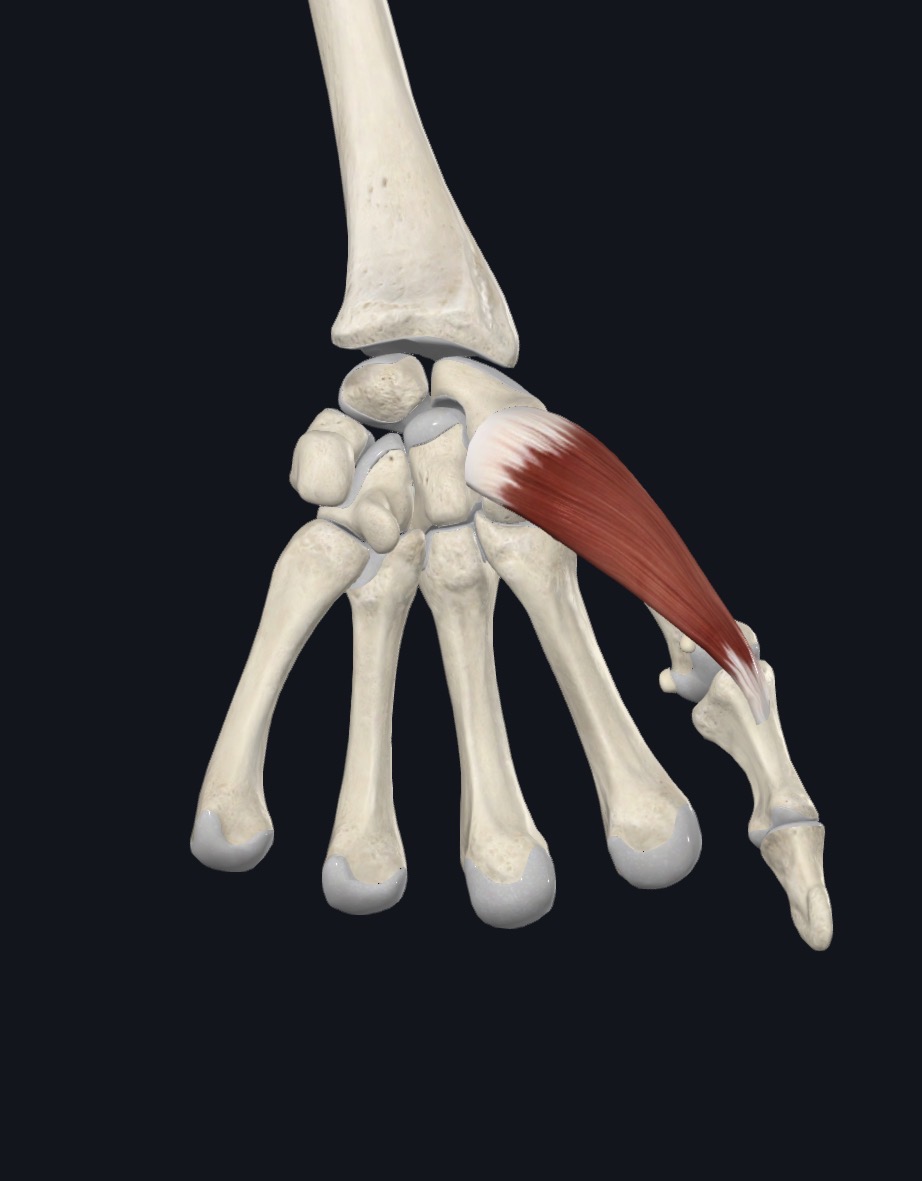
Opponens pollicis is a small triangular muscle lying deep to abductor pollicis brevis in the thenar eminence, the fleshy base of the thumb. It runs from the carpal tunnel region to the shaft of the first metacarpal.
Opposition is the movement that sets humans' hands apart: the thumb rotates and swings across the palm so that its pad can meet the pad of another finger. Opponens pollicis does most of the work at the carpometacarpal joint of the thumb.
Section 02 of 20
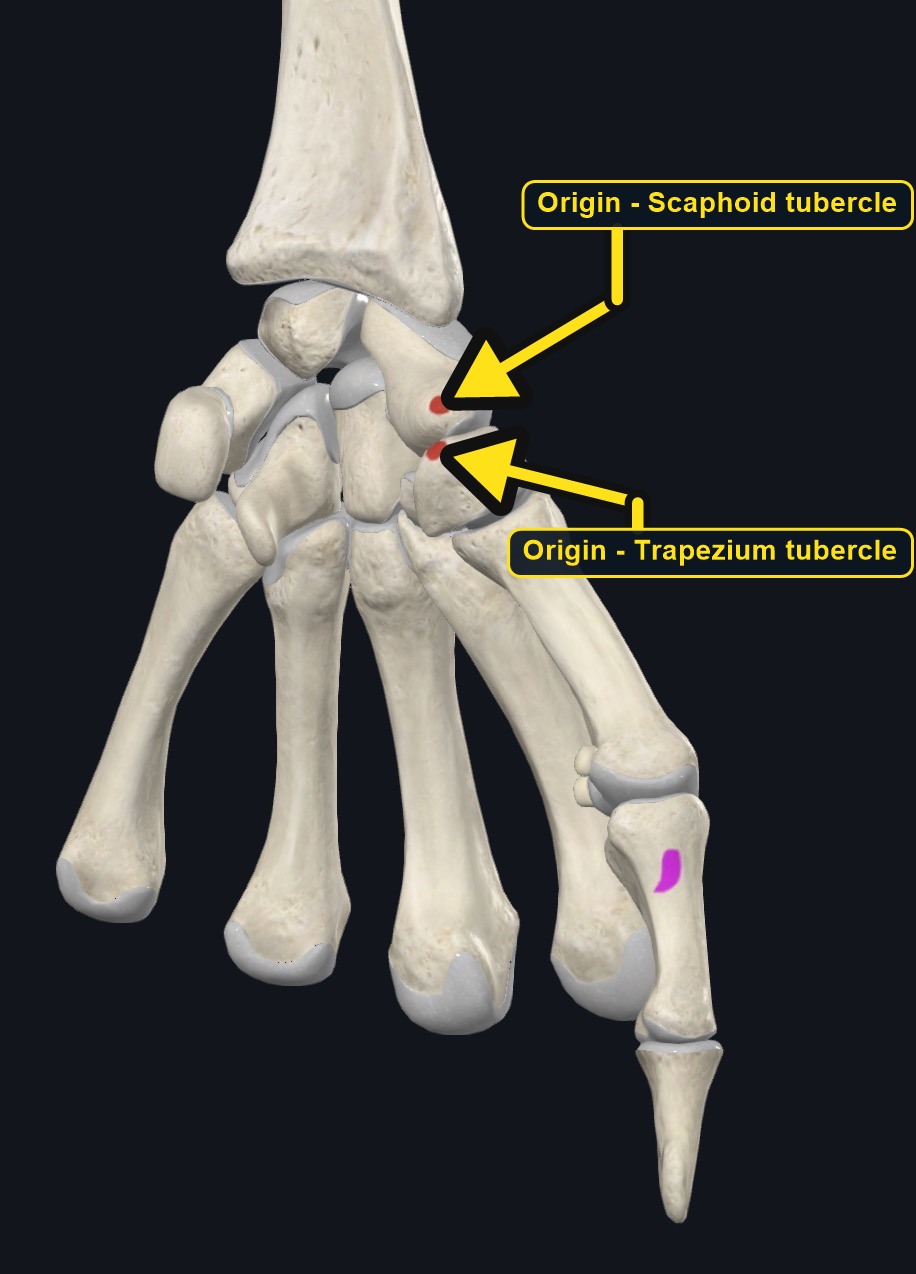
Origin
| Origin | Flexor retinaculum (transverse carpal ligament) and the tubercle of the trapezium. |
|---|
Section 03 of 20
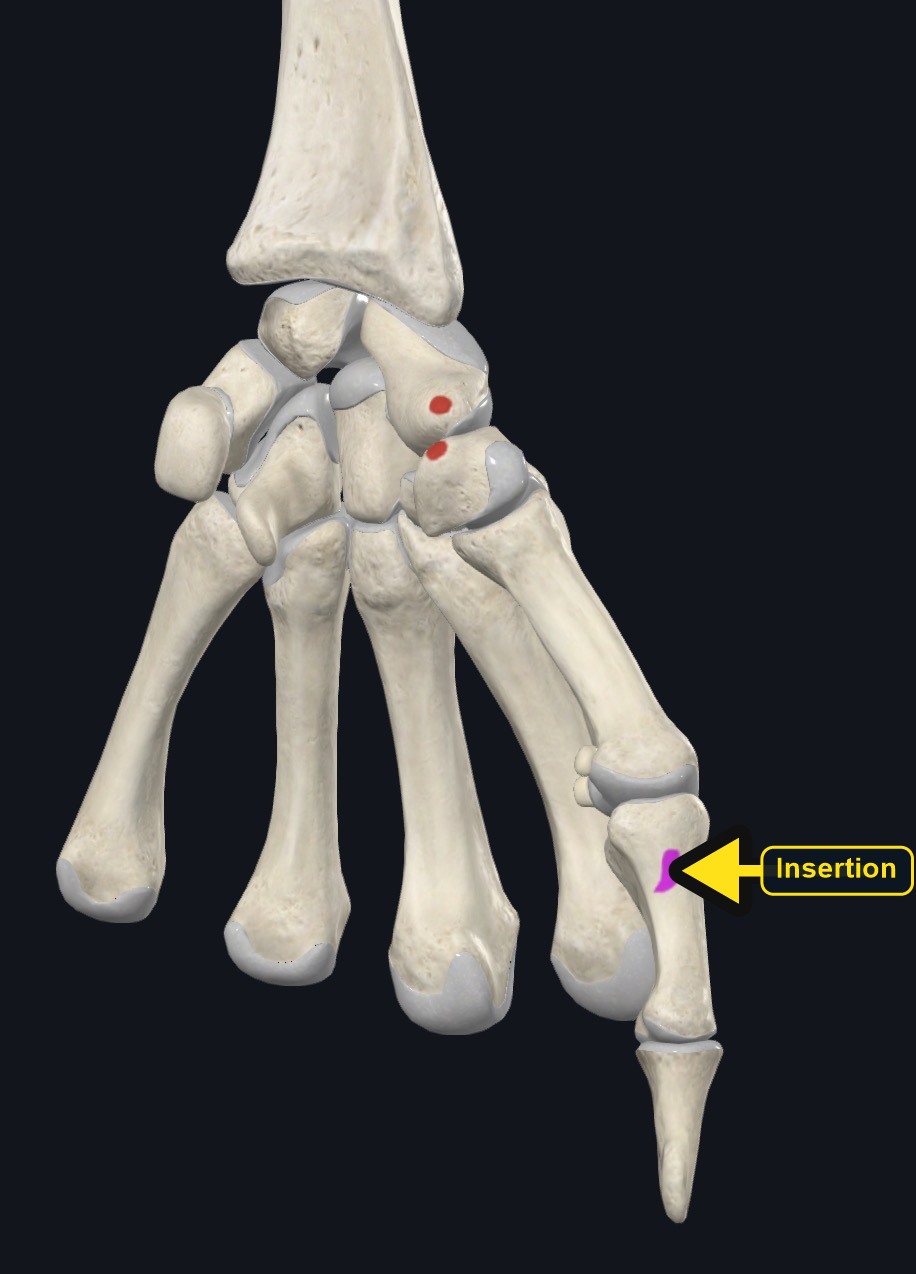
Insertion
| Insertion | The whole length of the radial (lateral) border and adjacent palmar surface of the shaft of the first metacarpal. |
|---|
Section 04 of 20
Actions
No dedicated action video is currently available. This movement is explained below and video will be added when verified source media becomes available.
| Primary action | Opposition of the thumb. |
|---|---|
| Secondary actions | Flexion and medial rotation of the first metacarpal at the carpometacarpal joint. |
| Movement at the joint | First carpometacarpal (thumb saddle) joint. |
| Heads / fiber groups | Single small triangular muscle. |
| Functional examples | Pinching; holding a pen; turning a key; buttoning clothes; gripping tools; typing on a phone. |
Opposition of the thumb
Draws the first metacarpal forward and across the palm so the thumb pad can meet the fingertips.
Flexion at the carpometacarpal joint
Bends the base of the thumb toward the palm.
Medial rotation of the first metacarpal
Rotates the thumb so its pad faces the fingers, the key part of a pinch grip.
Section 05 of 20
Nerve Innervation
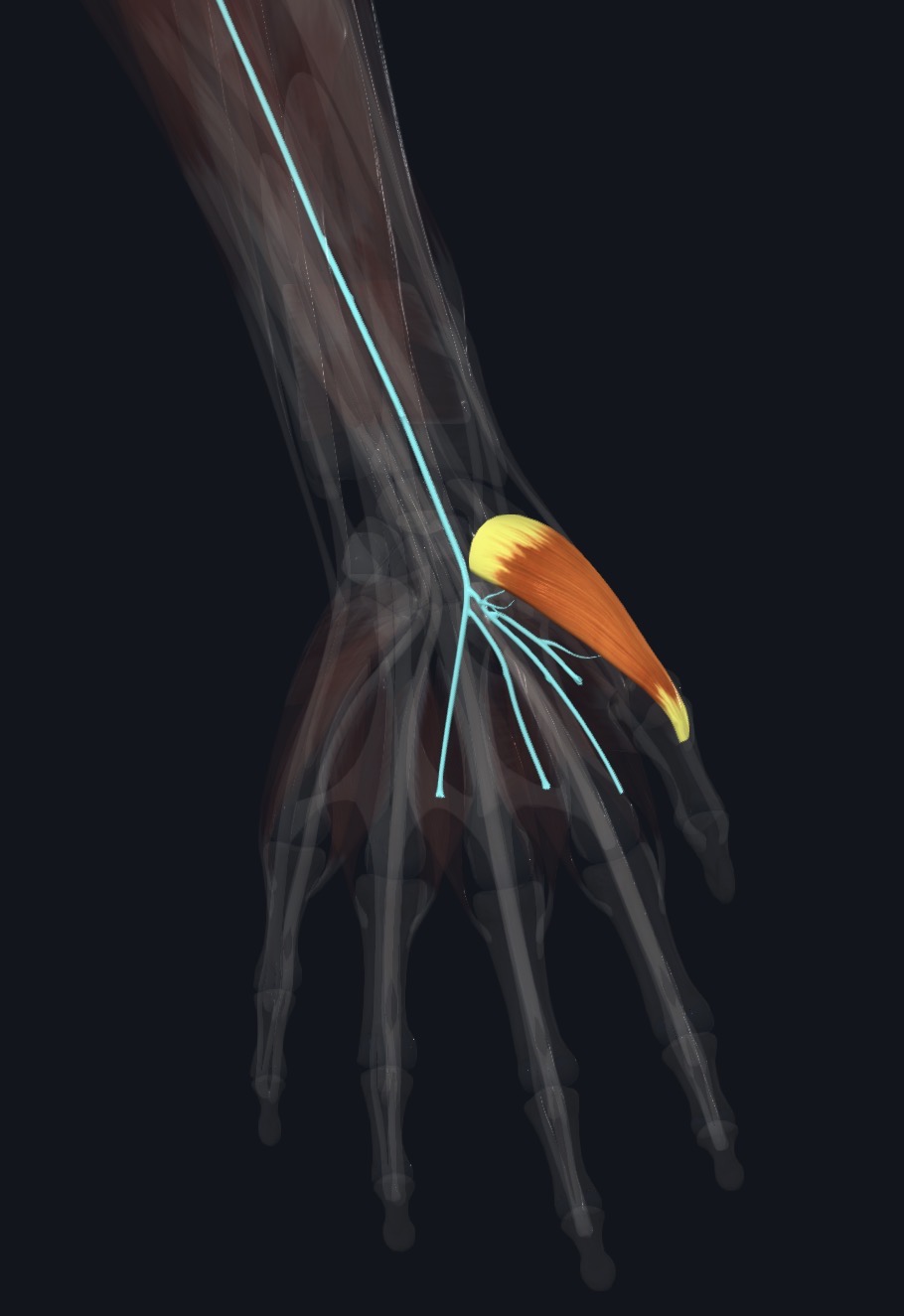
| Nerve | Recurrent (thenar) branch of the median nerve, roots C8–T1. |
|---|
The recurrent branch of the median nerve curls around the edge of the flexor retinaculum, so it can be affected at the wrist. Thumb weakness, thenar wasting, or numbness in the thumb, index, and middle fingers may reflect median nerve problems, not only muscle tightness.
Section 06 of 20
Blood Supply
| Blood | Superficial palmar arch and the princeps pollicis artery, with branches of the radial artery. |
|---|
Section 07 of 20
Pictures and Visual Anatomy
Section 08 of 20
Functional Movement
Opponens pollicis is used for holding a pen, pinching, turning a key, buttoning clothes, typing on a phone, and gripping tools. Many everyday hand tasks rely on thumb opposition.
Section 09 of 20
Synergists and Antagonists
Synergists: abductor pollicis brevis and flexor pollicis brevis (the other thenar muscles), with adductor pollicis assisting the pinch. Antagonists: abductor pollicis longus and extensor pollicis brevis and longus, which move the thumb back and away from the palm (reposition).
Section 10 of 20
Palpation and Location
Client position and technique
Position the client with the forearm supported and the palm up. Find the thenar eminence and press gently into the deep lateral side of it, along the first metacarpal. Ask the client to touch the thumb tip to the little fingertip (opposition) to feel the deep muscle contract under the more superficial abductor.
Protect nearby structures
Use light to moderate pressure. The median nerve, its recurrent branch, and the radial artery are close to the wrist end of the muscle, so avoid deep pressure over the carpal tunnel and stop if the client reports tingling, numbness, or sharp pain.
Section 11 of 20
Massage Therapy Relevance
Opponens pollicis is commonly overloaded by phone use, writing, sewing, crafts, and manual work. Thumb-base ache and hand fatigue are frequent complaints, and many joint, tendon, and nerve conditions can look similar.
Section 12 of 20
Dysfunction: What Happens When Movement Goes Wrong
Changes in how a muscle works can change how a joint moves. The points below describe possibilities that may be associated with altered muscle function; they are not diagnoses, and one muscle is never assumed to be the sole cause of a problem.
When the muscle is weak
Weakness may reduce pinch and grip strength and may make it hard to bring the thumb across the palm.
When it is tight or shortened
Tightness may be associated with an aching thumb base and limited thumb extension and abduction.
When it is overused
Repeated pinching, texting, and crafts may overload the muscle and may contribute to thumb base ache.
When it is strained
A strain may cause deep thumb base pain with resisted opposition; joint and tendon problems can look similar.
When it is inhibited or others compensate
Reduced activation may be associated with clumsy thumb control and more work by the other thenar muscles.
When it does not coordinate well with synergists and antagonists
Poor coordination with the other thenar muscles and the long thumb tendons may alter pinch mechanics and may be associated with thumb pain.
Section 13 of 20
Conditions, Pathologies, and Pain Relationships
Thenar overuse and tension
Repeated pinching and gripping may be associated with an aching, tight thumb base and reduced grip comfort.
Carpal tunnel syndrome
Median nerve compression at the wrist can cause numbness and tingling in the thumb, index, and middle fingers and, later, thenar weakness and wasting.
Thumb base osteoarthritis
Pain and stiffness at the carpometacarpal joint can limit opposition and pinch strength and may overlap with thenar muscle pain.
Differential considerations
De Quervain tenosynovitis, trigger thumb, cervical radiculopathy, and other nerve entrapments can cause similar thumb and hand symptoms.
Section 14 of 20
Example Clinical Relationship
A client who texts for long periods reports an aching thumb base and difficulty opening jars. The thenar muscles, including opponens pollicis, may be involved, and the pattern may be associated with overuse, but thumb base arthritis, tendon problems, and carpal tunnel syndrome can look similar. Gentle work at the thumb base may support comfort, while thenar wasting, constant numbness, or a hot swollen thumb needs referral.
Section 15 of 20
Massage and Treatment Approaches
For healthy, non-acute tissue, position the client supine or seated with the forearm supported and palm up. Begin with light effleurage over the palm and thumb base, then use gentle thumb kneading and slow strokes along the first metacarpal, adding gentle thumb mobilization within comfort.
| Movement | Use gentle thumb opposition, circumduction, and passive stretch into extension and abduction within comfort. |
|---|---|
| Regional work | Consider abductor pollicis brevis, flexor pollicis brevis, adductor pollicis, and the forearm flexors when assessment supports it. |
| Avoid | Deep pressure over the carpal tunnel, over swollen or hot joints, or at any point that reproduces numbness or tingling. |
Section 16 of 20
Precautions and Contraindications
Precautions and contraindications
- Recent hand or wrist injury, fracture, surgery, or open wound.
- Use caution with rheumatoid arthritis, severe osteoarthritis of the thumb, or known carpal tunnel syndrome.
- Use caution with anticoagulant use or easy bruising.
- Stop if pressure causes numbness, tingling, or sharp pain.
Section 17 of 20
Red Flags and When to Refer
Red flags and referral
- Progressive wasting of the thumb base, or increasing weakness of pinch and grip.
- Constant numbness or tingling in the thumb, index, and middle fingers, especially waking the client at night.
- A hot, red, swollen thumb or palm, especially with fever.
- Hand or arm symptoms with neck pain, chest pain, or shortness of breath.
Section 18 of 20
Study Summary
Attachments
Origin: flexor retinaculum and tubercle of the trapezium. Insertion: radial border of the first metacarpal shaft.
Actions
Opposition of the thumb (flexion and medial rotation of the first metacarpal).
Supply
Recurrent branch of the median nerve (C8–T1); superficial palmar arch and princeps pollicis artery.
Section 19 of 20
Instructor Narration
Open narration transcript
Opponens pollicis is the deep muscle of the thenar eminence. It lets the thumb swing across the palm to meet the fingertips.
It arises from the flexor retinaculum and the tubercle of the trapezium, and inserts along the radial border of the first metacarpal shaft.
It produces opposition, a combination of flexion and medial rotation of the first metacarpal. Abductor pollicis brevis and flexor pollicis brevis help it, and the long thumb abductor and extensors oppose it.
The recurrent branch of the median nerve supplies it, from C8 to T1, and the superficial palmar arch and princeps pollicis artery provide its blood.
Palpate the deep lateral side of the thenar eminence and ask for thumb-to-little-finger opposition. Avoid deep pressure over the carpal tunnel.
Overuse, carpal tunnel syndrome, thumb base arthritis, and De Quervain tenosynovitis can overlap. Refer progressive thenar wasting, constant numbness, a hot swollen thumb, or hand symptoms with neck or chest pain.
Remember: flexor retinaculum and trapezium to the first metacarpal; opposition; recurrent median nerve.
Section 20 of 20