Section 01 of 20
Introduction
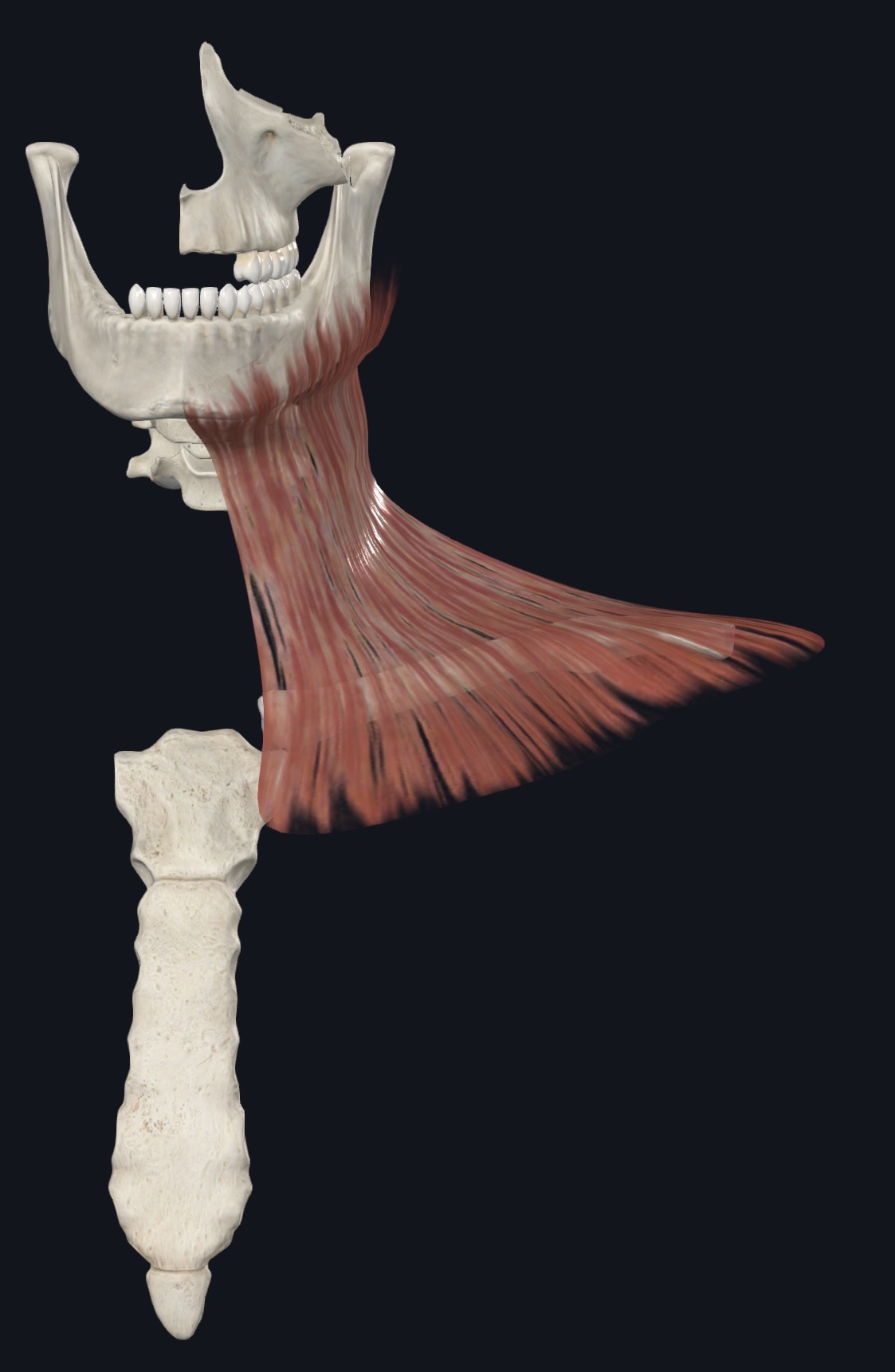
Mylohyoid is a thin, flat, triangular muscle that stretches between the two sides of the mandible and forms a sling, the muscular floor of the mouth. It lies above the anterior belly of the digastric and below the tongue and the sublingual tissues.
It belongs to the suprahyoid group. The muscles of the two sides meet in the midline at a fibrous seam called the median raphe, and together they support the floor of the mouth and raise the hyoid bone.
Section 02 of 20
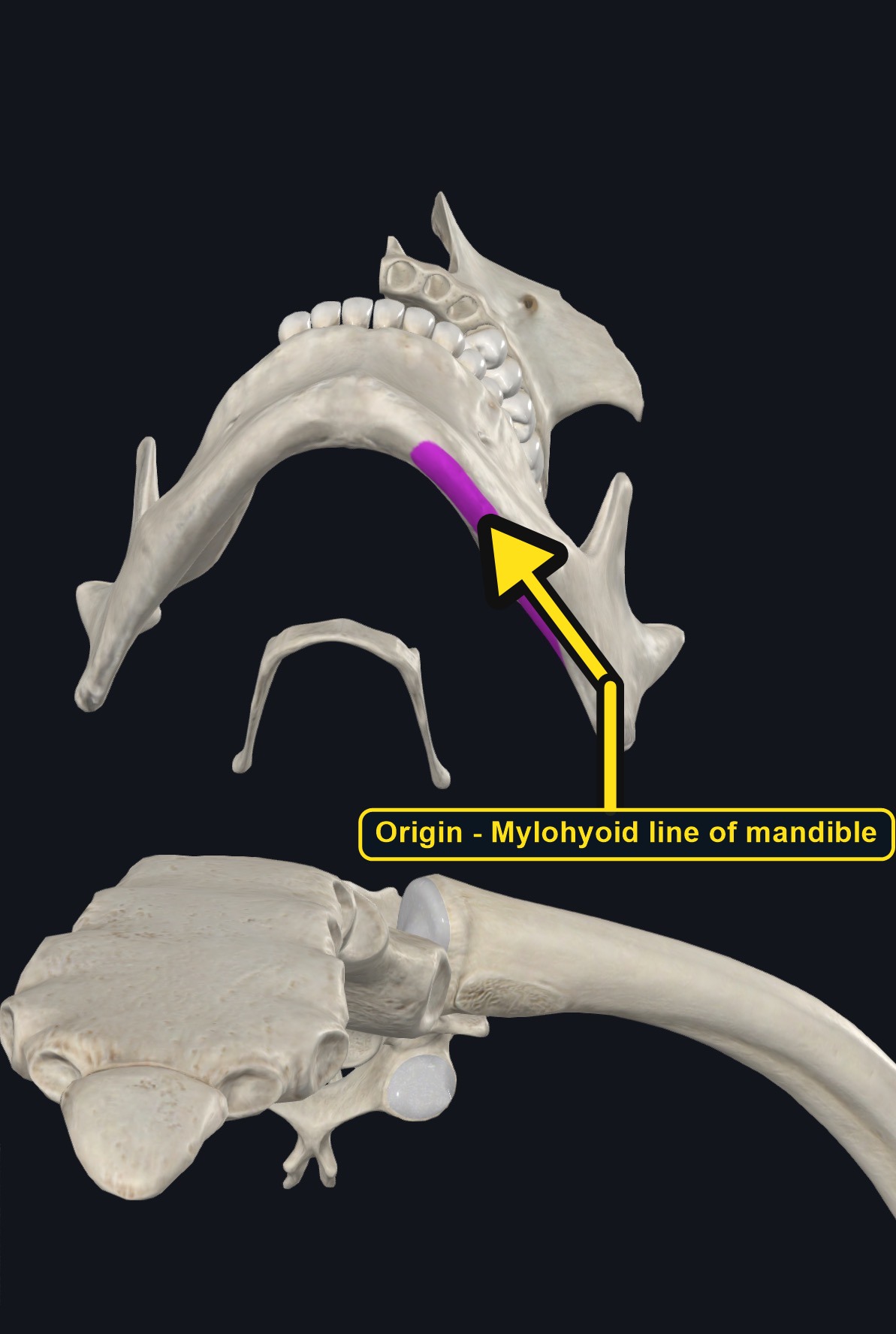
Origin
| Origin | Mylohyoid line on the inner (medial) surface of the mandible, running from near the symphysis to the last molar region. |
|---|
Section 03 of 20
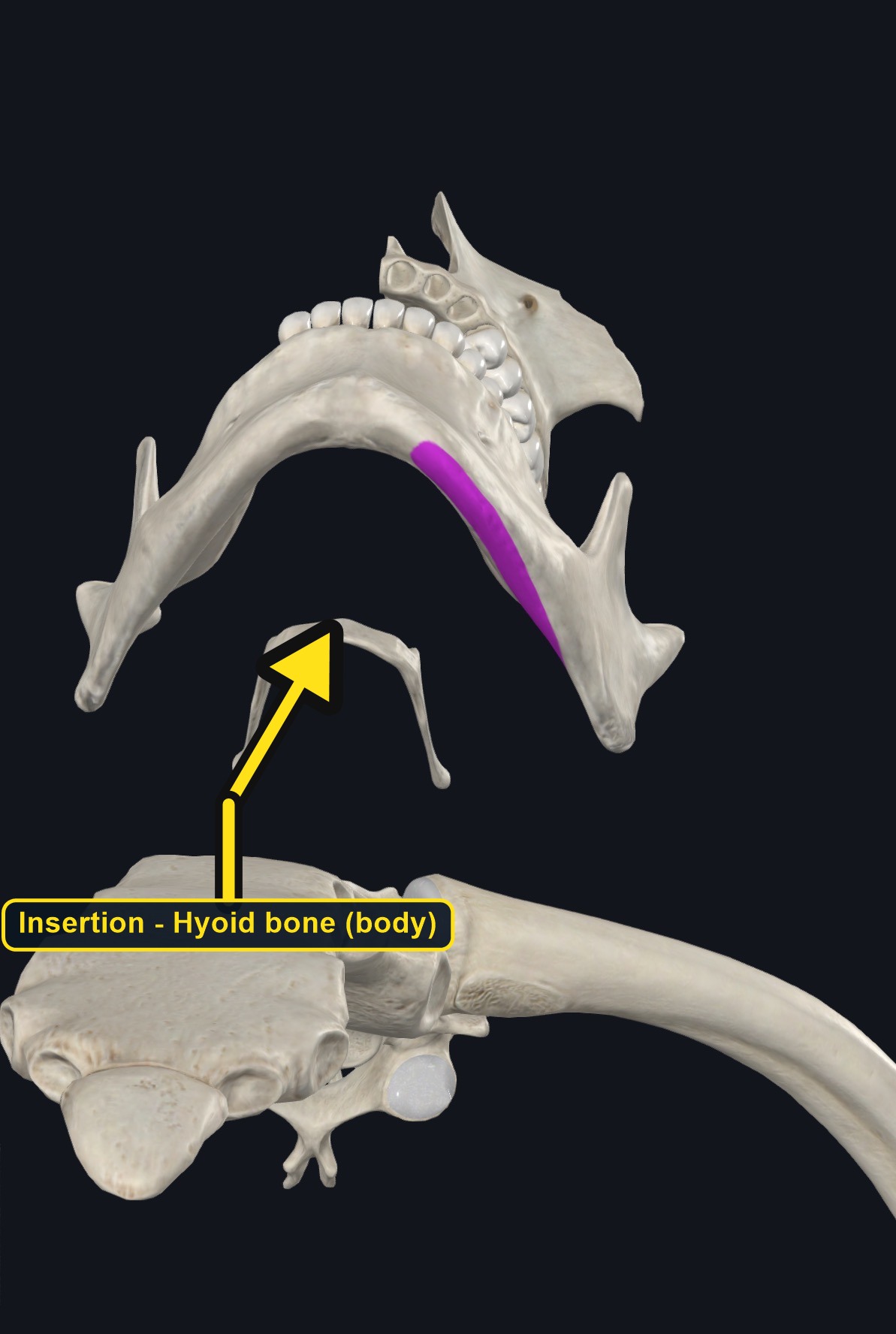
Insertion
| Insertion | The median raphe (a fibrous seam shared with the opposite muscle) and the anterior surface of the body of the hyoid bone. |
|---|
Section 04 of 20
Actions
No dedicated action video is currently available. This movement is explained below and video will be added when verified source media becomes available.
| Primary action | Elevation of the hyoid bone and floor of the mouth. |
|---|---|
| Secondary actions | Elevation of the tongue and, with the hyoid fixed, depression of the mandible. |
| Movement at the joint | Hyoid position and the temporomandibular joint (indirectly). |
| Heads / fiber groups | Single flat muscle; the two sides meet at the median raphe. |
| Functional examples | Swallowing; chewing; speaking; opening the mouth wide, as in yawning. |
Elevation of the hyoid and floor of the mouth
Raises the hyoid bone and the floor of the mouth during swallowing and speaking.
Tongue elevation
Pushes the tongue up and back against the palate during the first stage of swallowing.
Mandibular depression
With the hyoid fixed by the infrahyoid muscles, it helps pull the mandible down to open the mouth.
Section 05 of 20
Nerve Innervation
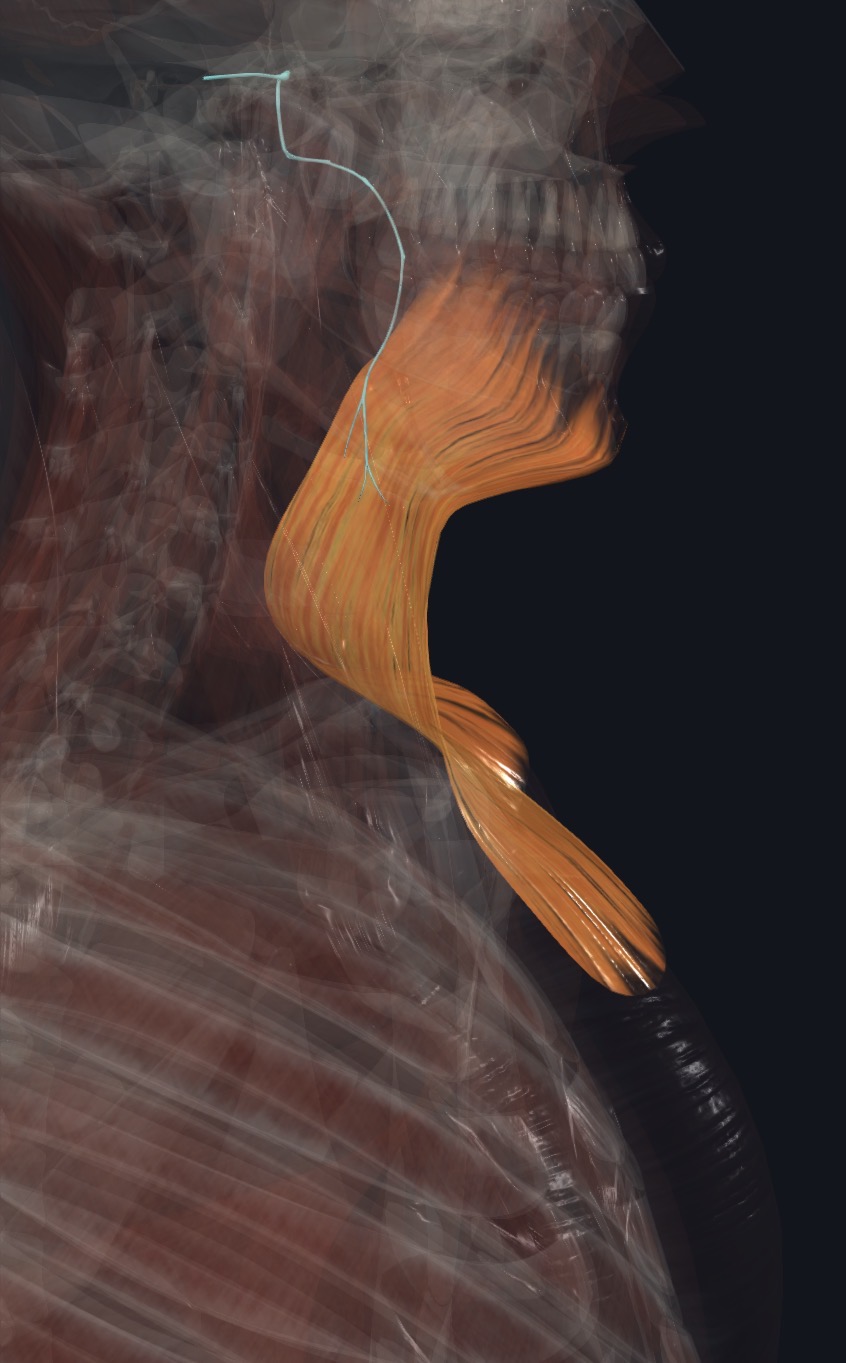
| Nerve | Nerve to mylohyoid, a branch of the inferior alveolar nerve from the mandibular division of the trigeminal nerve (cranial nerve V3). |
|---|
The trigeminal nerve also supplies the muscles of chewing. Changes in swallowing, jaw movement, or facial sensation may reflect nerve or medical problems, not only muscle tightness.
Section 06 of 20
Blood Supply
| Blood | Sublingual artery (from the lingual artery), submental artery (from the facial artery), and the mylohyoid branch of the inferior alveolar artery. |
|---|
Section 07 of 20
Pictures and Visual Anatomy
Section 08 of 20
Functional Movement
Mylohyoid works with every swallow, chew, and spoken word. It lifts the floor of the mouth and hyoid to help push food backward, and it helps open the jaw, as in yawning or wide biting.
Section 09 of 20
Synergists and Antagonists
Synergists: geniohyoid, the anterior belly of digastric, and stylohyoid (hyoid elevation), with the infrahyoid muscles stabilizing the hyoid for jaw opening. Antagonists: the infrahyoid muscles (sternohyoid, omohyoid, sternothyroid, and thyrohyoid) for hyoid depression, and the jaw elevators (masseter, temporalis, and medial pterygoid) for jaw movement.
Section 10 of 20
Palpation and Location
Client position and technique
Position the client supine or seated with the head supported and the jaw relaxed. Feel the soft tissue just behind and under the chin, between the mandible and the hyoid bone. Ask the client to swallow, or gently press the tongue against the roof of the mouth, to feel the floor of the mouth firm up under a light, flat finger.
Protect nearby structures
Only light, external pressure is appropriate. The submandibular glands, lymph nodes, tongue base, airway, and carotid vessels are close. Avoid pressing upward into the floor of the mouth, and stop if the client reports gagging, difficulty breathing, dizziness, or sharp pain. Intraoral work is outside the usual scope of general massage practice unless specifically trained and permitted.
Section 11 of 20
Massage Therapy Relevance
Mylohyoid is discussed in jaw and neck tension, swallowing comfort, and tongue and hyoid posture. Its position under the chin makes gentle, respectful technique and clear consent important, and many medical causes can produce similar symptoms.
Section 12 of 20
Dysfunction: What Happens When Movement Goes Wrong
Changes in how a muscle works can change how a joint moves. The points below describe possibilities that may be associated with altered muscle function; they are not diagnoses, and one muscle is never assumed to be the sole cause of a problem.
When the muscle is weak
Weakness may be associated with less efficient hyoid lift during swallowing and reduced jaw opening control.
When it is tight or shortened
Tightness may be associated with a tight feeling under the chin, limited jaw opening, and a pulled-forward head posture.
When it is overused
Clenching, prolonged chewing, and tongue pressing may overload the suprahyoid muscles and may contribute to jaw and neck ache.
When it is strained
A strain may cause pain under the chin with swallowing or jaw opening; joint, dental, and gland problems can look similar.
When it is inhibited or others compensate
Reduced activation may be associated with poor coordination of swallowing and more work by other jaw and neck muscles.
When it does not coordinate well with synergists and antagonists
Poor coordination with the digastric, geniohyoid, and infrahyoid muscles may alter hyoid and jaw movement and may be associated with jaw, neck, or swallowing symptoms.
Section 13 of 20
Conditions, Pathologies, and Pain Relationships
Jaw and temporomandibular joint tension
Tension in the suprahyoid muscles may be associated with jaw pain, clicking, or limited opening, but joint and dental problems can look similar.
Swallowing discomfort
A sense of tightness under the chin during swallowing may involve the suprahyoids, but swallowing difficulty (dysphagia) can have serious causes and needs medical assessment.
Forward head posture and neck strain
A forward head position lengthens and loads the suprahyoid and infrahyoid groups and may be associated with neck and jaw tightness.
Differential considerations
Salivary gland problems, dental infection, lymph node swelling, thyroid disease, and cervical spine problems can cause pain or swelling under the jaw.
Section 14 of 20
Example Clinical Relationship
A client who clenches their jaw during the day reports a tight feeling under the chin and a tired jaw when yawning. The suprahyoid muscles, including mylohyoid, may be involved, and the pattern may be associated with jaw and neck tension, but joint, dental, and gland problems can look similar. Gentle external work may support comfort, while trouble swallowing or breathing, swelling under the jaw with fever, or a hard lump needs referral.
Section 15 of 20
Massage and Treatment Approaches
For healthy, non-acute tissue, position the client supine with the head supported. Use light effleurage under the chin and along the jaw line, then very gentle, flat-finger contact and slow release around the hyoid area, always with the client's consent and comfort as the guide.
| Movement | Use gentle, comfortable jaw opening, tongue resting posture, and slow breathing; do not force the jaw. |
|---|---|
| Regional work | Consider the masseter, temporalis, medial pterygoid, digastric, sternocleidomastoid, scalenes, and neck extensors when assessment supports it. |
| Avoid | Pressing up into the floor of the mouth, the front of the throat, or any swollen, tender, or hot area. |
Section 16 of 20
Precautions and Contraindications
Precautions and contraindications
- Recent dental or oral surgery, jaw injury, or suspected jaw fracture.
- Use caution with known temporomandibular joint disorders, thyroid disease, or vascular disease of the neck.
- Avoid contact over swollen glands, lumps, wounds, or infection.
- Stop if the client reports gagging, dizziness, difficulty breathing, or sharp pain.
Section 17 of 20
Red Flags and When to Refer
Red flags and referral
- Difficulty swallowing, drooling, or a feeling of throat closing, or trouble breathing.
- Swelling under the chin or jaw with fever, redness, or severe pain (possible infection of the floor of the mouth).
- A hard lump under the jaw, a mouth sore that does not heal, or unexplained weight loss.
- Sudden facial numbness or weakness, slurred speech, or sudden severe headache.
Section 18 of 20
Study Summary
Attachments
Origin: mylohyoid line of the mandible. Insertion: median raphe and body of the hyoid bone.
Actions
Elevates the hyoid, floor of the mouth, and tongue; helps depress the mandible.
Supply
Nerve to mylohyoid (V3); sublingual and submental arteries.
Section 19 of 20
Instructor Narration
Open narration transcript
Mylohyoid is the flat muscle that forms the floor of the mouth. It stretches between the two sides of the mandible.
It arises from the mylohyoid line on the inside of the mandible and inserts on the median raphe and the body of the hyoid bone.
It lifts the hyoid bone, the floor of the mouth, and the tongue during swallowing, and it helps open the jaw when the hyoid is fixed. Geniohyoid and the anterior belly of digastric help it, and the infrahyoid muscles and jaw elevators oppose it.
The nerve to mylohyoid, from the mandibular division of the trigeminal nerve, supplies it, and the sublingual and submental arteries provide its blood.
Use light external contact under the chin with the client swallowing or pressing the tongue to the palate. Avoid pressing into the floor of the mouth, and avoid intraoral work unless you are trained and permitted.
Jaw tension, swallowing discomfort, and forward head posture can overlap with salivary gland, dental, thyroid, and cervical problems. Refer difficulty swallowing or breathing, swelling under the jaw with fever, a hard lump, or sudden facial numbness.
Remember: mylohyoid line of the mandible to the median raphe and hyoid; hyoid and floor of mouth elevation; nerve to mylohyoid from V3.
Section 20 of 20