Section 01 of 20
Introduction
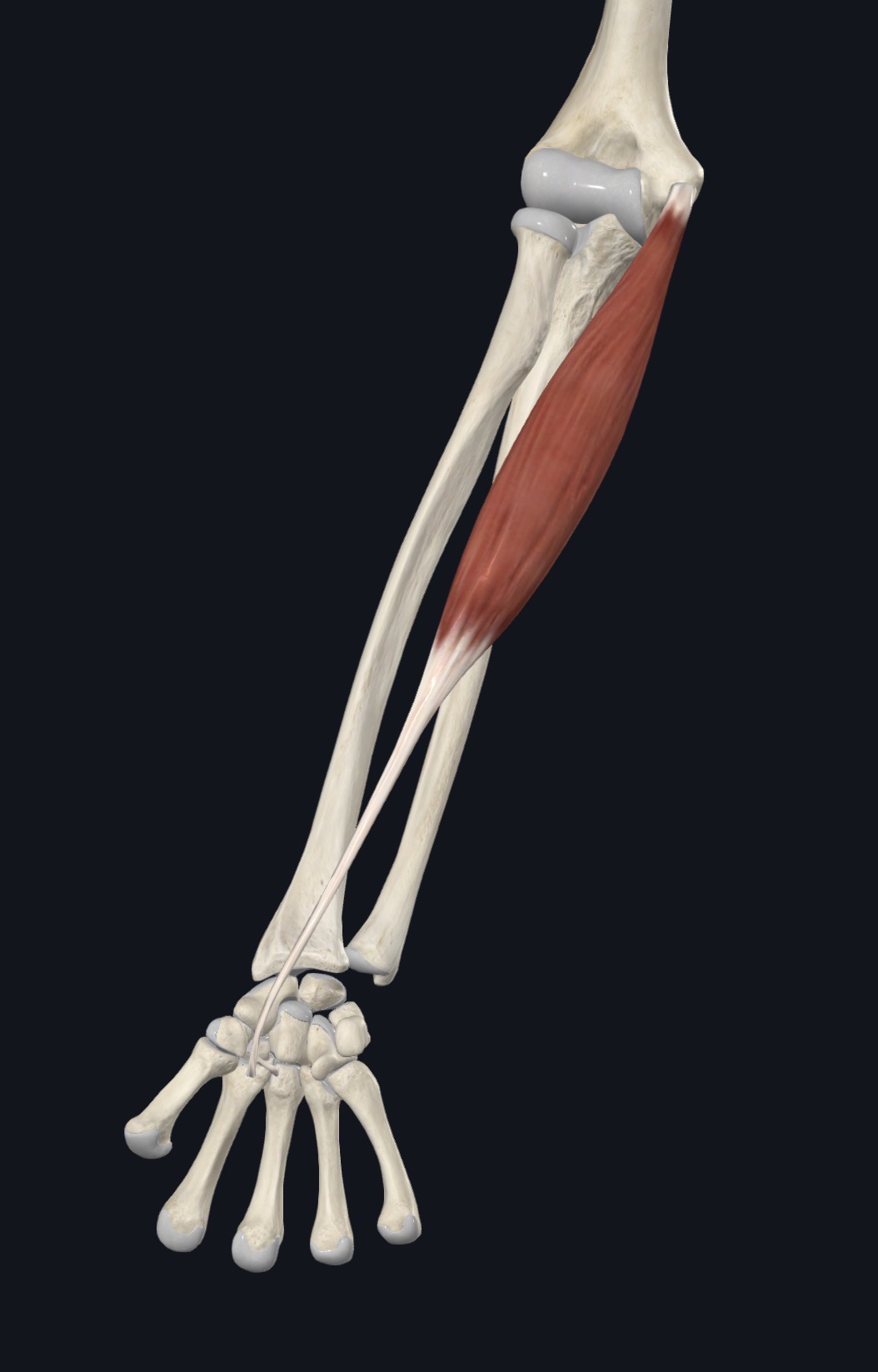
Flexor carpi radialis (FCR) is one of the superficial muscles of the anterior forearm. It runs obliquely from the medial epicondyle of the humerus toward the radial side of the wrist and ends in a long tendon.
At the wrist its tendon lies just lateral to palmaris longus (when present) and medial to the radial artery pulse, then passes through its own groove beside the trapezium to reach the base of the second metacarpal.
Section 02 of 20
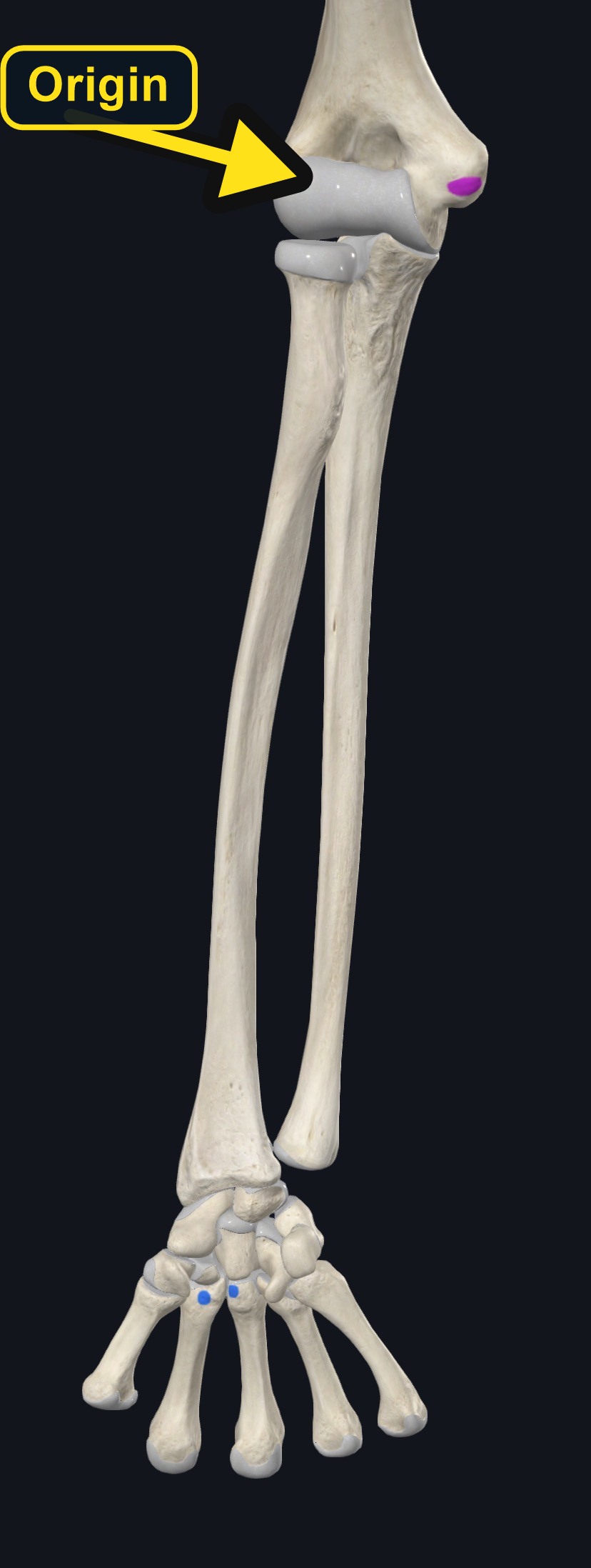
Origin
| Origin | Common flexor tendon from the medial epicondyle of the humerus, with adjacent antebrachial fascia and intermuscular septa. |
|---|
Section 03 of 20
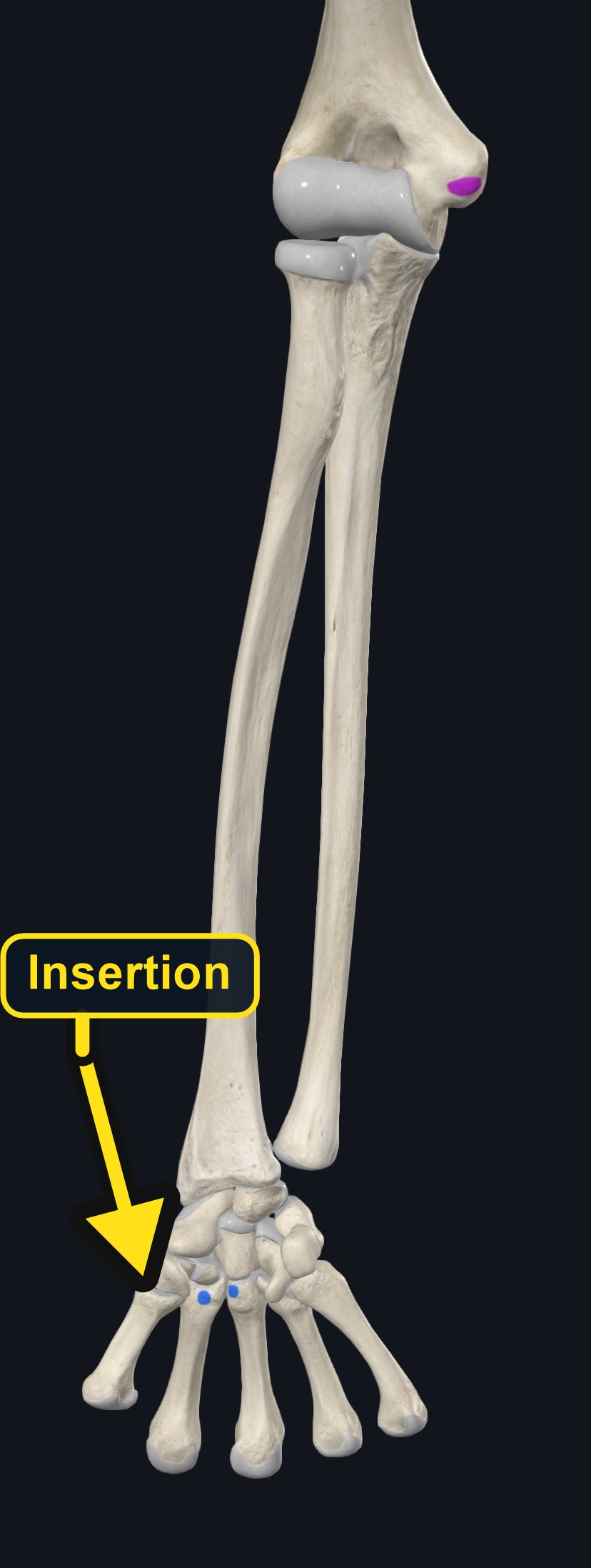
Insertion
| Insertion | Palmar surface of the base of the second metacarpal, with a slip to the base of the third metacarpal. |
|---|
Section 04 of 20
Actions
| Primary action | Wrist flexion. |
|---|---|
| Secondary actions | Radial deviation of the wrist (toward the thumb); weak assistance with elbow flexion and forearm pronation. |
| Movement at the joint | Wrist (radiocarpal and midcarpal) joints; elbow (small contribution). |
| Heads / fiber groups | Single muscle belly; no separate heads. |
| Functional examples | Gripping; throwing; hammering; typing; racquet sports. |
Wrist flexion
Flexes the hand at the wrist, together with the other wrist flexors.
Radial deviation
Deviates the hand toward the thumb side (abduction of the hand), working with the radial wrist extensors.
Elbow
Weakly assists elbow flexion and forearm pronation.
Section 05 of 20
Nerve Innervation
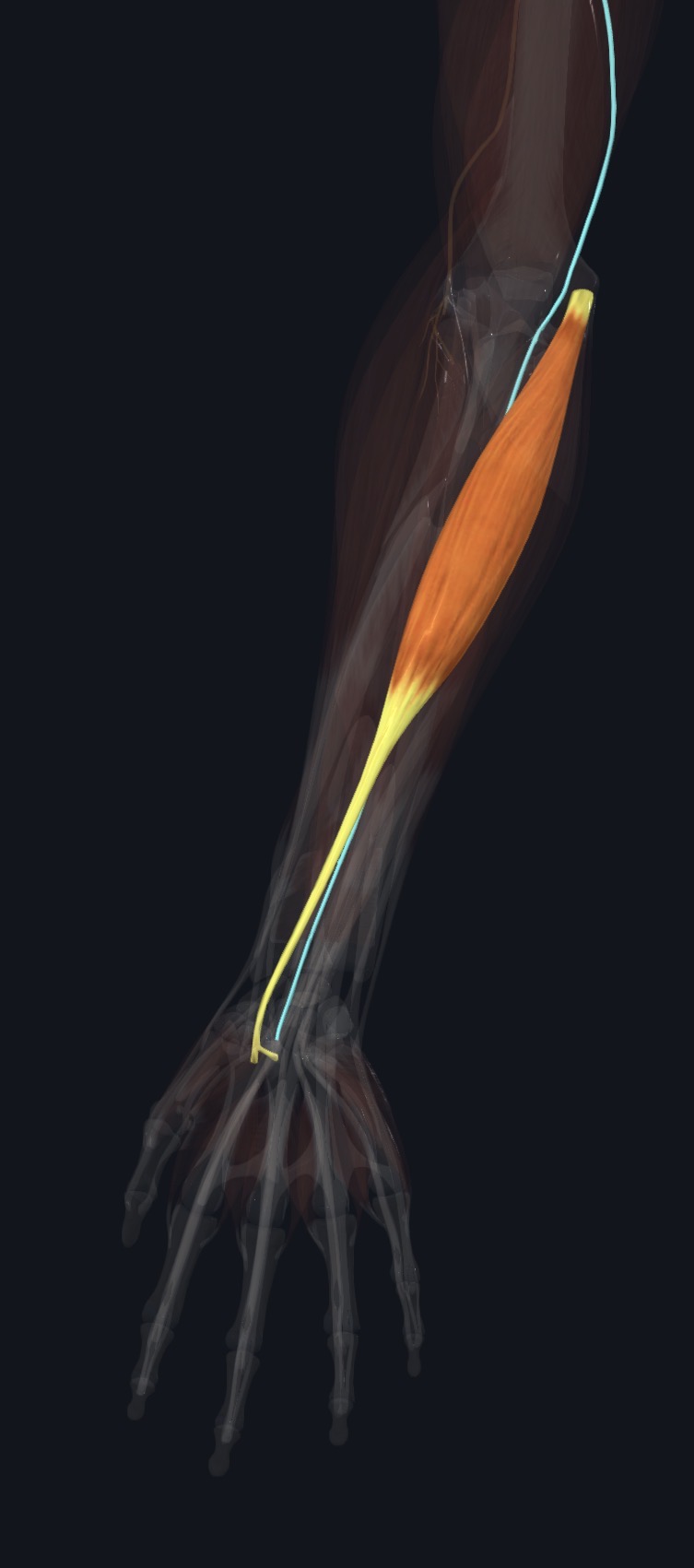
| Nerve | Median nerve, primarily C6–C7. |
|---|
The median nerve also supplies other superficial forearm flexors and passes through the carpal tunnel just medial to the FCR tendon, so wrist and hand symptoms may involve the nerve as well as the muscle.
Section 06 of 20
Blood Supply
| Blood | Muscular branches of the radial and ulnar arteries, with contributions from the anterior ulnar recurrent artery. |
|---|
Section 07 of 20
Pictures and Visual Anatomy
Section 08 of 20
Functional Movement
FCR is used in gripping, throwing, hammering, racquet sports, typing, and any task that combines wrist flexion with a slight tilt toward the thumb. It stabilizes the wrist when the fingers grasp.
Section 09 of 20
Synergists and Antagonists
Synergists: palmaris longus and flexor carpi ulnaris in wrist flexion; extensor carpi radialis longus and brevis and abductor pollicis longus in radial deviation. Antagonists: the wrist extensors (extensor carpi radialis and ulnaris) oppose flexion; extensor carpi ulnaris and flexor carpi ulnaris oppose radial deviation.
Section 10 of 20
Palpation and Location
Client position and technique
Position the client with the forearm supported, palm up. Ask for gentle wrist flexion with a slight tilt toward the thumb against light resistance. The FCR tendon stands out on the radial side of the wrist crease, medial to the radial artery pulse. Follow it up the forearm to the belly, which is the most lateral of the superficial flexors.
Protect nearby structures
Do not press on the radial artery pulse, and keep pressure light over the tendon at the wrist where the median nerve and carpal tunnel are close. Avoid the medial epicondyle if it is tender, and stop if pressure causes tingling into the hand.
Section 11 of 20
Massage Therapy Relevance
The forearm flexors are heavily used by therapists, desk workers, and athletes. Medial elbow, forearm, and wrist pain may involve FCR, but it may also reflect nerve, joint, or neck problems.
Section 12 of 20
Dysfunction: What Happens When Movement Goes Wrong
Changes in how a muscle works can change how a joint moves. The points below describe possibilities that may be associated with altered muscle function; they are not diagnoses, and one muscle is never assumed to be the sole cause of a problem.
When the muscle is weak
Weakness may reduce wrist flexion and grip strength and may be associated with median nerve problems.
When it is tight or shortened
Tightness may be associated with limited wrist extension and forearm tension near the medial elbow.
When it is overused
Repetitive gripping and throwing may load the common flexor tendon and may contribute to medial elbow and wrist ache.
When it is strained
A strain may cause pain along the tendon at the wrist with resisted flexion; carpal tunnel and thumb-base problems can look similar.
When it is inhibited or others compensate
Reduced activation may be associated with a weaker grip and compensation from the other wrist flexors.
When it does not coordinate well with synergists and antagonists
Poor coordination with flexor carpi ulnaris, the wrist extensors, and the finger flexors may alter grip mechanics and may load the elbow.
Section 13 of 20
Conditions, Pathologies, and Pain Relationships
Medial epicondylalgia (golfer's elbow)
Overload of the common flexor tendon causes pain at the medial epicondyle, often aggravated by gripping and resisted wrist flexion. Avoid aggressive local pressure.
FCR tendinopathy
Pain along the tendon at the wrist, sometimes near the trapezium, with resisted flexion. It can resemble thumb-base arthritis or De Quervain.
Carpal tunnel syndrome
Numbness, tingling, night symptoms, and weakness in the median-nerve distribution may be mistaken for muscle tightness and need referral.
Differential considerations
Pronator teres syndrome, cervical radiculopathy, scaphoid or thumb-base problems, and inflammatory arthritis can all cause palmar-radial wrist pain.
Section 14 of 20
Example Clinical Relationship
A tennis player reports aching on the inner forearm and pain at the wrist crease on the thumb side. Flexor carpi radialis may be overloaded, and the pattern may be associated with tendinopathy or golfer's elbow, but carpal tunnel syndrome and thumb-base arthritis can look similar. Numbness in the thumb and index finger with night symptoms needs referral.
Section 15 of 20
Massage and Treatment Approaches
For healthy, non-acute tissue, support the forearm palm up and begin with broad effleurage and kneading along the anterior forearm. Progress to comfortable, longitudinal strokes along the muscle belly toward the wrist, keeping pressure away from the carpal tunnel.
| Movement | Use gentle, pain-free active wrist movements; do not force wrist extension into pain. |
|---|---|
| Regional work | Consider the other forearm flexors, pronator teres, biceps, and neck and shoulder posture when history supports it. |
| Avoid | Deep pressure over the medial epicondyle, carpal tunnel, or radial artery, or over an acutely inflamed tendon. |
Section 16 of 20
Precautions and Contraindications
Precautions and contraindications
- Acute injury, suspected fracture, or recent surgery at the elbow, wrist, or hand.
- Use caution with carpal tunnel or cubital tunnel symptoms, inflammatory arthritis, or reduced sensation.
- Avoid open wounds, infection, and marked swelling.
- Ask about anticoagulant use and easy bruising.
Section 17 of 20
Red Flags and When to Refer
Red flags and referral
- Progressive weakness, thenar wasting, or constant numbness in the hand.
- Sudden loss of grip or ability to flex the wrist after a pop.
- Hot, red, swollen wrist or elbow with fever.
- Neck pain with spreading arm weakness, or chest pain and shortness of breath.
Section 18 of 20
Study Summary
Attachments
Origin: medial epicondyle (common flexor tendon). Insertion: bases of the second and third metacarpals.
Actions
Wrist flexion and radial deviation.
Supply
Median nerve (C6–C7); radial and ulnar artery branches.
Section 19 of 20
Instructor Narration
Open narration transcript
Flexor carpi radialis is a superficial muscle of the anterior forearm. It runs from the medial epicondyle of the humerus across the forearm toward the thumb side of the wrist.
It arises from the common flexor tendon and inserts on the palmar base of the second metacarpal, with a slip to the third. Its tendon is easy to find on the radial side of the wrist crease, just medial to the radial artery pulse.
It flexes the wrist and deviates the hand toward the thumb. Palmaris longus and flexor carpi ulnaris help with flexion, and the wrist extensors oppose it.
The median nerve, mainly C6 to C7, supplies it. Blood comes from muscular branches of the radial and ulnar arteries.
To palpate, support the forearm palm up and ask for gentle wrist flexion with a slight tilt toward the thumb. Find the tendon on the radial side of the wrist and follow it to the belly. Do not press on the radial pulse, and stay light near the carpal tunnel.
Golfer's elbow, FCR tendinopathy, carpal tunnel syndrome, and neck problems can overlap. Refer progressive weakness, thenar wasting, constant numbness, sudden loss of wrist flexion, a hot swollen joint, or neck pain with spreading arm weakness.
Remember: medial epicondyle to the second and third metacarpal bases, wrist flexion with radial deviation, and the median nerve.
Section 20 of 20