Section 01 of 20
Introduction
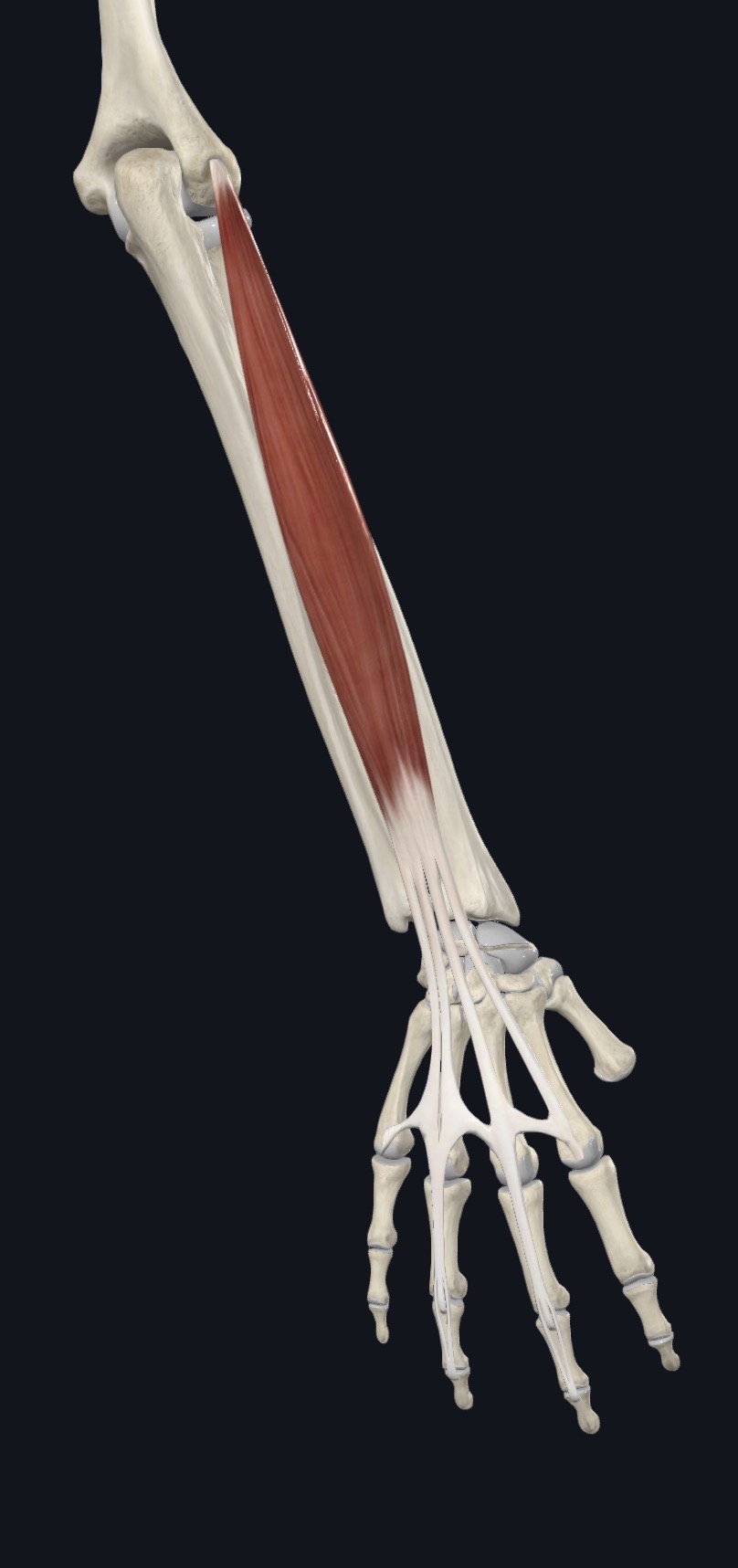
Extensor digitorum is a superficial posterior forearm muscle. Its broad belly separates distally into four tendons that pass under the extensor retinaculum in the fourth dorsal compartment and join the extensor expansions of the index through little fingers. Intertendinous connections on the back of the hand limit completely independent finger extension.
Section 02 of 20
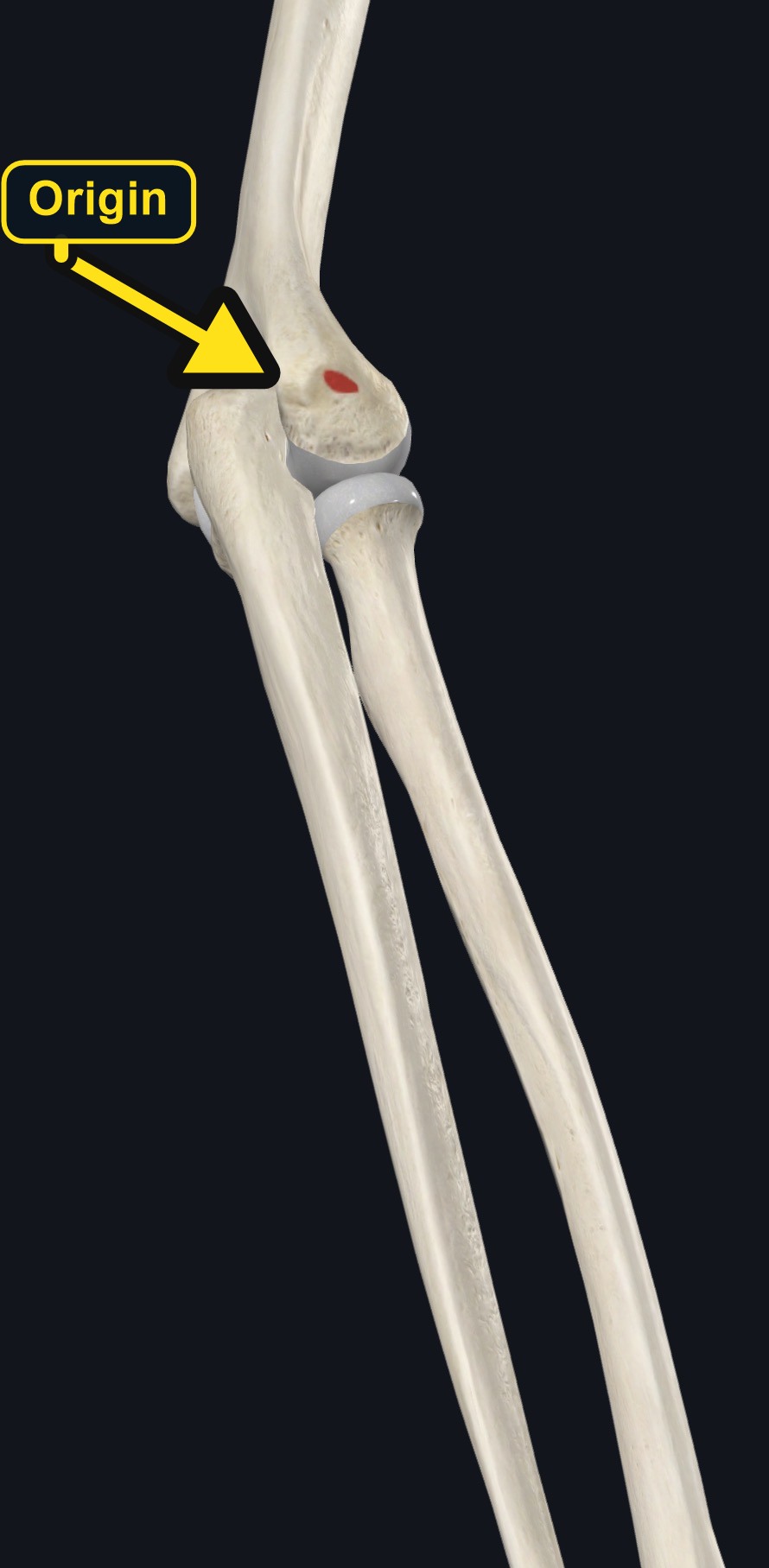
Origin
| Origin | Common extensor tendon from the lateral epicondyle of the humerus, with adjacent fascial septa. |
|---|
Section 03 of 20
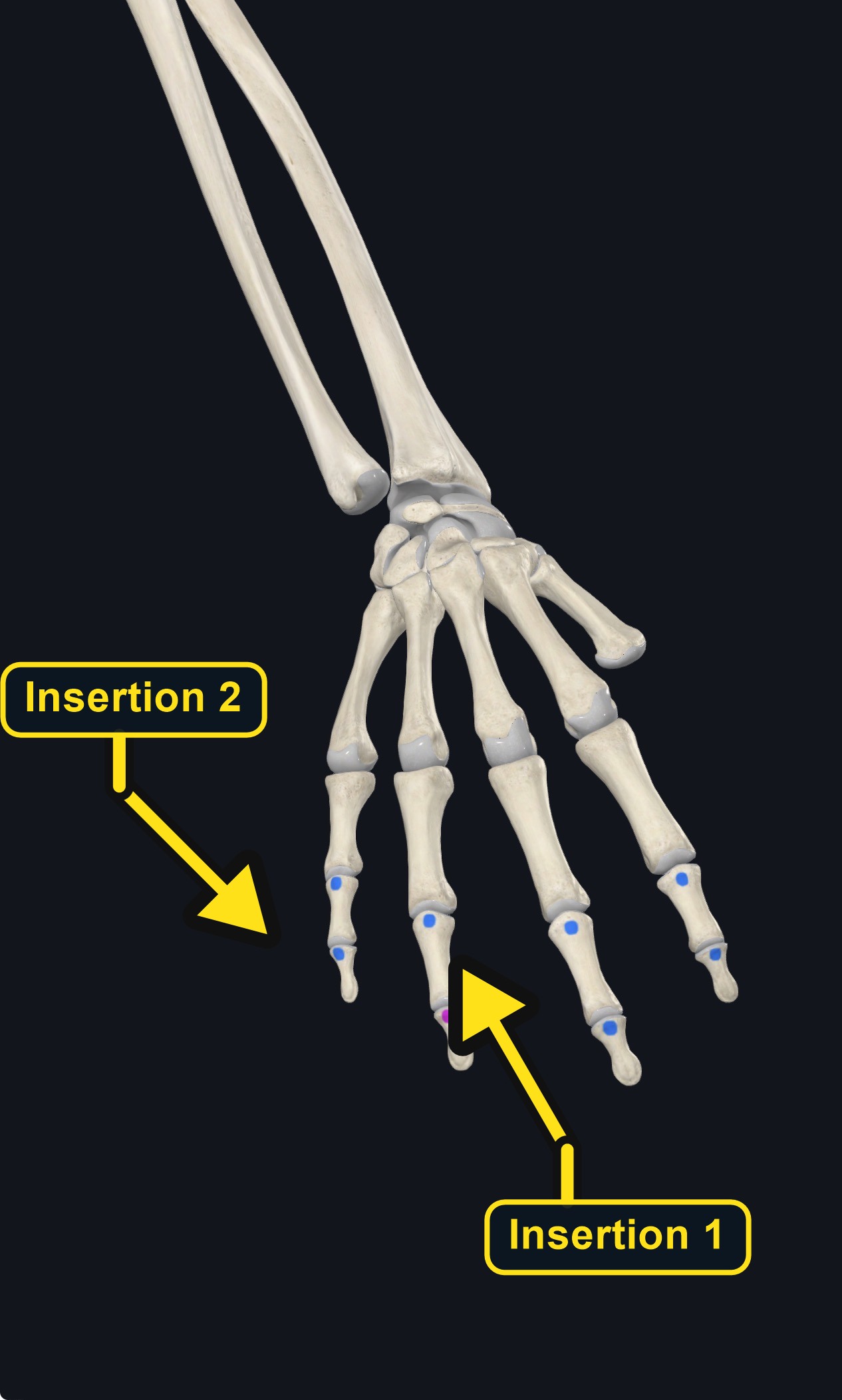
Insertion
| Insertion | Extensor expansions of digits 2–5; central slips reach middle phalanges and lateral bands continue toward distal phalanges through the extensor mechanism. |
|---|
Section 04 of 20
Actions
| Primary action | Extension of the fingers (digits 2 to 5) at the metacarpophalangeal joints. |
|---|---|
| Secondary actions | Assists extension at the interphalangeal joints and assists wrist extension. |
| Movement at the joint | Metacarpophalangeal, interphalangeal, and wrist joints. |
| Heads / fiber groups | Single muscle belly with four tendons connected by juncturae tendinum. |
| Functional examples | Opening the hand to release an object; typing; playing piano; spreading the fingers. |
- Extends digits 2–5, especially at the metacarpophalangeal joints.
- Contributes through the extensor mechanism to interphalangeal extension with intrinsic hand muscles.
- Assists wrist extension.
Functional use includes releasing a grasp, opening the hand, typing, piano playing, and positioning the fingers for object handling.
Section 05 of 20
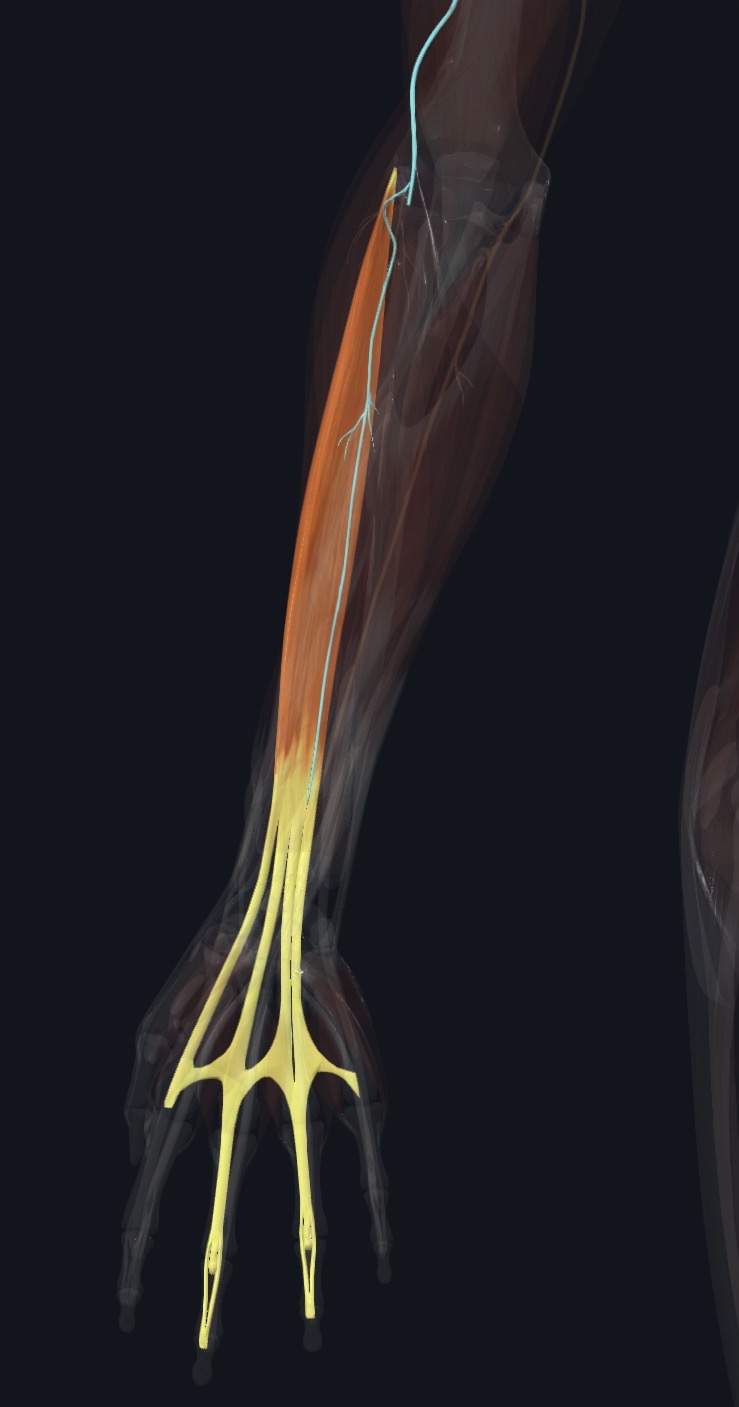
Nerve Innervation
| Nerve | Posterior interosseous nerve, continuation of the deep branch of the radial nerve. |
|---|---|
| Roots | C7-C8. |
Section 06 of 20
Blood Supply
| Blood supply | Posterior interosseous artery with regional radial recurrent contributions. |
|---|
Section 07 of 20
Pictures and Visual Anatomy
Section 08 of 20
Functional Movement
Extensor digitorum opens the hand and straightens the fingers when releasing a grip, typing, playing an instrument, or reaching. It also helps keep the wrist steady while the fingers work, which is why forearm extensor fatigue is common with computer work.
Section 09 of 20
Synergists and Antagonists
Synergists: extensor indicis, extensor digiti minimi, lumbricals and interossei for coordinated extension; wrist extensors stabilize the wrist. Antagonists: flexor digitorum superficialis/profundus and the intrinsic finger flexors.
Section 10 of 20
Palpation and Location
Support a pronated forearm. Ask the client to gently extend digits 2–5 while keeping the wrist near neutral. Palpate the central superficial extensor mass distal to the lateral epicondyle, then follow the tendons onto the dorsal hand. Avoid forceful repeated resisted extension when the lateral elbow or tendons are irritable.
Section 11 of 20
Massage Therapy Relevance
Repetitive gripping, keyboard work, racquet sports, climbing, and manual tools can load this muscle. Symptoms may overlap with lateral epicondylalgia, extensor tenosynovitis, posterior interosseous neuropathy, joint pathology, or cervical referral. Massage therapists describe findings and response to movement rather than diagnosing a single source.
Section 12 of 20
Dysfunction: What Happens When Movement Goes Wrong
Changes in how a muscle works can change how a joint moves. The points below describe possibilities that may be associated with altered muscle function; they are not diagnoses, and one muscle is never assumed to be the sole cause of a problem.
When the muscle is weak
Weakness may make it hard to straighten the fingers and may be associated with radial nerve problems (finger drop), so it needs assessment.
When it is tight or shortened
Tightness may be associated with discomfort when making a full fist and may add tension on the back of the forearm.
When it is overused
Repetitive typing or mouse use may overload the muscle and may contribute to aching in the posterior forearm.
When it is strained
A strain may cause pain with resisted finger extension; sudden loss of extension after injury needs assessment.
When it is inhibited or others compensate
Reduced activation may be associated with a flexed finger posture and more reliance on the wrist extensors.
When it does not coordinate well with synergists and antagonists
Poor coordination with the finger flexors and the wrist extensors may alter grip release and may contribute to forearm fatigue.
Section 13 of 20
Conditions, Pathologies, and Pain Relationships
Overuse and lateral elbow pain
Local tenderness may accompany repetitive extensor loading. ECRB is often emphasized in tennis elbow, so extensor digitorum should not be assumed to be the sole tissue involved.
Tendon irritation
Dorsal wrist/hand pain or swelling may involve the extensor tendons or their sheaths. Acute inflammation and crepitus require caution.
Posterior interosseous neuropathy
Finger-extension weakness without typical sensory loss can reflect motor nerve involvement and warrants evaluation.
Section 14 of 20
Example Clinical Relationship
A typist reports an ache along the back of the forearm that worsens toward the end of the day. Extensor digitorum may be fatigued and may be associated with repetitive strain, but radial tunnel syndrome, lateral elbow problems, and cervical nerve irritation can present similarly. Weak or absent finger extension, wasting, or spreading numbness needs referral.
Section 15 of 20
Massage and Treatment Approaches
Begin broadly through the posterior forearm, use tolerable longitudinal work, and avoid painful friction over an acutely irritated tendon. Consider wrist position, grip load, lateral elbow tissues, and radial-nerve screening. Massage may support comfort but does not repair tendon tears or nerve injury.
- Broad warming and compressions to the extensor compartment.
- Gentle stripping from muscle belly toward the tendons.
- Comfortable wrist and finger flexion to lengthen the tissue.
- Supine, prone, or seated with the forearm supported.
Section 16 of 20
Precautions and Contraindications
Avoid local work with acute trauma, fracture suspicion, infection, marked swelling, open wounds, acute tendon inflammation, or recent surgery without clearance. Modify pressure for anticoagulation, fragile skin, and nerve-sensitive symptoms.
Section 17 of 20
Red Flags and When to Refer
Refer sudden inability to extend fingers, progressive weakness, wrist drop, persistent numbness, traumatic deformity, rapidly increasing swelling, fever/redness, or pain that is worsening despite appropriate activity modification.
Section 18 of 20
Study Summary
Origin: lateral epicondyle. Insertion: extensor expansions of digits 2–5. Action: finger extension; assists wrist extension. Innervation: posterior interosseous nerve, C7-C8. Clinical key: finger-extension weakness is a referral finding.
Section 19 of 20
Instructor Narration
Open complete narration
Section 20 of 20