Section 01 of 20
Introduction
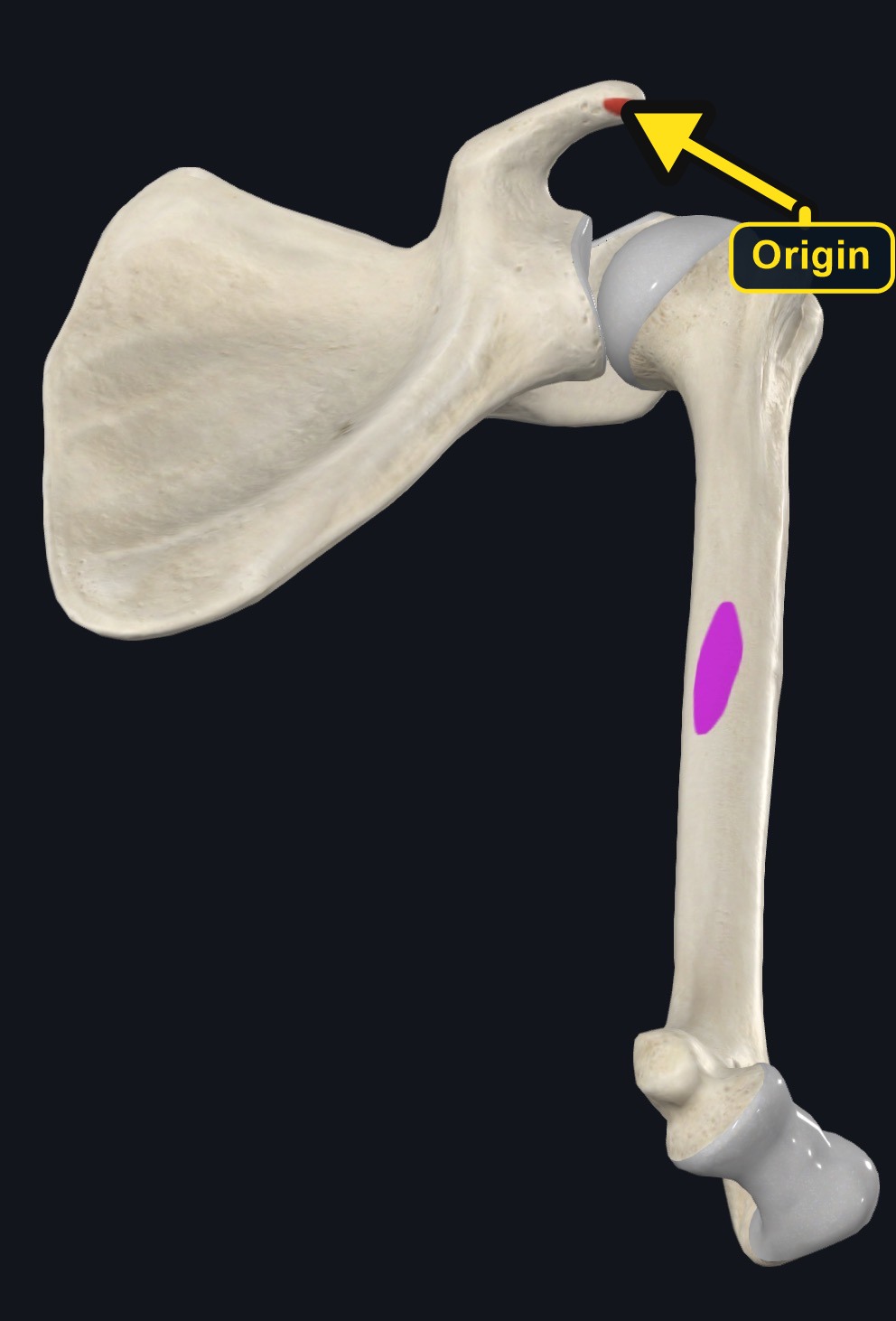
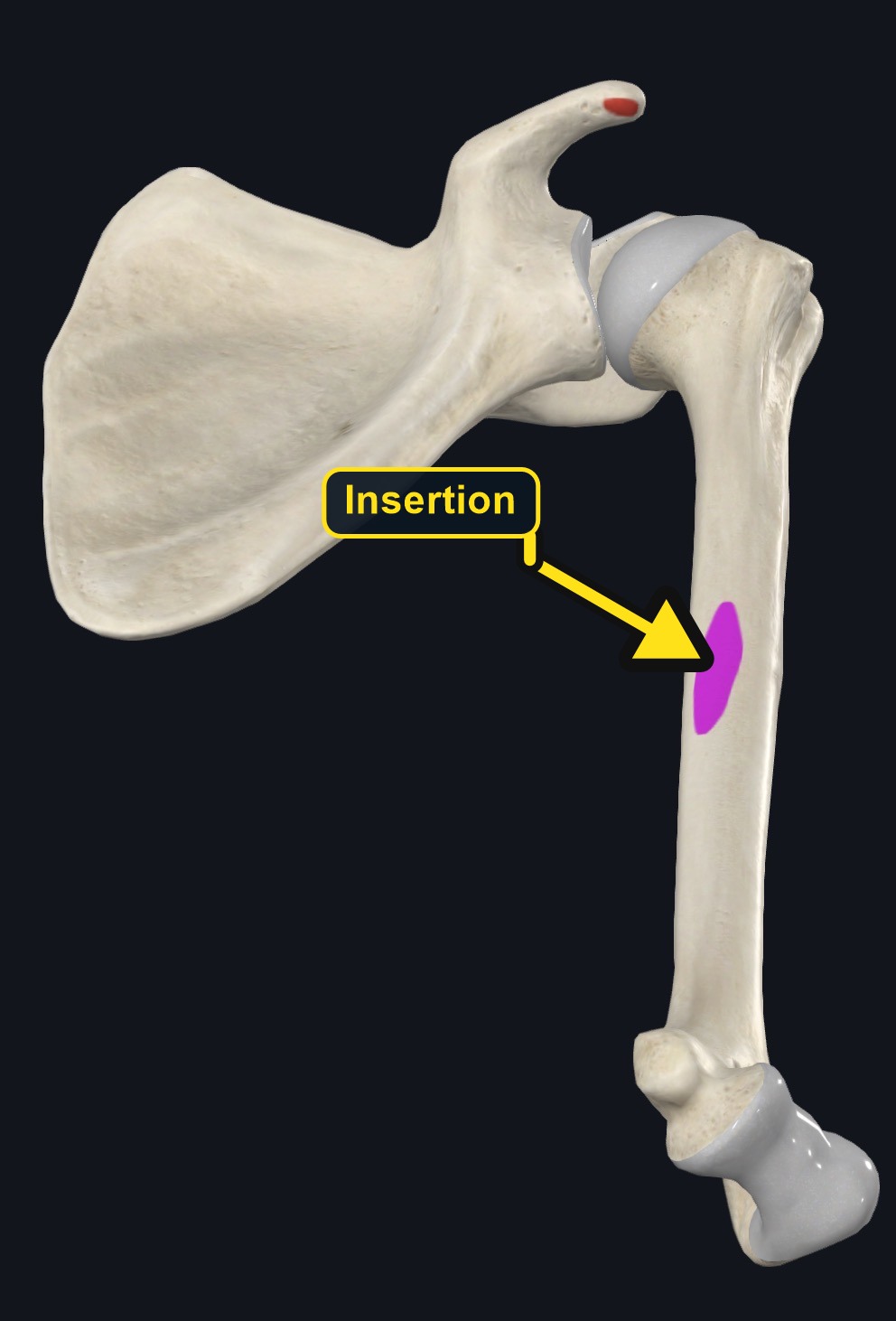
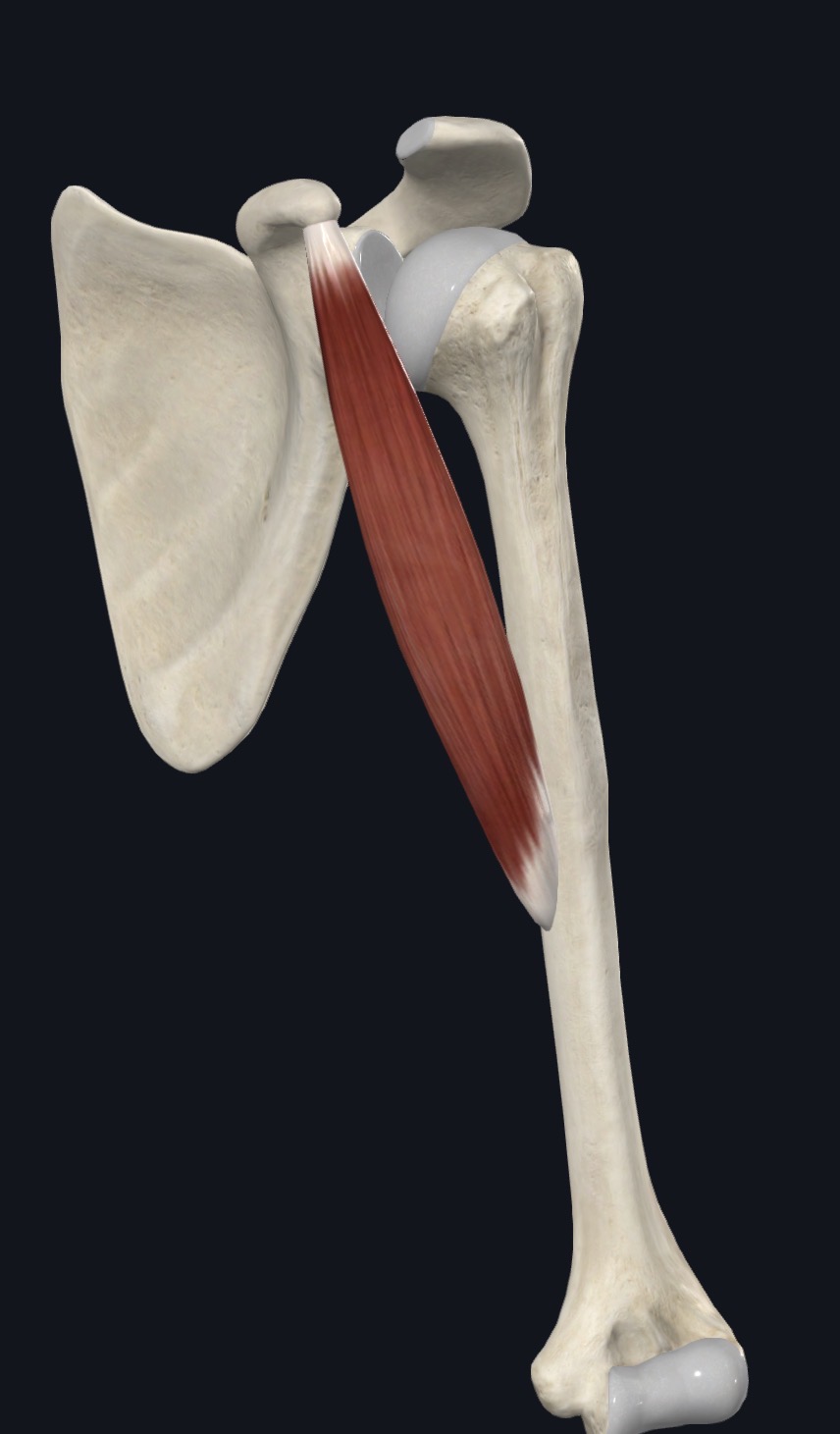
Coracobrachialis is a slender muscle in the proximal medial arm. It begins at the coracoid process beside the short head of biceps brachii, crosses only the shoulder joint, and ends midway down the medial humerus.
It lies deep and medial to the short head of biceps, near the axilla. Unlike biceps and brachialis, it does not cross the elbow. Its name describes its path: coraco for coracoid and brachialis for arm.
Parts and variation
Coracobrachialis is usually described as one muscle rather than named heads. Anatomical variants can include additional slips or heads. The musculocutaneous nerve usually pierces it, although the nerve may pass beside it in some people.
Section 02 of 20
Origin
| Origin | Tip of the coracoid process of the scapula, commonly through a shared proximal tendon with the short head of biceps brachii. |
|---|
Section 03 of 20
Insertion
| Insertion | Middle third of the medial or anteromedial surface and medial border of the humerus. |
|---|
Section 04 of 20
Actions
No dedicated action video is currently available. This movement is explained below and video will be added when verified source media becomes available.
| Primary action | Shoulder flexion. |
|---|---|
| Secondary actions | Adduction of the arm and stabilization of the humeral head in the glenohumeral joint. |
| Movement at the joint | Glenohumeral (shoulder) joint. |
| Heads / fiber groups | Single muscle belly; no separate heads. |
| Functional examples | Reaching forward and across the body; pulling the arm toward the chest; stabilizing the shoulder when carrying. |
Shoulder flexion
Assists bringing the arm forward, especially from neutral or slight extension.
Shoulder adduction
Draws the humerus toward the trunk and helps control abduction.
Stability
Helps steady the humeral head and resist excessive downward displacement during carrying.
Section 05 of 20
Nerve Innervation
Nerve
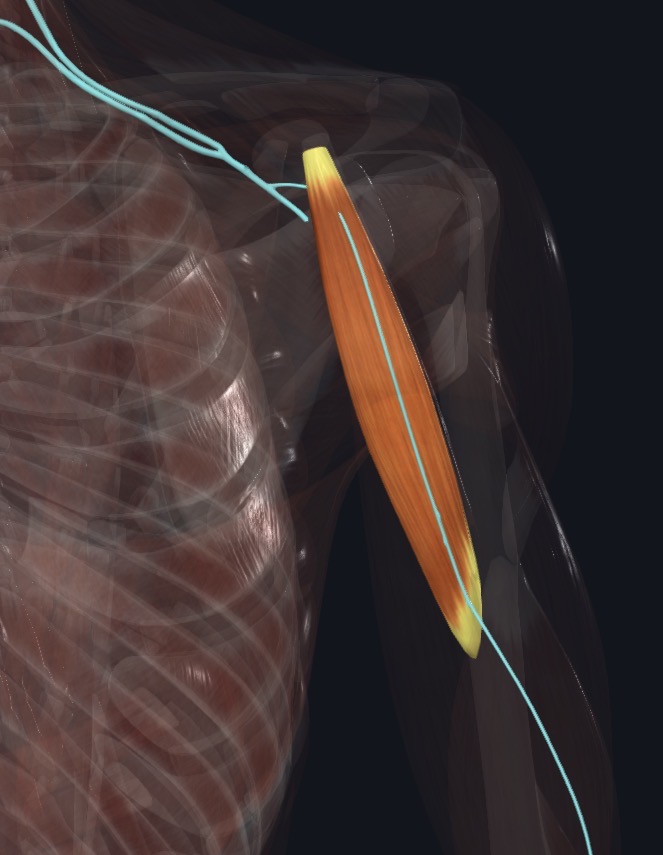
Musculocutaneous nerve, C5–C7. The nerve commonly pierces coracobrachialis, then travels between biceps brachii and brachialis. Anatomical variation is common enough that this relationship should not be treated as identical in every person.
Section 06 of 20
Blood Supply
Blood supply
Muscular branches of the brachial artery, with proximal contribution from branches associated with the axillary artery.
Section 07 of 20
Pictures and Visual Anatomy
Section 08 of 20
Functional Movement
Functional examples include hugging an object to the torso, reaching forward and inward, steadying the arm while carrying, and returning an abducted arm toward the body.
Section 09 of 20
Synergists and Antagonists
Synergists: anterior deltoid and clavicular pectoralis major for flexion; pectoralis major, latissimus dorsi, and teres major for adduction. Antagonists: posterior deltoid and latissimus dorsi oppose flexion; middle deltoid and supraspinatus oppose adduction.
Section 10 of 20
Palpation and Location
Client position
Supine or seated with the arm supported. Place the shoulder in slight flexion and adduction. Ask the client to gently press the arm inward and forward against very light resistance.
Locate the coracoid process carefully, then palpate inferiorly along the proximal medial arm, deep to the short head of biceps. Use broad, modest contact because the muscle is small and deep.
Protect nearby structures
The axilla and medial upper arm contain the brachial plexus, axillary/brachial vessels, lymph nodes, and other vulnerable structures. Do not pursue the muscle with deep, pointed pressure. Reproduction of tingling, electric pain, numbness, or vascular symptoms means stop immediately.
Section 11 of 20
Massage Therapy Relevance
Coracobrachialis is a small muscle deep to the biceps and the front of the shoulder, and it is often overlooked. It contributes to shoulder flexion and adduction and can be involved in anterior shoulder and inner-arm tension in people who reach forward or carry loads. Because the musculocutaneous nerve pierces it and the axillary neurovascular structures lie nearby, deep pressure needs care.
Section 12 of 20
Dysfunction: What Happens When Movement Goes Wrong
Changes in how a muscle works can change how a joint moves. The points below describe possibilities that may be associated with altered muscle function; they are not diagnoses, and one muscle is never assumed to be the sole cause of a problem.
When the muscle is weak
Weakness may reduce forward-reaching strength and shoulder stability and may shift work to the anterior deltoid and pectoralis major.
When it is tight or shortened
Tightness may be associated with limited shoulder abduction and extension and may contribute to anterior shoulder and inner-arm tension.
When it is overused
Repetitive reaching, throwing, or carrying may load the muscle and may contribute to anterior shoulder ache.
When it is strained
A strain may cause pain in the upper inner arm with resisted flexion or adduction; nearby biceps and shoulder joint problems can look similar.
When it is inhibited or others compensate
Reduced activation may be associated with less anterior stability and compensation from the biceps and deltoid.
When it does not coordinate well with synergists and antagonists
Poor coordination with the biceps, pectoralis major, and rotator cuff may alter shoulder control and may be associated with anterior shoulder symptoms.
Section 13 of 20
Conditions, Pathologies, and Pain Relationships
Overuse or strain
Repetitive reaching, carrying, throwing, or pulling the arm inward may contribute to soreness or strain. Symptoms are nonspecific and can overlap biceps, pectoralis major, rotator-cuff, or joint problems.
Musculocutaneous nerve relationship
Because the nerve often pierces the muscle, anatomical tension or compression has been proposed as one possible site of irritation. True neuropathy is uncommon and requires medical evaluation. Possible findings include weakness in elbow flexion/supination or altered sensation over the lateral forearm—not simply a tender coracobrachialis.
Anterior shoulder pain
Coracoid-region tenderness may also involve the short head of biceps, pectoralis minor, joint capsule, or nearby neurovascular structures. Tenderness alone does not identify the pain generator.
Pain relationships
Medial arm symptoms may arise from cervical radiculopathy, brachial plexus irritation, peripheral nerve problems, vascular conditions, or referred pain. Massage therapists should screen and refer rather than diagnose.
Section 14 of 20
Example Clinical Relationship
A client who throws overhand reports deep pain at the front of the shoulder and tingling on the outer forearm. Coracobrachialis may be involved because the musculocutaneous nerve passes through it, and the pattern may be associated with nerve irritation, but the biceps tendon, rotator cuff, and neck can cause similar symptoms. Progressive weakness or persistent numbness needs referral.
Section 15 of 20
Massage and Treatment Approaches
Positioning: supine with the arm supported slightly away from the trunk, or side-lying with pillows. Preserve modesty and avoid prolonged overhead positioning.
| Broad warming | Begin over the anterior and medial arm with light pressure to assess comfort. |
|---|---|
| Compression | Use broad, gentle contact over the accessible muscle belly; avoid pointed pressure toward the axilla. |
| Longitudinal work | Short, slow glides along the upper medial arm, staying clear of palpable pulses and neural sensations. |
| Movement | Comfortable shoulder extension and abduction may lengthen the muscle; keep the range small and symptom-free. |
| Regional plan | Consider biceps, brachialis, pectorals, deltoid, latissimus dorsi, and rotator cuff according to assessment. |
Section 16 of 20
Precautions and Contraindications
Modify or avoid
- Acute strain, swelling, bruising, infection, or recent surgery.
- Recent vaccination, catheter, lymph-node procedure, or medically restricted arm.
- Anticoagulant use, fragile skin, impaired sensation, or lymphedema risk.
- Avoid strong pressure in the axilla and medial neurovascular corridor.
Section 17 of 20
Red Flags and When to Refer
Refer
- New weakness, spreading numbness, electric pain, or loss of lateral-forearm sensation.
- Unexplained swelling, discoloration, coldness, absent/changed pulse, or severe arm heaviness.
- Major trauma, deformity, fever, redness, or worsening unexplained pain.
- Chest pressure, shortness of breath, sweating, or pain radiating into the arm requires urgent evaluation.
Section 18 of 20
Study Summary
Attachments
Coracoid process to the middle medial humerus.
Actions
Assists shoulder flexion and adduction; helps steady the humerus.
Supply
Musculocutaneous nerve, C5–C7; muscular branches of the brachial artery.
Section 19 of 20
Instructor Narration
Open narration transcript
Start at the coracoid process, the small hook of scapula at the front of the shoulder. From its tip, coracobrachialis travels down the proximal medial arm and attaches midway along the humerus. It shares its origin region with the short head of biceps but, unlike biceps, never crosses the elbow.
Its actions are modest shoulder flexion and adduction. Think of reaching forward and inward or holding an object close to the body. It also helps steady the humerus. Anterior deltoid and clavicular pectoralis major assist flexion, while pectoralis major, latissimus dorsi, and teres major assist adduction.
The musculocutaneous nerve, carrying C5 through C7 fibers, commonly pierces coracobrachialis. That relationship makes careful touch essential. The axilla and medial arm also contain major vessels, nerves, and lymphatic structures. Broad, gentle work is more appropriate than pointed searching.
To locate the muscle, support the client supine or seated and ask for a small inward-and-forward press. Palpate below the coracoid and deep to the short head of biceps. Stop if contact produces tingling, electrical pain, numbness, vascular change, or unexpected weakness.
Coracoid or medial-arm pain is not automatically coracobrachialis. Biceps, pectoralis minor, shoulder structures, cervical roots, and the brachial plexus can create overlapping symptoms. For healthy non-acute tissue, use broad warming, gentle compression, careful gliding, and comfortable movement. Refer neurological, vascular, traumatic, infectious, or unexplained progressive presentations.
Section 20 of 20