Section 01 of 20
Introduction
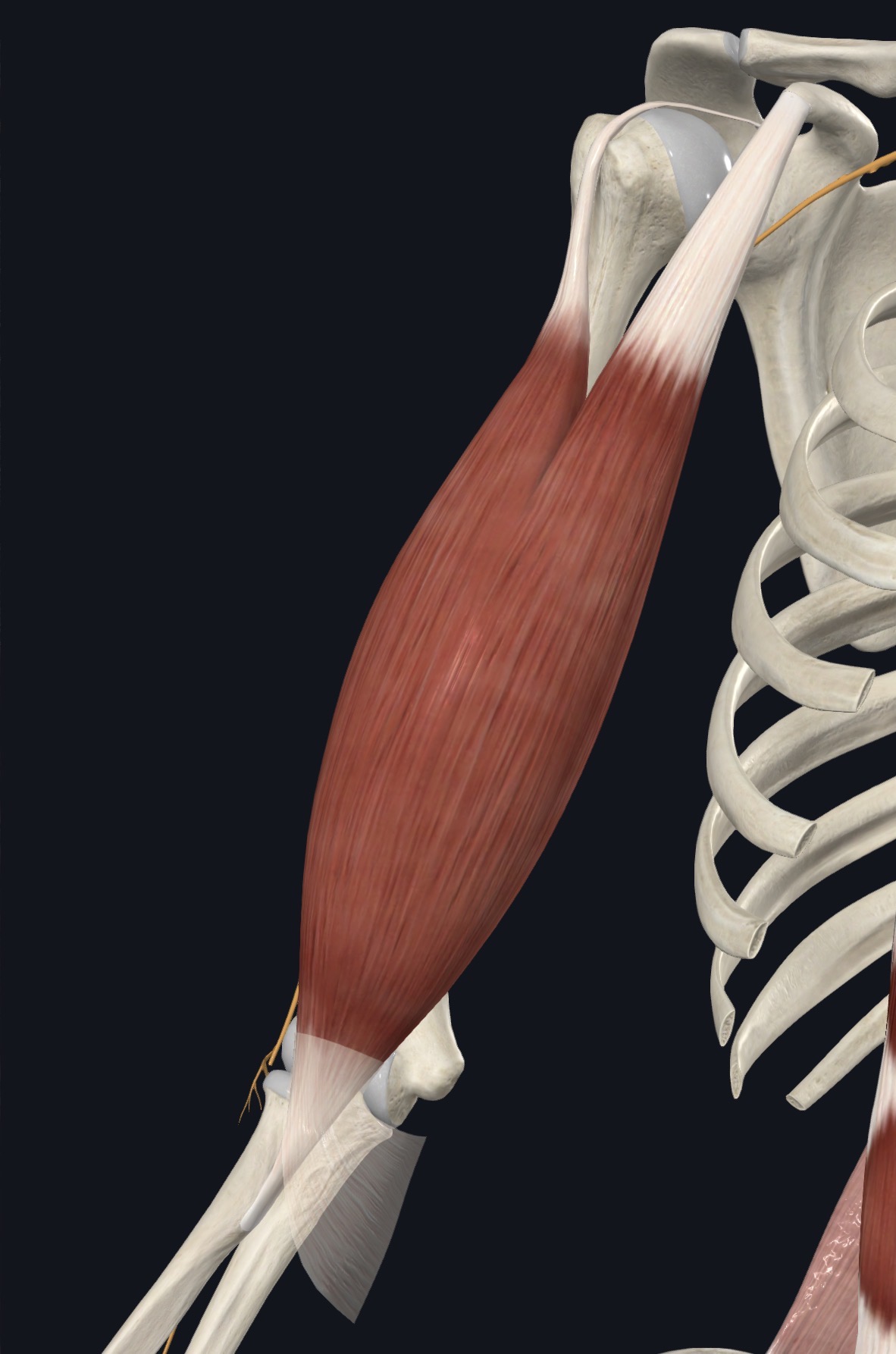
The biceps brachii is a superficial, fusiform muscle on the front of the upper arm. Its name means “two-headed muscle of the arm.” A long head and a short head begin separately on the scapula, merge into a common belly, and cross the elbow to reach the radius.
Because it crosses the shoulder and elbow and attaches to the radius, it can influence movement at the shoulder, elbow, and forearm. Its most distinctive role is forearm supination, with elbow flexion as another major action.
Long head and short head
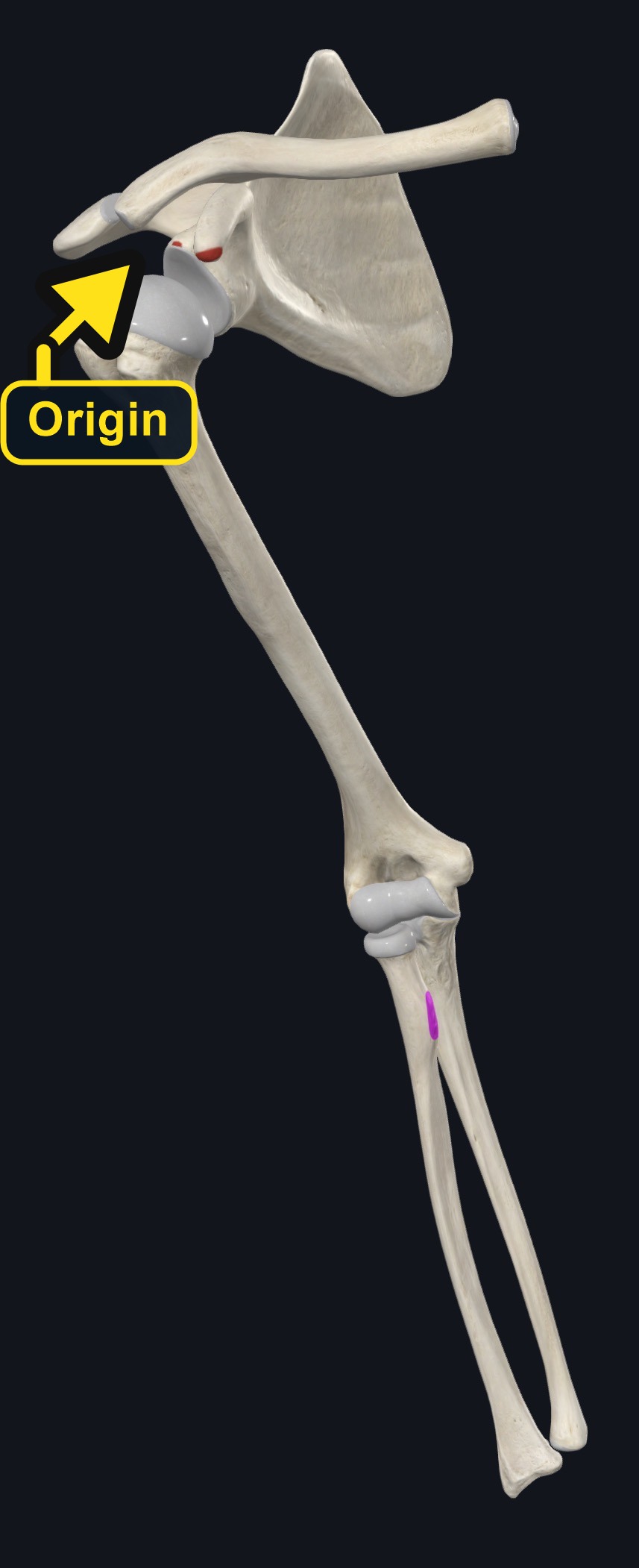
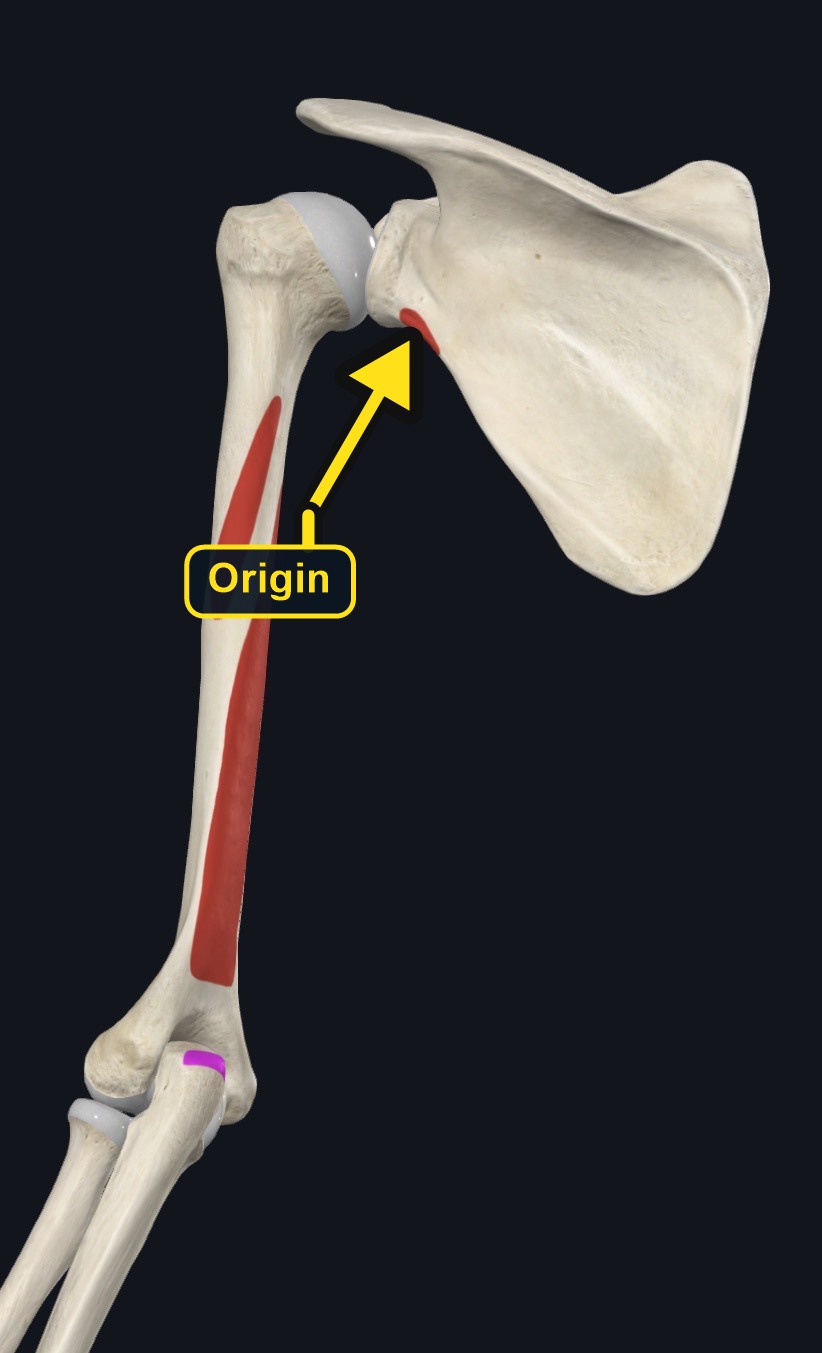
Long head: begins at the supraglenoid tubercle and superior glenoid labrum. Its intracapsular, extrasynovial tendon crosses the humeral head before descending in the intertubercular groove. It lies more laterally in the arm.
Short head: begins at the coracoid process alongside coracobrachialis. It lies more medially and joins the long head to form the common belly.
Section 02 of 20
Origin
| Long-head origin | Supraglenoid tubercle of the scapula, with attachment to the superior glenoid labrum. |
|---|---|
| Short-head origin | Tip or apex of the coracoid process, sharing a common tendon with coracobrachialis. |
Section 03 of 20
Insertion
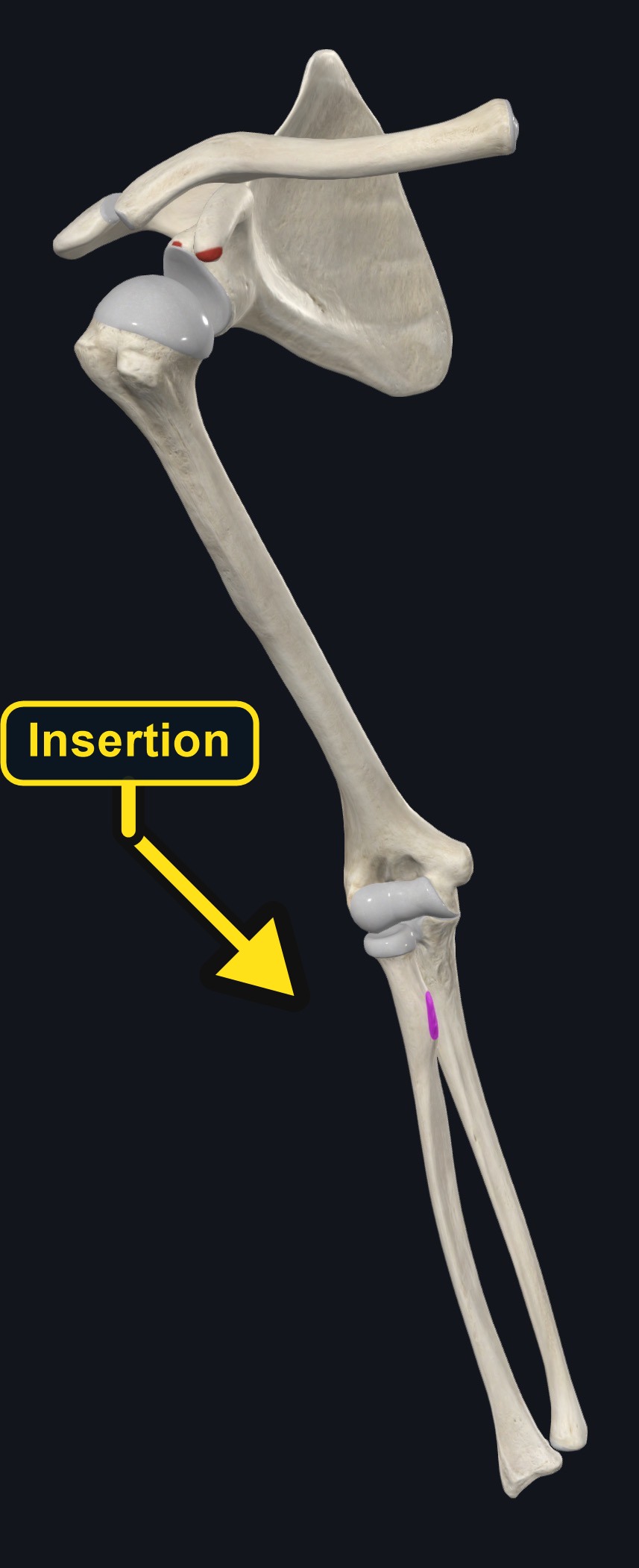
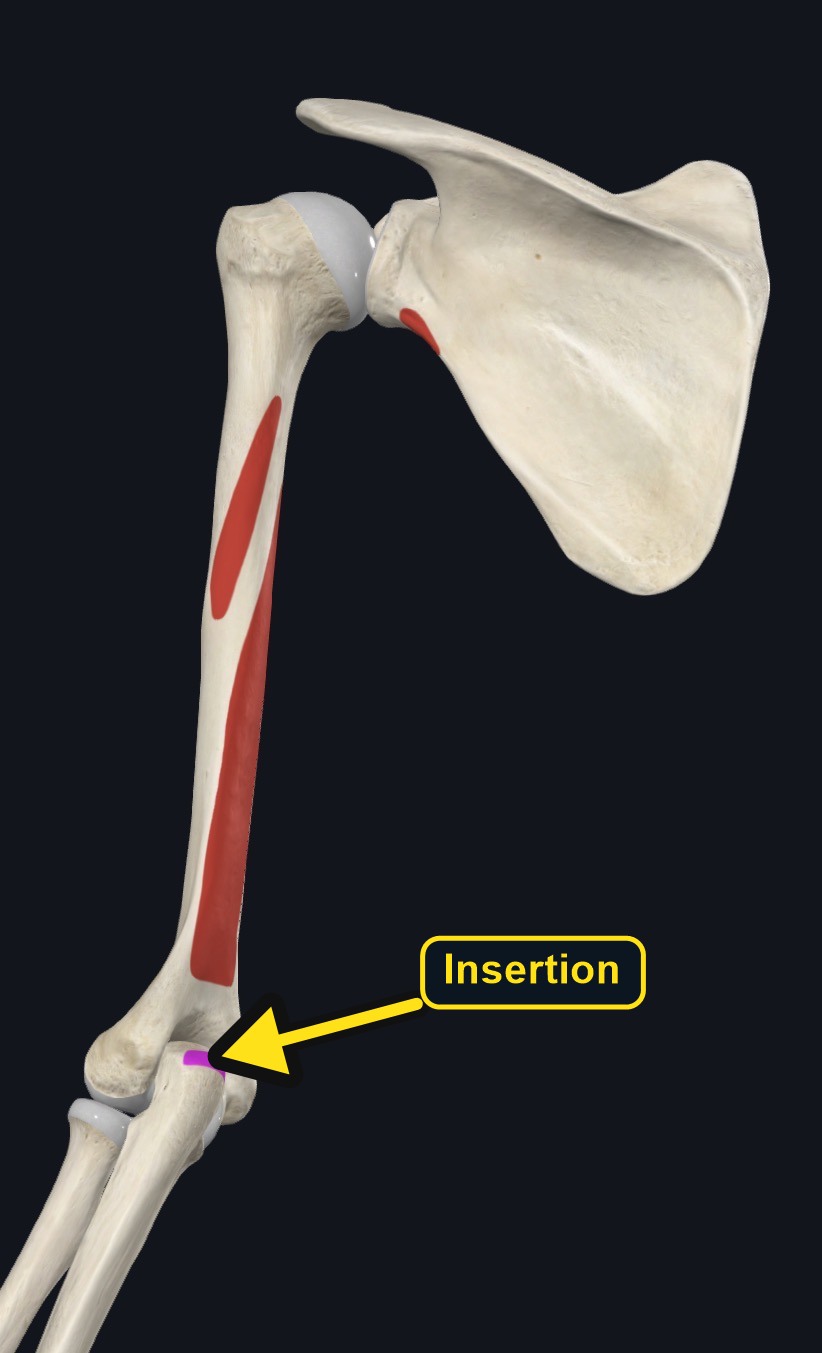
| Insertion | Radial tuberosity and forearm fascia through the bicipital aponeurosis (lacertus fibrosus). |
|---|
Section 04 of 20
Actions
| Primary action | Forearm supination (especially with the elbow flexed). |
|---|---|
| Secondary actions | Elbow flexion; both heads assist shoulder flexion, and the long head may contribute to glenohumeral stability. |
| Movement at the joint | Radioulnar joints (supination), elbow (flexion), and shoulder (weak flexion). |
| Heads / fiber groups | Long head (supraglenoid tubercle, lateral) and short head (coracoid process, medial), sharing a common distal tendon. |
| Functional examples | Turning a screwdriver or door handle; lifting a cup palm-up; carrying a box; pulling and rowing. |
Supination
Rotates the radius so the palm faces anteriorly or upward. Biceps is especially effective as a supinator when the elbow is flexed.
Elbow flexion
Brings the forearm toward the arm. Its contribution is strongest with the forearm supinated; brachialis remains an important flexor in every forearm position.
At the shoulder
Both heads can assist shoulder flexion. The long-head tendon may contribute to dynamic glenohumeral stability, while the rotator cuff remains central to humeral-head control.
Section 05 of 20
Nerve Innervation
Innervation
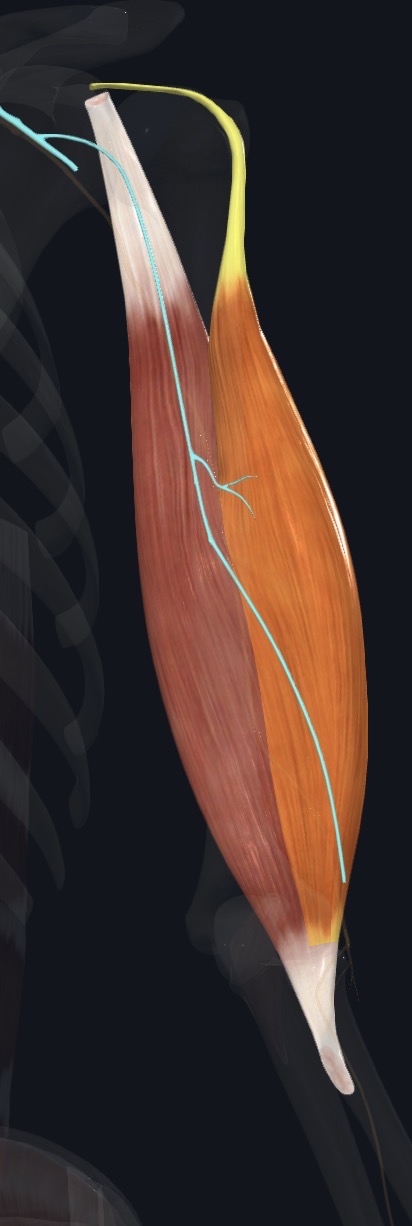
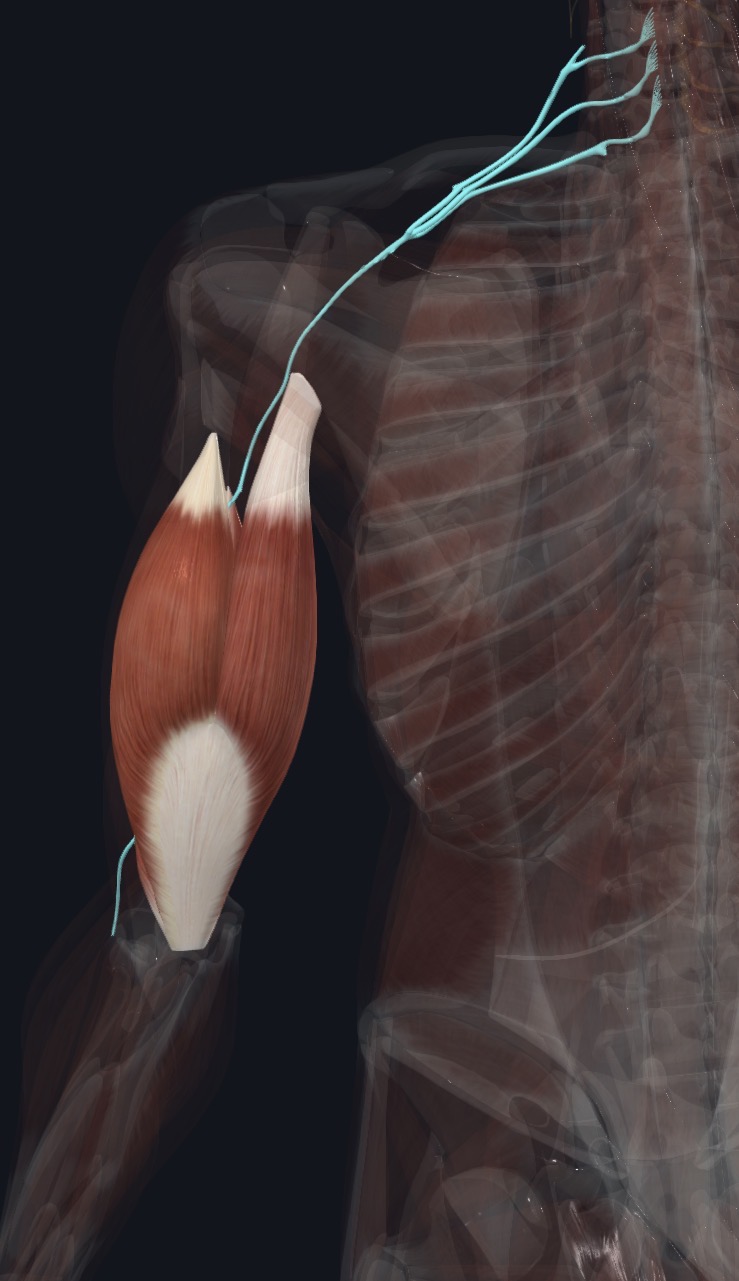
Musculocutaneous nerve, primarily C5–C6. It arises from the lateral cord of the brachial plexus, pierces coracobrachialis, and travels between biceps and brachialis before continuing as the lateral cutaneous nerve of the forearm.
Section 06 of 20
Blood Supply
Blood supply
The principal supply is from muscular branches of the brachial artery. This artery and nearby neurovascular structures lie medial/deep to biceps and enter the cubital fossa—an important reason to avoid indiscriminate deep pressure there.
Section 07 of 20
Pictures and Visual Anatomy
Section 08 of 20
Functional Movement
Functional movement: turning a screwdriver, lifting a cup palm-up, carrying a box, pulling, rowing, and controlling a load as the elbow opens all recruit biceps to different degrees.
Section 09 of 20
Synergists and Antagonists
Synergists
BrachialisBrachioradialisSupinator
Brachialis and brachioradialis assist elbow flexion; supinator assists forearm supination.
Antagonists
Triceps brachiiAnconeusPronator teresPronator quadratus
Elbow extensors oppose flexion; pronators oppose supination.
Section 10 of 20
Palpation and Location
Client position
Seat the client or position them supine. Support the arm, flex the elbow to about 90 degrees, and begin with the forearm supinated.
- Place relaxed fingers over the anterior upper arm.
- Ask for gentle elbow flexion against light resistance; the superficial belly becomes prominent.
- With the elbow bent, ask for gentle palm-up rotation to reinforce the supination action.
- Follow the distal tendon toward the front of the elbow with light contact only.
Orientation and caution
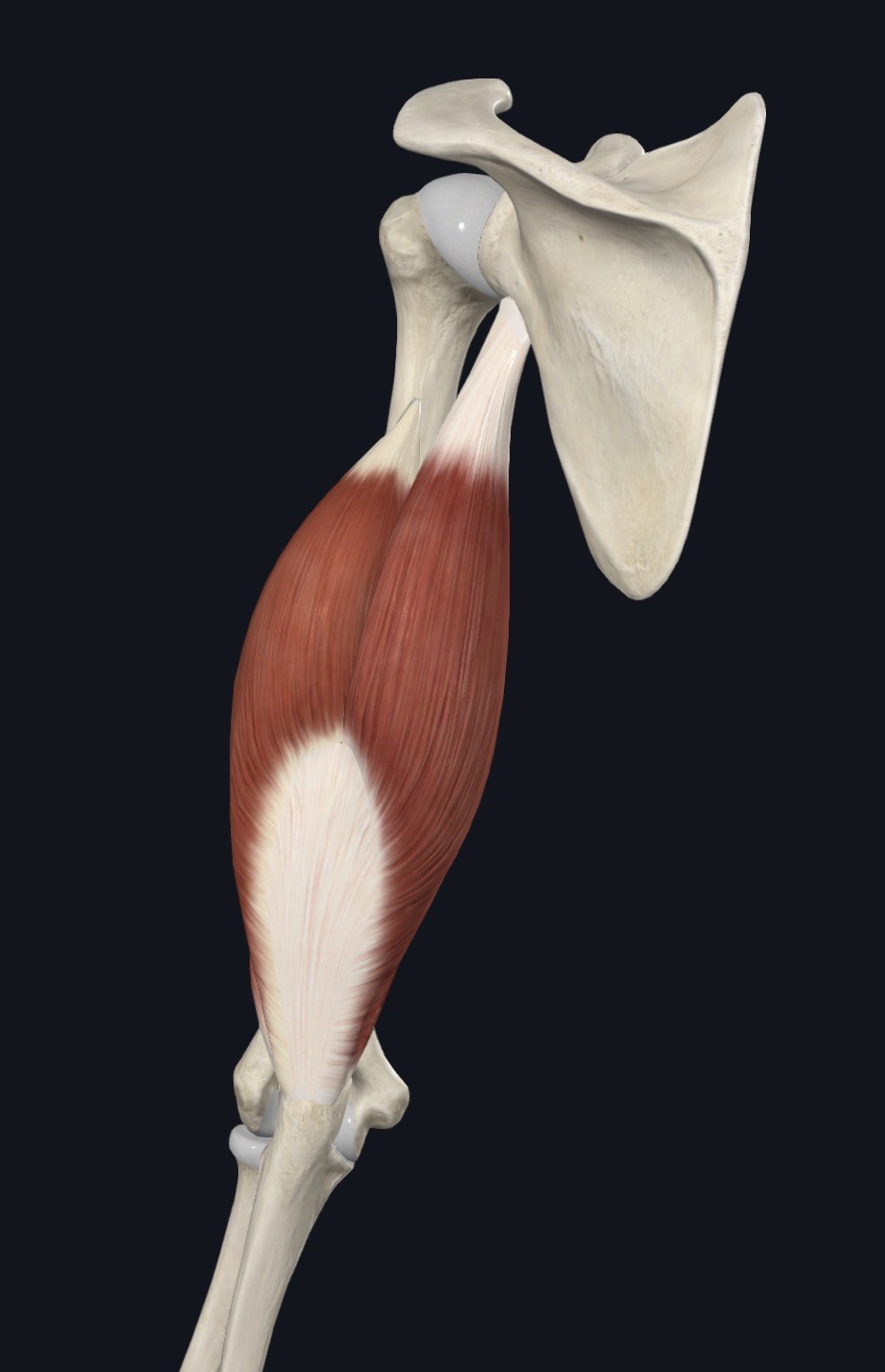
The long head is more lateral and the short head more medial. They are easier to distinguish proximally than through the merged distal belly.
Do not press deeply into the cubital fossa. From lateral to medial, remember TAN: biceps tendon, brachial artery, median nerve.
Section 11 of 20
Massage Therapy Relevance
Biceps brachii is one of the most familiar arm muscles in massage practice. It is used constantly in lifting, carrying, pulling, and turning the palm up, so clients often report fatigue or tenderness in the belly and near the elbow and shoulder tendons. Because the long-head tendon sits in a crowded shoulder neighborhood and the distal tendon lies close to the cubital fossa, careful screening and light-to-moderate pressure are important.
Section 12 of 20
Dysfunction: What Happens When Movement Goes Wrong
Changes in how a muscle works can change how a joint moves. The points below describe possibilities that may be associated with altered muscle function; they are not diagnoses, and one muscle is never assumed to be the sole cause of a problem.
When the muscle is weak
Weakness may reduce supination and elbow flexion strength and may shift work to brachialis and brachioradialis.
When it is tight or shortened
Tightness may be associated with limited elbow extension and shoulder extension and may contribute to a flexed arm posture.
When it is overused
Repetitive lifting and pulling may load the muscle and its tendons and may contribute to anterior shoulder or elbow ache.
When it is strained
A strain or tendon injury may cause pain with resisted supination or flexion; a sudden pop, bruising, or a changed muscle contour needs assessment.
When it is inhibited or others compensate
Reduced activation may be associated with less supination power and compensation from the forearm and shoulder muscles.
When it does not coordinate well with synergists and antagonists
Poor coordination with brachialis, the rotator cuff, and the elbow extensors may alter shoulder stability and elbow control and may be associated with anterior shoulder symptoms.
Section 13 of 20
Conditions, Pathologies, and Pain Relationships
Overuse and muscle strain
Repetitive lifting, pulling, throwing, or resisted supination may produce fatigue, delayed-onset soreness, or strain. Massage may suit general non-acute tension after screening, but acute pain, swelling, bruising, or lost function changes the plan.
Long-head biceps tendinopathy
This may present as anterior shoulder pain and tenderness near the intertubercular groove, often aggravated by overhead activity or loading. It commonly overlaps rotator-cuff or labral problems. Do not diagnose from tenderness alone or apply aggressive friction to an irritable tendon.
Proximal or distal tendon tear
A sudden pop, bruising, weakness, altered contour, or “Popeye” bulge can accompany a tear. Distal tears often produce notable supination weakness. Suspected tears require prompt medical evaluation and no local massage until assessed and cleared.
SLAP/labral relationship
The long-head tendon blends with the superior labrum, so deep shoulder pain, catching, or painful clicking may involve structures a massage therapist cannot diagnose. Persistent mechanical symptoms merit medical assessment.
Pain is not a one-structure story
Anterior shoulder discomfort may relate to the long-head tendon, rotator cuff, subacromial tissues, labrum, glenohumeral joint, or cervical referral. Elbow-region pain may arise from brachialis, forearm flexors, joint structures, or nerve irritation. Massage therapists observe patterns and provide appropriate comfort-oriented care; they do not label a medical diagnosis.
Section 14 of 20
Example Clinical Relationship
A climber reports anterior shoulder pain when pulling overhead. The long-head tendon of biceps may be involved because it lies in the intertubercular groove and blends with the labrum, and the pain may be associated with tendinopathy. Rotator cuff problems, labral injury, and cervical referral can look similar, so a sudden pop with bruising or a gap in the muscle needs referral.
Section 15 of 20
Massage and Treatment Approaches
Positioning
- Supine: arm supported beside the body or on a bolster.
- Seated: forearm supported on a table, useful for active movement.
- Side-lying: an option when other shoulder positions are uncomfortable.
Before contact
- Ask about onset, trauma, swelling, bruising, weakness, numbness, surgery, medication, and diagnoses.
- Observe comfortable active range without forcing.
- Clarify whether the goal is relaxation, ordinary muscle soreness, or support within a medical rehabilitation plan.
Approaches for healthy, non-acute tissue
| Broad gliding | Light-to-moderate strokes over the anterior arm to warm tissue and assess tolerance. |
|---|---|
| Compression | Rhythmic broad pressure through the belly; avoid pinning the medial neurovascular bundle. |
| Petrissage | Gentle lifting and kneading of the accessible belly with the arm supported. |
| Longitudinal work | Slow gliding along fiber direction, staying on the belly and adjusting to feedback. |
| Movement | Comfortable active or passive elbow extension and pronation may lengthen biceps; never force range or reproduce sharp pain. |
| Regional plan | Consider brachialis, brachioradialis, triceps, pectorals, coracobrachialis, rotator cuff, and cervical/thoracic contributors. |
Section 16 of 20
Precautions and Contraindications
Use caution or modify
- Known tendinopathy or rehabilitation soreness: follow the care plan and remain symptom-limited.
- Recent surgery or injection: obtain appropriate clearance and avoid healing tissue.
- Anticoagulants, fragile skin, reduced sensation, or easy bruising: reduce pressure.
- Systemic illness or complex medical history: coordinate when indicated.
- Avoid firm sustained pressure over the intertubercular groove, medial arm bundle, and cubital fossa.
Section 17 of 20
Red Flags and When to Refer
Postpone and refer
- Sudden pop, new deformity, palpable gap, significant bruising, or acute weakness.
- Major trauma, suspected fracture/dislocation, or inability to use the arm.
- New or progressive numbness, tingling, sensory loss, or weakness.
- Unexplained one-sided swelling, warmth, redness, or color change.
- Fever, spreading redness, drainage, or other infection signs.
- Severe, worsening, night-dominant, or unexplained pain. Chest pain or shortness of breath requires urgent evaluation.
Section 18 of 20
Study Summary
Attachments
Long: supraglenoid tubercle/superior labrum.
Short: coracoid process.
Insertion: radial tuberosity and forearm fascia.
Function
Powerful supination of the flexed forearm; elbow flexion; assists shoulder flexion; long head contributes to shoulder stability.
Supply
Musculocutaneous nerve, primarily C5–C6. Muscular branches of the brachial artery.
Massage takeaway
Treat biceps as part of an anterior-arm and shoulder system. Work broadly and comfortably on healthy tissue, protect the bicipital groove and cubital fossa, and refer acute trauma, deformity, neurological change, vascular or infection signs, and unexplained progressive pain.
Section 19 of 20
Instructor Narration
Open narration transcript
Imagine your client resting comfortably with the palm facing up. The broad, familiar muscle at the front of the upper arm is the biceps brachii. Its name gives us our first clue: it has two heads. The long head begins just above the shoulder socket at the supraglenoid tubercle and superior labrum. Its tendon crosses the top of the humeral head inside the joint capsule before descending through the intertubercular groove. The short head begins at the coracoid process beside coracobrachialis. These heads meet, form the visible muscle belly, and continue to the radial tuberosity, with the bicipital aponeurosis spreading into forearm fascia.
Now connect those attachments to movement. Because the tendon reaches the radius, contraction can rotate the radius into supination. With the elbow flexed, biceps is a particularly strong supinator. It also flexes the elbow, most effectively when the palm is up, and can assist shoulder flexion. Brachialis and brachioradialis help with elbow flexion; supinator helps turn the palm up. Triceps and anconeus oppose elbow flexion, while pronator teres and pronator quadratus oppose supination.
The musculocutaneous nerve supplies biceps, primarily from C5 and C6. It pierces coracobrachialis, passes between biceps and brachialis, and continues into the forearm as a sensory nerve. The main blood supply comes from branches of the brachial artery. That artery travels on the medial side and enters the cubital fossa near the distal tendon, so this is anatomy you respect with your hands—not a place for blind, heavy pressure.
For palpation, support the client’s arm and ask for a gentle elbow bend or palm-up motion against light resistance. The biceps belly becomes easy to see and feel. Keep the contraction low effort. Your goal is identification, not strength testing and certainly not provoking pain.
In practice, general biceps tension may follow lifting, carrying, pulling, rowing, or repetitive tool use. But anterior shoulder pain is not automatically a biceps problem. The long-head tendon shares a crowded clinical neighborhood with the rotator cuff, subacromial tissues, labrum, and joint. Cervical structures can also refer symptoms into the arm. Our role is to notice the pattern, adapt treatment, and refer when diagnosis or medical management is needed.
With a healthy, non-acute presentation, begin broadly: supported positioning, light warming strokes, comfortable compression, kneading, and gradual longitudinal work over the belly. Movement can be added gently, but never force shoulder extension, elbow extension, or pronation. Avoid aggressive work directly over an irritable tendon, the medial neurovascular bundle, or the cubital fossa.
Finally, remember the stop signs. A sudden pop, bruising, a new bulge or gap, acute weakness, major trauma, progressive numbness, unusual swelling, infection signs, or severe unexplained pain calls for referral rather than massage. Massage can support comfort and movement when appropriate; it does not repair a tendon tear or replace medical evaluation.
Your core memory points are simple: two origins on the scapula, one distal insertion on the radius plus forearm fascia, supination and elbow flexion, musculocutaneous nerve from C5 and C6, and thoughtful caution around the shoulder tendon and cubital fossa.
Section 20 of 20