Section 01 of 20
Introduction
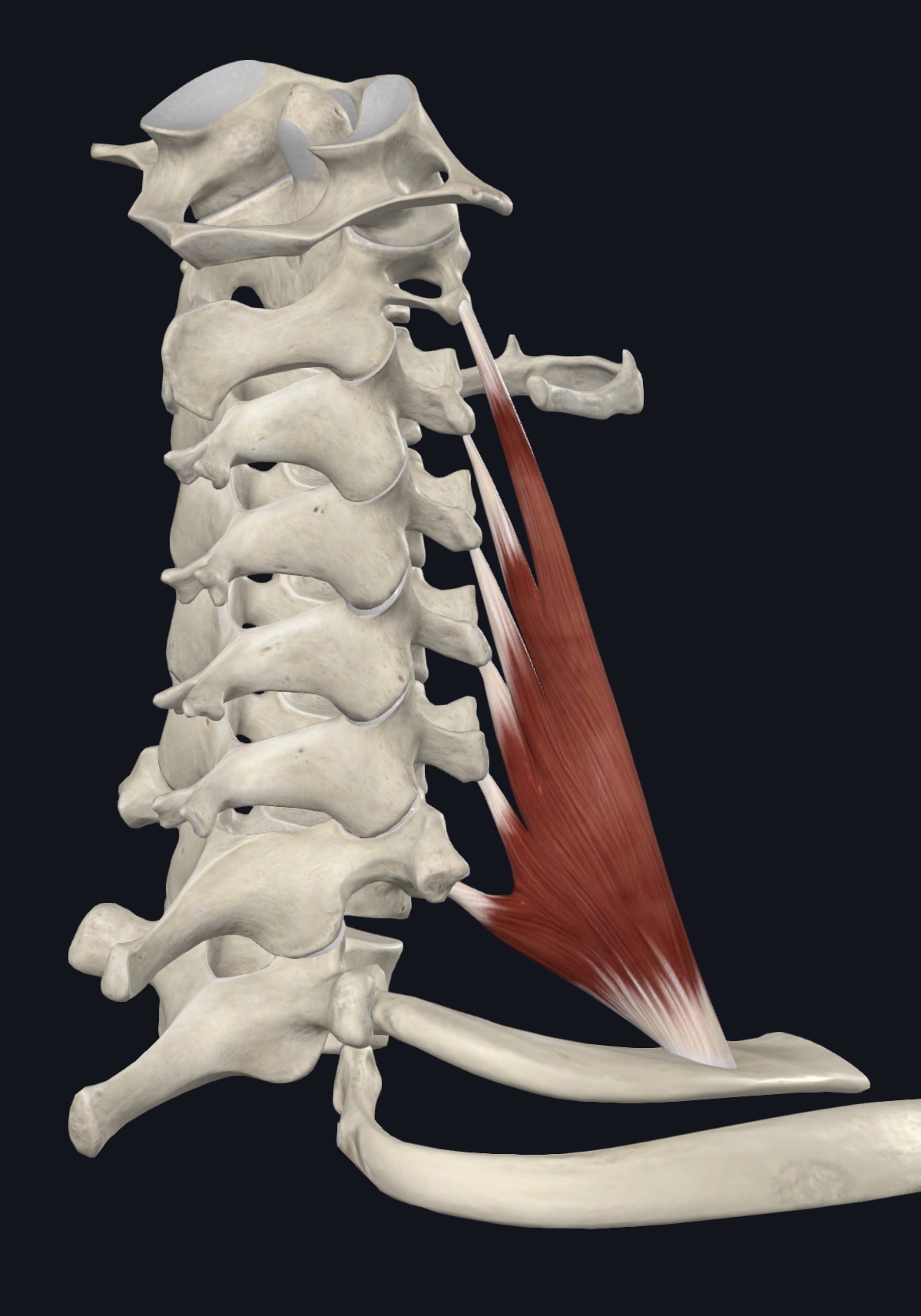
Anterior scalene is the most anterior of the three scalene muscles. It runs from the transverse processes of the mid-cervical vertebrae down and slightly forward to the first rib, deep to sternocleidomastoid.
The anterior and middle scalenes form the interscalene triangle, through which the brachial plexus roots and the subclavian artery pass. The subclavian vein passes in front of the anterior scalene, and the phrenic nerve runs down its anterior surface.
Section 02 of 20
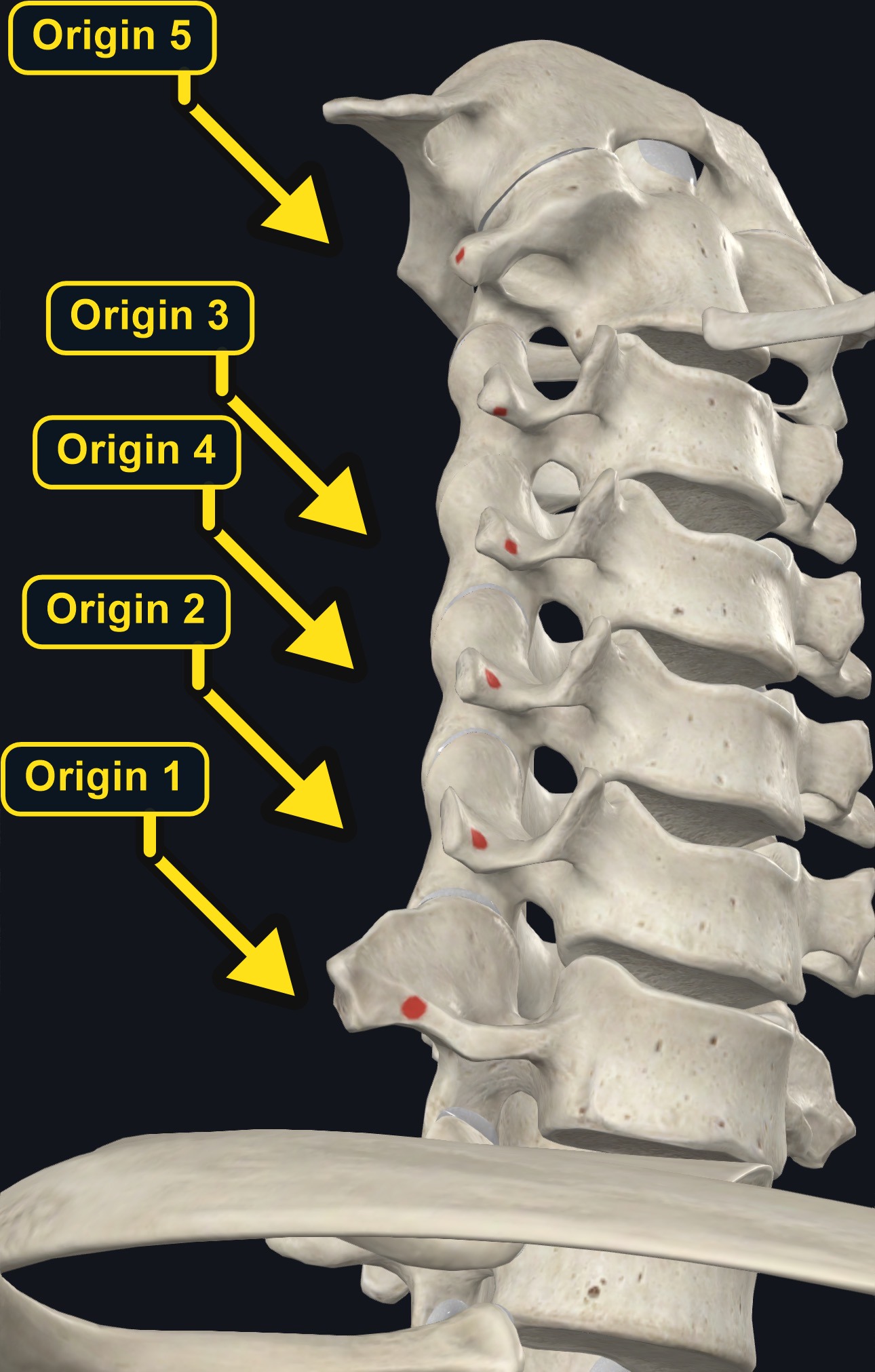
Origin
| Origin | Anterior tubercles of the transverse processes of cervical vertebrae C3–C6. |
|---|
Section 03 of 20
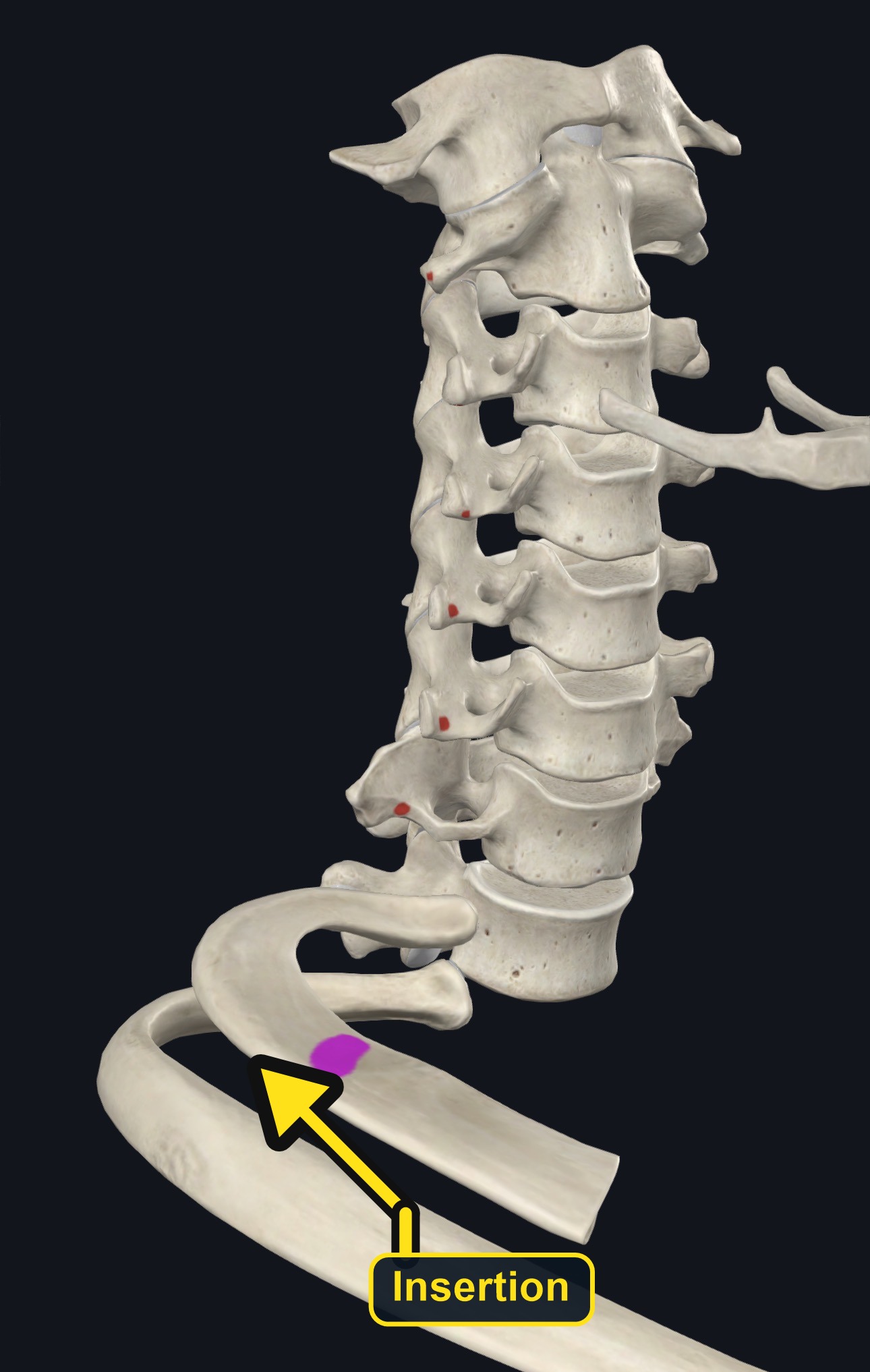
Insertion
| Insertion | Scalene tubercle on the inner border of the first rib. |
|---|
Section 04 of 20
Actions
No dedicated action video is currently available. This movement is explained below and video will be added when verified source media becomes available.
| Primary action | Elevates the first rib during inspiration (accessory breathing muscle) when the neck is stable. |
|---|---|
| Secondary actions | Flexes the neck; unilateral contraction side-bends the neck to the same side and assists rotation to the opposite side. |
| Movement at the joint | Cervical spine (flexion, side-bending, rotation) and the first costovertebral and costotransverse joints (elevation). |
| Heads / fiber groups | Single muscle belly with slips from C3 to C6. |
| Functional examples | Deep or labored breathing; turning and bending the head; holding the head forward over a screen. |
Elevates the first rib
Acts as an accessory muscle of inspiration when the neck is fixed.
Neck flexion and side-bending
Both sides together flex the cervical spine; one side laterally flexes the neck toward that side.
Rotation
One side assists rotation of the neck to the opposite side.
Section 05 of 20
Nerve Innervation
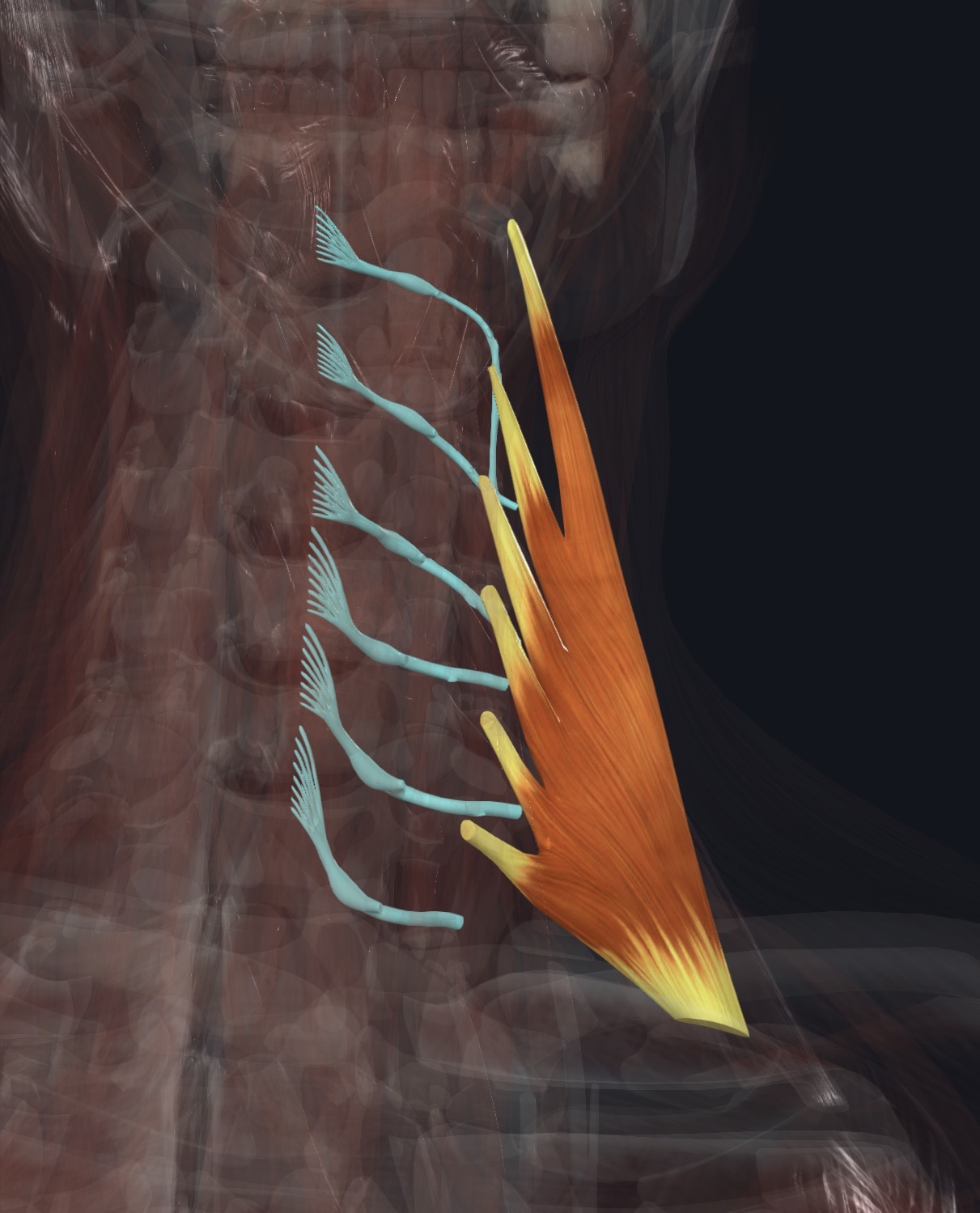
| Nerve | Anterior (ventral) rami of the cervical nerves, mainly C5–C6; some sources list C4–C6 or C7. |
|---|
The phrenic nerve (C3–C5) runs on the muscle's anterior surface and the brachial plexus roots pass just behind it. Arm symptoms, breathing changes, or altered sensation are not the same as muscle tightness and need careful screening.
Section 06 of 20
Blood Supply
| Blood | Ascending cervical artery, a branch of the inferior thyroid artery, with contributions from nearby cervical vessels. |
|---|
Section 07 of 20
Pictures and Visual Anatomy
Section 08 of 20
Functional Movement
The anterior scalene is active in forced or labored breathing, in holding the head in forward posture, and during lateral neck movements. People with forward head posture, chest breathing, asthma, or chronic lung disease often overuse the scalenes.
Section 09 of 20
Synergists and Antagonists
Synergists: middle and posterior scalenes and sternocleidomastoid for neck flexion and rib elevation; the diaphragm and intercostals in breathing. Antagonists: the neck extensors (splenius, semispinalis, suboccipitals) oppose flexion; the opposite scalenes oppose lateral flexion and rotation.
Section 10 of 20
Palpation and Location
Client position and technique
Position the client supine with the head supported and turned slightly away. Ask for a gentle sniff or slow inhalation to activate the scalenes. Find the lateral border of sternocleidomastoid just above the clavicle and slide gently into the posterior triangle to feel the round band of anterior scalene deep to it.
Protect nearby structures
The carotid artery and internal jugular vein lie anterior and medial, and the brachial plexus and subclavian artery lie behind and lateral. Use slow, light, flat-finger pressure only, avoid pinching or sustained pressure, never press on the front of the neck, and stop if the client reports tingling, numbness, dizziness, or a pulse-like sensation.
Section 11 of 20
Massage Therapy Relevance
The scalenes are a frequent site of tension and referral in clients with neck and shoulder pain, forward head posture, or breathing pattern problems. The anatomy is crowded, so treatment must be gentle, well communicated, and screened.
Section 12 of 20
Dysfunction: What Happens When Movement Goes Wrong
Changes in how a muscle works can change how a joint moves. The points below describe possibilities that may be associated with altered muscle function; they are not diagnoses, and one muscle is never assumed to be the sole cause of a problem.
When the muscle is weak
Weakness may reduce neck flexion and side-bending control and may shift work to sternocleidomastoid and the other neck muscles.
When it is tight or shortened
Tightness may be associated with restricted neck rotation and side-bending and may narrow the space around the brachial plexus and subclavian vessels; arm tingling or heaviness should be screened for thoracic outlet syndrome.
When it is overused
Chest-dominant breathing, asthma, forward head posture, and prolonged desk work may overuse the scalenes and may contribute to neck, shoulder, and upper-chest ache.
When it is strained
A strain after a whiplash-type movement may cause neck pain with side-bending; severe or neurological symptoms need assessment.
When it is inhibited or others compensate
Inhibition may be associated with weaker neck flexion and less first-rib control, with compensation from the other neck muscles.
When it does not coordinate well with synergists and antagonists
Poor coordination with the diaphragm, sternocleidomastoid, and deep neck flexors may alter breathing pattern and head posture.
Section 13 of 20
Conditions, Pathologies, and Pain Relationships
Scalene tightness and referral
Overuse can cause neck, shoulder, chest, and upper-back aching that may spread into the arm. The pattern is not diagnostic.
Thoracic outlet syndrome
Compression of the brachial plexus or subclavian vessels in the interscalene region can cause arm tingling, weakness, or color and swelling changes. Suspected cases need medical assessment; massage should not provoke symptoms.
Breathing pattern and respiratory conditions
Asthma, COPD, and anxiety-related chest breathing can overload the scalenes. Persistent breathlessness needs medical evaluation.
Differential considerations
Cervical radiculopathy, rotator cuff disease, cardiac symptoms, Pancoast tumor, and vascular problems can mimic scalene-related pain.
Section 14 of 20
Example Clinical Relationship
A client with a forward head posture reports neck tightness and tingling in the hand when working at a computer. The anterior scalene may be involved because the brachial plexus roots pass beside it, and the pattern may be associated with thoracic outlet syndrome, but cervical radiculopathy and other causes are also possible. Gentle, symptom-limited work may support comfort, while arm swelling, color change, or progressive weakness needs referral.
Section 15 of 20
Massage and Treatment Approaches
For healthy, non-acute tissue, position the client supine with the neck neutral. Begin with light effleurage over the neck and upper chest, then use gentle, slow compression or broad stroking in the posterior triangle, always monitoring symptoms and staying away from the anterior neck.
| Movement | Use comfortable head-neutral positions with slow breathing; do not stretch into pain, tingling, or dizziness. |
|---|---|
| Regional work | Consider sternocleidomastoid, upper trapezius, levator scapulae, pectoralis minor, and breathing mechanics when assessment supports it. |
| Avoid | Deep or sustained pressure over the carotid pulse, the front of the neck, or any point that reproduces arm symptoms. |
Section 16 of 20
Precautions and Contraindications
Precautions and contraindications
- Acute neck trauma, whiplash, suspected fracture, or recent neck surgery.
- Use caution with known thoracic outlet syndrome, cervical radiculopathy, anticoagulant use, or vascular disease.
- Avoid deep pressure over the carotid artery and the anterior neck.
- Stop if the client feels tingling, numbness, dizziness, or pulsing sensations.
Section 17 of 20
Red Flags and When to Refer
Red flags and referral
- Sudden severe neck pain with headache, dizziness, speech or vision change, or facial droop (possible vascular event).
- Arm swelling, color change, coldness, or throbbing after effort.
- Chest pain, pressure, or shortness of breath, especially with sweating or radiation to the jaw or arm.
- Progressive arm weakness, hand wasting, Horner signs (drooping lid, small pupil), or unexplained weight loss.
Section 18 of 20
Study Summary
Attachments
Origin: anterior tubercles of C3–C6 transverse processes. Insertion: scalene tubercle of the first rib.
Actions
Elevates the first rib; flexes and side-bends the neck.
Supply
Cervical ventral rami (C5–C6); ascending cervical artery.
Section 19 of 20
Instructor Narration
Open narration transcript
Anterior scalene is the front scalene muscle of the neck, lying deep to sternocleidomastoid.
It arises from the anterior tubercles of the transverse processes of C3 through C6 and inserts on the scalene tubercle on the inner border of the first rib. The anterior and middle scalenes form the interscalene triangle. The brachial plexus roots and subclavian artery pass through it, while the subclavian vein passes in front, and the phrenic nerve runs down the front of the muscle.
Working with the neck fixed, it elevates the first rib as an accessory muscle of breathing. It also flexes the neck, and one side laterally flexes the neck toward the same side and helps rotate it to the opposite side. The middle and posterior scalenes and sternocleidomastoid help it. The neck extensors and the opposite scalenes oppose it.
The ventral rami of the cervical nerves, mainly C5 and C6, supply it. Blood comes from the ascending cervical artery.
To palpate, place the client supine and ask for a gentle sniff. Find the lateral border of sternocleidomastoid above the clavicle and feel the round band in the posterior triangle. Use slow, light, flat-finger pressure only, never press the front of the neck, and stop for tingling, numbness, dizziness, or a pulsing sensation.
Scalene overuse, thoracic outlet syndrome, breathing pattern problems, cervical radiculopathy, and vascular or cardiac conditions can overlap. Refer sudden severe neck pain with neurological signs, arm swelling or color change, chest pain, progressive arm weakness, or Horner signs.
Remember: C3 to C6 transverse processes to the first rib, first-rib elevation, and the interscalene triangle.
Section 20 of 20