Section 01 of 20
Introduction
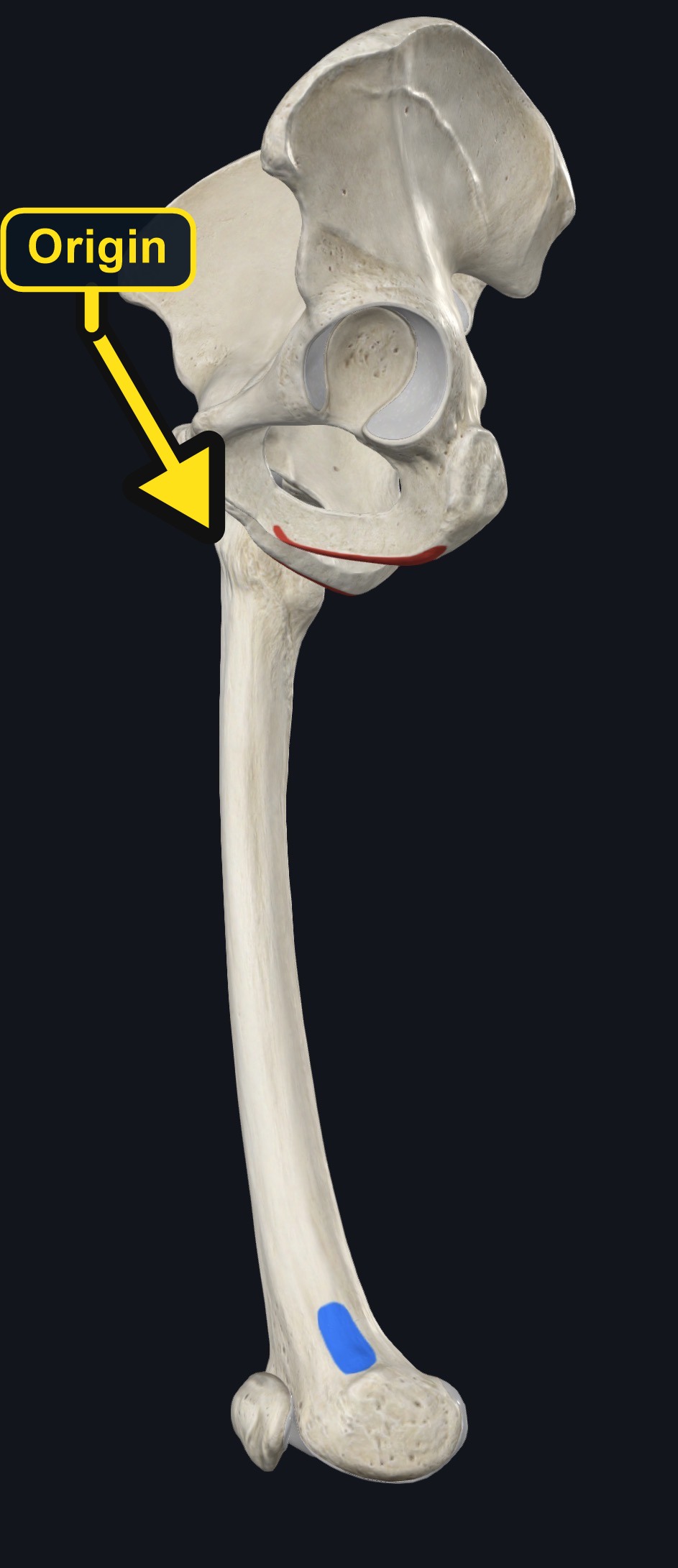
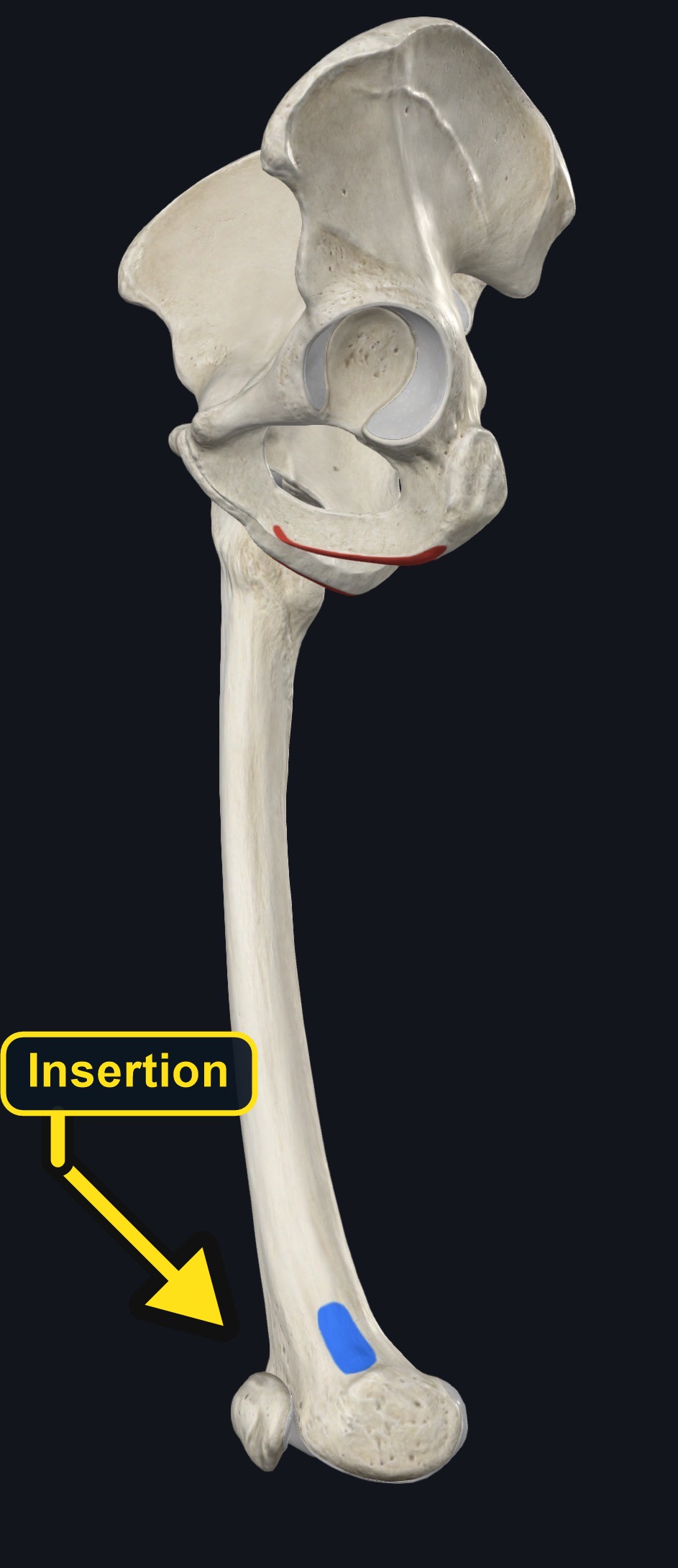
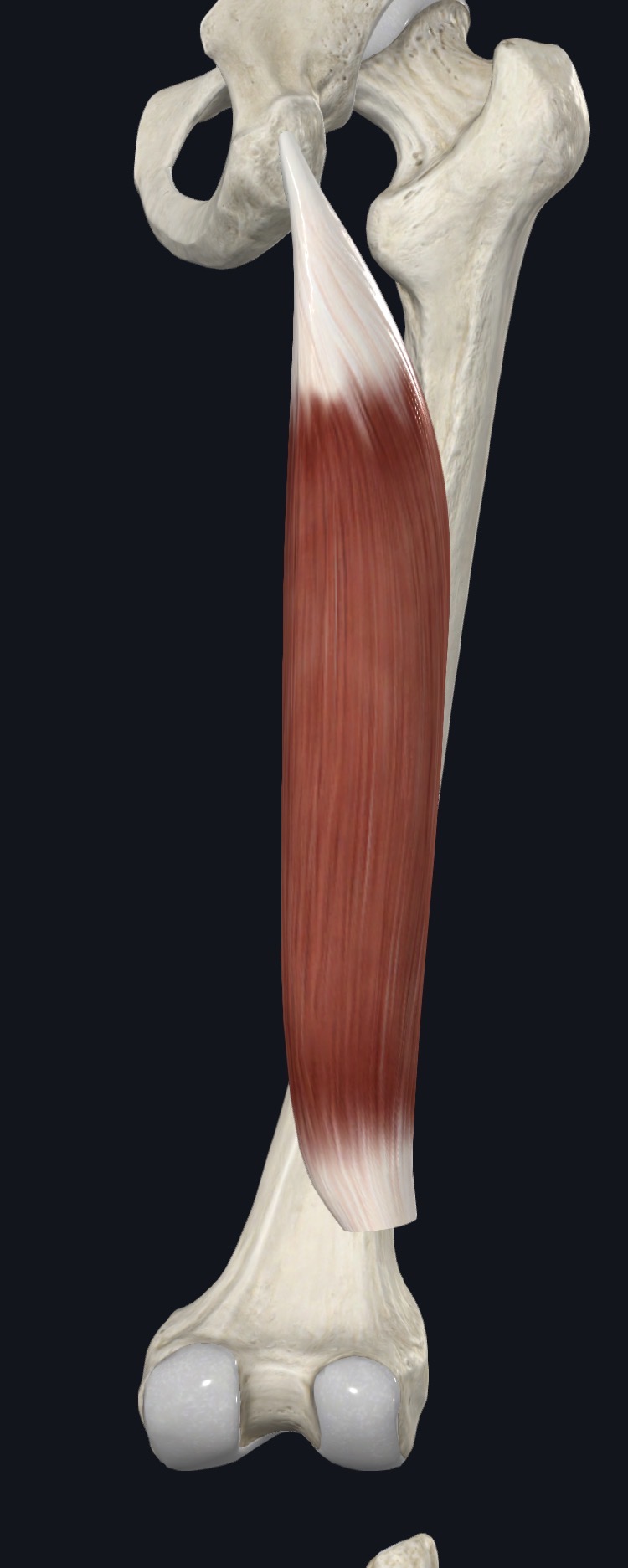
Adductor magnus is a large, triangular muscle that forms most of the medial thigh's deep mass. It has two functional parts: an adductor part that arises from the pubic and ischial rami, and a hamstring part that arises from the ischial tuberosity.
Its tendon gap, the adductor hiatus, lets the femoral vessels pass from the adductor canal to the back of the knee.
Section 02 of 20
Origin
| Origin | Adductor part: inferior pubic ramus and ischial ramus. Hamstring part: inferolateral aspect of the ischial tuberosity. |
|---|
Section 03 of 20
Insertion
| Insertion | Adductor part: gluteal tuberosity, linea aspera, and medial supracondylar line of the femur. Hamstring part: adductor tubercle of the femur, through a rounded tendon. |
|---|
Section 04 of 20
Actions
No dedicated action video is currently available. This movement is explained below and video will be added when verified source media becomes available.
| Primary action | Adduction of the thigh (adductor part). |
|---|---|
| Secondary actions | Hip extension by the hamstring part; assists hip flexion by the anterior fibers; contributes to pelvic stability. |
| Movement at the joint | Hip joint (adduction, extension, some rotation). |
| Heads / fiber groups | Two functional parts: the adductor part (pubic and ischial rami) and the hamstring part (ischial tuberosity to the adductor tubercle), each with a different nerve. |
| Functional examples | Squatting and rising from a chair; walking and running push-off; skating; rowing motions. |
Adductor part
Adducts the thigh and assists hip flexion, especially in its anterior fibers.
Hamstring part
Extends the hip, especially from a flexed position, working like a hamstring; also adducts the thigh.
Rotation and stability
Contributes to medial rotation of the thigh and helps stabilize the pelvis and hip in gait and single-leg stance.
Section 05 of 20
Nerve Innervation
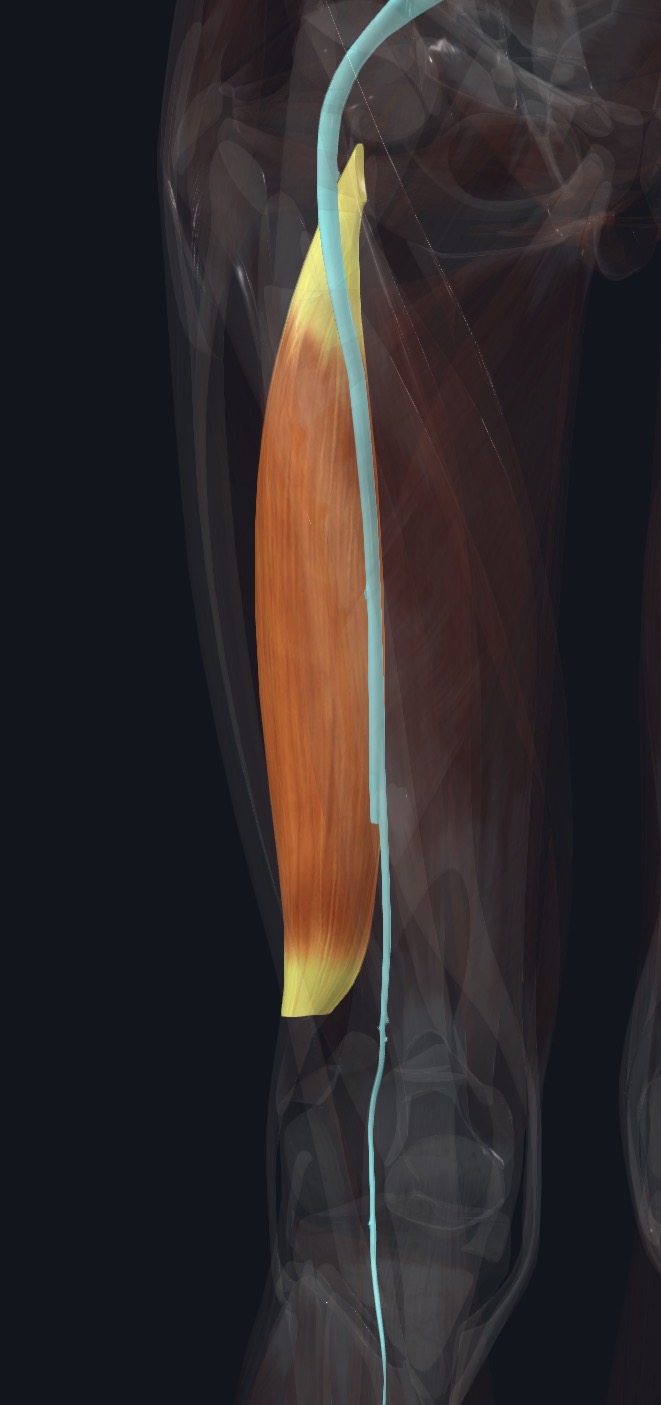
| Nerve | Adductor part: posterior division of the obturator nerve (L2–L4). Hamstring part: tibial division of the sciatic nerve (about L4). |
|---|
The dual innervation is characteristic. Symptoms affecting only one part, or patterns that do not match local muscle pain, should prompt assessment rather than assumption.
Section 06 of 20
Blood Supply
| Blood | Perforating branches of the profunda femoris artery, medial circumflex femoral artery, obturator artery, and branches of the femoral and popliteal arteries. |
|---|
Section 07 of 20
Pictures and Visual Anatomy
Section 08 of 20
Functional Movement
Adductor magnus is active in walking, running, climbing, squatting, and rising, in deep squats and rowing motions, and in sports that require strong leg adduction such as skating and horse riding. The hamstring part is a powerful hip extensor at large flexion angles.
Section 09 of 20
Synergists and Antagonists
Synergists: adductor longus, adductor brevis, gracilis, and pectineus in adduction; gluteus maximus and the hamstrings in hip extension. Antagonists: gluteus medius, gluteus minimus, and tensor fasciae latae in abduction; iliopsoas and rectus femoris in extension of the thigh.
Section 10 of 20
Palpation and Location
Client position and technique
Position the client supine with the hip abducted and externally rotated, or prone with the knee flexed. Ask for gentle adduction against light resistance. The deep mass on the medial thigh, behind and medial to adductor longus and gracilis, is adductor magnus; follow it toward the ischial ramus proximally and toward the adductor tubercle distally.
Protect nearby structures
Avoid deep pressure in the femoral triangle and over the adductor canal, where the femoral artery, vein, and nerves pass. Stay away from the genitals, obtain explicit consent, and use secure draping. Use caution at the ischial tuberosity, where the sciatic nerve and hamstring tendons are close.
Section 11 of 20
Massage Therapy Relevance
Adductor magnus is a large, deep muscle that contributes to groin, medial thigh, and posterior hip symptoms. Because it spans functions of two muscle groups, it may be involved in pain that seems to belong to either the groin or the hamstring area.
Section 12 of 20
Dysfunction: What Happens When Movement Goes Wrong
Changes in how a muscle works can change how a joint moves. The points below describe possibilities that may be associated with altered muscle function; they are not diagnoses, and one muscle is never assumed to be the sole cause of a problem.
When the muscle is weak
Weakness may reduce hip extension and adduction strength and may increase the load on the gluteus maximus and hamstrings.
When it is tight or shortened
Tightness may be associated with limited hip abduction and external rotation and may contribute to inner-thigh and deep pelvic tension.
When it is overused
Repeated deep squatting, sprinting, or horse riding may overload the muscle and may contribute to inner-thigh soreness.
When it is strained
A strain may cause deep inner-thigh or lower pelvic pain; pain near the ischium may overlap with proximal hamstring problems.
When it is inhibited or others compensate
Reduced activation may be associated with less hip extension and more reliance on the hamstrings and the low back.
When it does not coordinate well with synergists and antagonists
Imbalance between the adductor part, the hamstring part, and the gluteal muscles may alter pelvic control and may be associated with groin or ischial symptoms.
Section 13 of 20
Conditions, Pathologies, and Pain Relationships
Adductor strain
Groin or medial thigh strain from sprinting, kicking, or forced abduction. Acute pain, bruising, or weakness needs assessment, not deep work.
Adductor or ischial tendinopathy
Deep pain near the ischial ramus and tuberosity, especially with sitting or hip extension loading, can overlap with proximal hamstring problems.
Adductor canal and hiatus
The femoral vessels pass through the adductor hiatus. Rare vascular entrapment or compression should be considered when there are leg vascular symptoms.
Differential considerations
Hip joint disease, hernia, lumbar radiculopathy, sciatic irritation, osteitis pubis, and referred pain can all mimic medial thigh problems.
Section 14 of 20
Example Clinical Relationship
A rower reports deep inner-thigh and lower-buttock tension. Adductor magnus may be involved because it works both as an adductor and as a hip extensor, and the pain may overlap with proximal hamstring symptoms. Cold, painful, or swollen leg symptoms, a groin bulge, or a sudden pop needs referral instead of deep work.
Section 15 of 20
Massage and Treatment Approaches
For healthy, non-acute tissue, use secure draping and begin with broad effleurage and compression on the medial thigh. Progress to gentle kneading and longitudinal strokes along the belly, keeping pressure comfortable and avoiding the femoral triangle and adductor canal.
| Positioning | Supine with the thigh supported in slight abduction, or side-lying with the upper leg supported. |
|---|---|
| Regional work | Consider the other adductors, hamstrings, gluteals, and hip flexors when assessment supports it. |
| Avoid | Deep pressure on an acute lesion, the femoral triangle, the adductor canal, or the genital area. |
Section 16 of 20
Precautions and Contraindications
Precautions and contraindications
- Acute strain, hematoma, recent surgery, or medically restricted loading.
- Suspected hernia or unexplained groin lump: do not massage locally.
- Use caution with varicose veins, anticoagulant use, easy bruising, or reduced sensation.
- Obtain consent and use secure draping for medial thigh work.
Section 17 of 20
Red Flags and When to Refer
Red flags and referral
- Unilateral leg swelling, warmth, redness, or calf pain, or sudden shortness of breath.
- Cold, pale, or painful leg, or new leg weakness or numbness.
- Groin bulge, testicular pain or swelling, blood in urine, or fever.
- Severe pain after trauma, a palpable defect, or inability to bear weight.
Section 18 of 20
Study Summary
Attachments
Pubic and ischial rami and ischial tuberosity to the linea aspera, supracondylar line, and adductor tubercle.
Actions
Adduction; the hamstring part extends the hip.
Supply
Obturator and tibial (sciatic) nerves; profunda femoris branches.
Section 19 of 20
Instructor Narration
Open narration transcript
Adductor magnus is the largest of the medial thigh adductors. It behaves like two muscles: an adductor part and a hamstring part.
The adductor part arises from the inferior pubic ramus and ischial ramus and inserts along the gluteal tuberosity, linea aspera, and medial supracondylar line. The hamstring part arises from the ischial tuberosity and inserts on the adductor tubercle of the femur. The gap between them is the adductor hiatus, where the femoral vessels pass to the back of the knee.
The adductor part adducts the thigh and assists hip flexion. The hamstring part extends the hip. Adductor longus, brevis, gracilis, and pectineus work with it, and the hip abductors oppose it.
The obturator nerve supplies the adductor part, from L2 to L4, and the tibial division of the sciatic nerve supplies the hamstring part, at about L4. Blood comes from profunda femoris, obturator, and medial circumflex branches.
To palpate, place the client supine with the hip abducted, and ask for gentle adduction. Find the deep mass behind adductor longus and gracilis. Avoid deep pressure in the femoral triangle and adductor canal, and use consent and secure draping for all groin and medial thigh work.
Adductor strain, ischial or hamstring tendon pain, hernia, hip disease, lumbar radiculopathy, and vascular problems can all overlap. Refer unilateral leg swelling, a cold or painful leg, a groin bulge, testicular symptoms, or severe pain after trauma.
Remember: pubic and ischial rami to the linea aspera and adductor tubercle, adduction and hip extension, dual innervation.
Section 20 of 20